Structural, green measures needed to curb Leh floods: expert
RAWALPINDI: Development of green areas while ending grey structures along Leh Nullah, construction of check dams, delay-action dams and percolation reservoirs along the Margalla Hills, and management of sewage discharged into the nullah, coupled with structural flood engineering, are the only solutions to avoid flood-like situations in the twin cities of Rawalpindi and Islamabad. Dr Amir Haider…
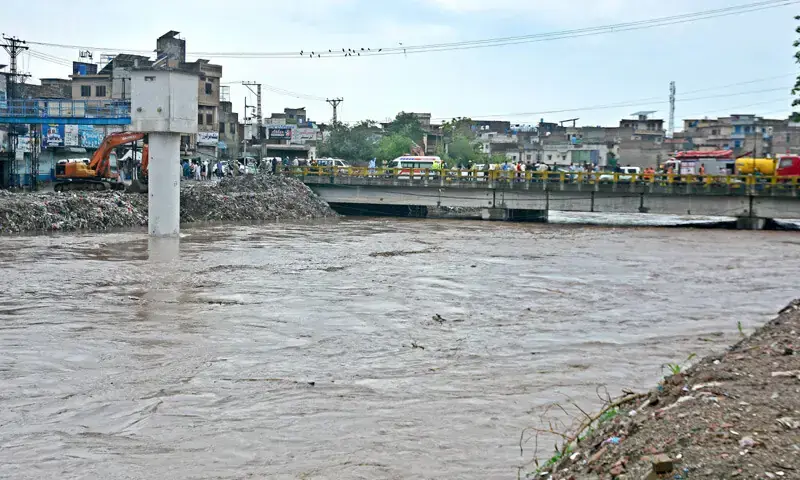
Rawalpindi and Islamabad face recurring annual flood crises due to urban expansion and poor planning. Dr Amir Haider Malik, a former adviser, argues these are not natural disasters but consequences of poor management. He urges a shift from treating the Leh Nullah as an open sewer to managing it as a crucial hydrological asset. This involves structural flood engineering, upstream runoff attenuation, Managed Aquifer Recharge, wastewater interception, and innovative financing models.
The Leh Basin, covering about 235 square kilometres, originates in the Margalla Hills and flows through densely populated areas before discharging into the Soan River. Rapid urbanisation has transformed the stream into an overloaded drainage corridor, exacerbated by extensive bank encroachment, undersized bridges, and deforestation.
The basin receives 50% of its water volume from external sources, and monsoon floods happen quickly, with inundation lasting six to 24 hours. Over 400,000 residents live in high-risk flood zones. Current interventions like channel dredging are financially inefficient and unsustainable. Dr Malik proposes a multi-tiered, basin-wide management framework combining structural and hydrological engineering with Managed Aquifer Recharge to create a permanent, resilient urban model.
Written by urgent.news from Dawn - Pakistan's reporting — not their text. Machine-written — may contain errors; check the original before relying on it.