Rivian’s Gambit for Full Autonomy
I’m sitting in a Rivian R1S SUV as it drives itself down the leafy streets of Palo Alto, Calif. , through areas crowded with touchstones of tech history. At one point I pass the landmark HP Garage , the one-car workshop where Hewlett-Packard, and, arguably, Silicon Valley, was founded in 1939. I skirt Stanford University, where a team led by computer science professor Sebastian Thrun won a US $2…
As I sit in a Rivian R1S SUV, it navigates the leafy streets of Palo Alto, California, past notable tech landmarks. This vehicle, equipped with Rivian's Autonomy+ system, can be directed to any destination within the U.S. and Canada simply by entering an address. This advanced system allows for a point-to-point drive, a significant step up from previous self-driving capabilities.
The system operates seamlessly on suburban streets, detecting and responding to various traffic signals and pedestrian crosswalks. The Autonomy+ system for Rivian's R1S SUV is expected to launch later this year and will be available for its newer R1T and R1S models via over-the-air updates. At a monthly cost of $49.99 or a one-time fee of $2,500, the system is priced lower than Tesla's Full Self-Driving (Supervised) subscription.
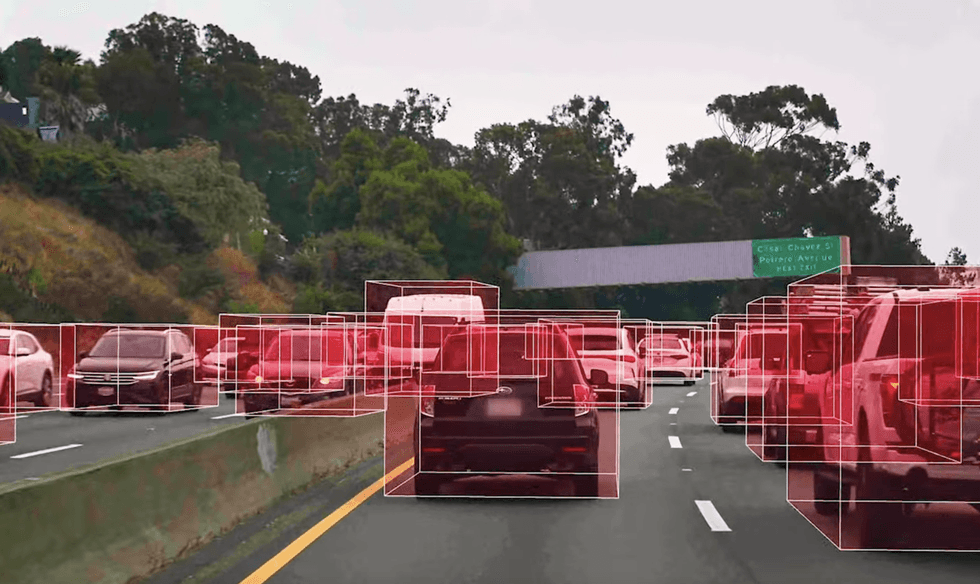
Rivian aims to bring Level 4 autonomy to the masses, with robotaxis set to arrive in 2028. This system, powered by cameras, radar, lidar, and in-house silicon chips, utilizes AI to process raw sensor data into vehicle commands. Despite being a relatively small player in the U.S. passenger-vehicle market, Rivian is leveraging software and technological prowess to compete in the self-driving industry.
Written by urgent.news from IEEE Spectrum's reporting — not their text. Machine-written — may contain errors; check the original before relying on it.