'Revolutionary' 36-year old jet engine designed for F-16 set to power world's first AI-piloted VTOL fighter jet
Shield AI’s unmanned vertical takeoff craft the X-BAT is employing axisymmetric vectoring, using a a jet engine first tested in the 1990s.
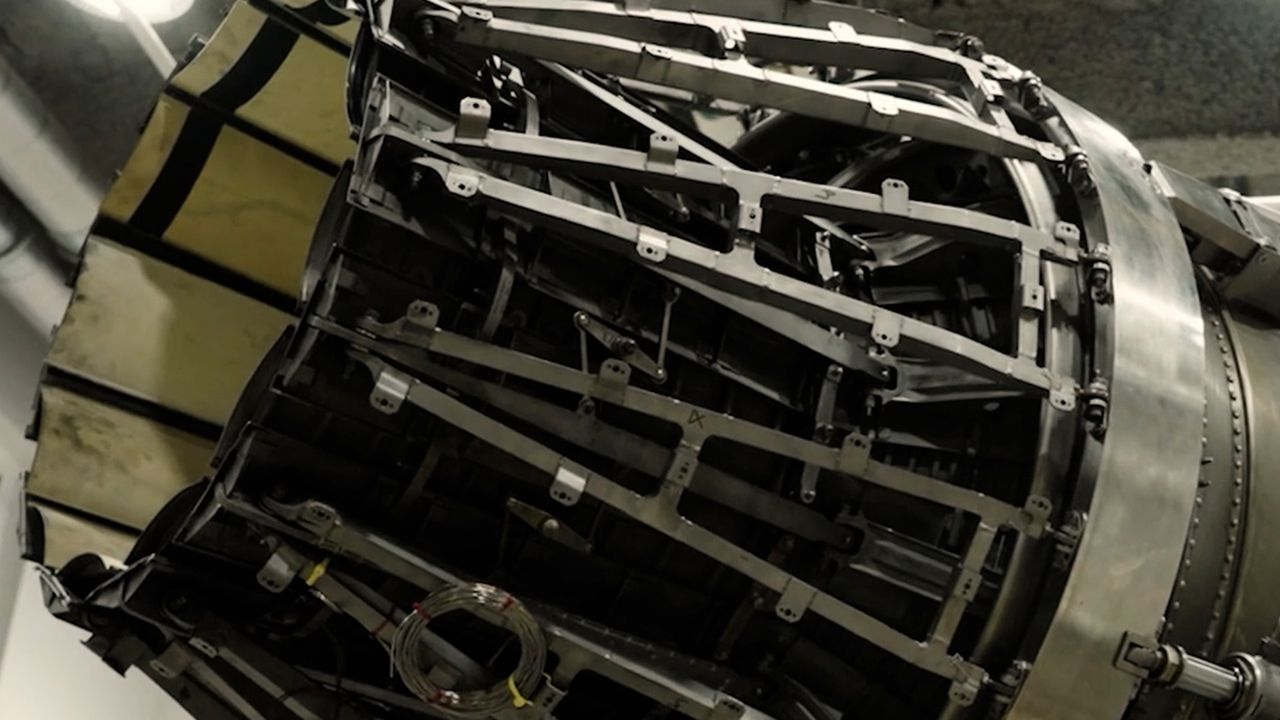
A revolutionary 36-year-old jet engine, the AVEN thrust-vectoring nozzle, is set to power the world's first AI-piloted Vertical Take-Off and Landing (VTOL) fighter jet, the X-BAT. Developed over 35 years ago and first tested on a General Dynamics F-16 in the 1990s, the AVEN – Axisymmetric Vectoring Exhaust Nozzle – works by directing the exhaust instead of manipulating airflow across the airfoil, a process termed "thrust-vectoring."
Shield AI and GE Aerospace have recently revived the technology, pairing it with an F110-GE-129E engine for the X-BAT. The VTOL X-BAT's capabilities, including hovering and superhuman reaction speeds, are made possible by the Axisymmetric Vectoring Exhaust Nozzle. This nozzle allows the X-BAT to take off like a rocket, removing the need for pilot intervention during extreme aerial maneuvers.
The X-BAT, designed for deployment in areas with limited runways, leverages the nozzle's thrust for its unique take-off and landing capabilities.
First test flights of the X-BAT are slated for late 2026 in Kansas, with plans for operational validation and full production in 2028. The AVEN nozzle, while originally developed for the F-16, has been modernized with new materials, production techniques, and compatibility with 21st-century guidance systems, ensuring seamless integration with the X-BAT's AI piloting and control systems.
Written by urgent.news from TechRadar's reporting — not their text. Machine-written — may contain errors; check the original before relying on it.