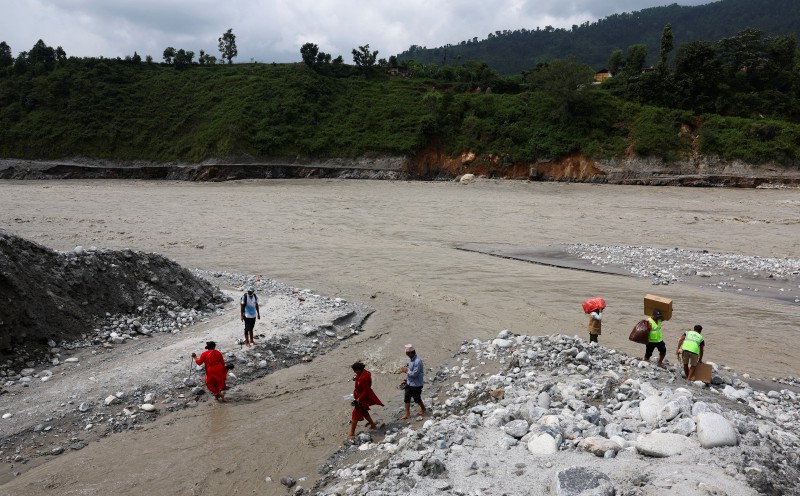
Relentless natural disasters test Indonesia’s fiscal priorities
Indonesia can always scramble cash after tragedy strikes, but with national buffers tied up and disasters arriving back-to-back, running preparedness on a shoestring is a gamble we can no longer afford.

Indonesia finds itself grappling with a relentless onslaught of natural disasters, stretching its financial and institutional resources to the limit. In recent weeks, the country has faced a series of catastrophic events that have left a trail of destruction and hardship in their wake.
The recent earthquake in Flores has left behind a significant humanitarian crisis and a mammoth task of reconstruction, while several volcanoes, including Anak Krakatau, Sinabung, and Semeru, have erupted with renewed vigor. Meanwhile, an intense El Niño has exacerbated the situation by triggering droughts and peatland fires across Sumatra and Kalimantan, causing rivers to choke, supply chains to falter, air quality to deteriorate, and crop yields to plummet.
What sets this round of disasters apart is the sheer compression of events, with each catastrophe arriving before communities have had the chance to rebuild from the previous one. This relentless cycle of disaster is challenging Indonesia's fiscal and institutional resilience, forcing the nation to confront uncomfortable questions about its preparedness.
The real unknown in this scenario is not whether disasters will strike, but rather where, when, and how severe they will be. From floods and fires to droughts, quakes, landslides, and eruptions, Indonesia's archipelago is constantly at risk, and these events will inevitably take a significant toll on the economy. Disaster risk is not a sudden bolt from the blue; it is a permanent line item of national exposure, and the country's fiscal architecture must acknowledge this reality.
In 2018, the Disaster Management Research Unit at the Centre for Strategic and International Studies (DMRU-CSIS) highlighted this vulnerability in its study, "Building a Disaster-Risk Financing System in Indonesia." The research revealed that disaster funding had become overly reliant on ad-hoc appropriations from the annual state budget.
Contingency reserves were far too small to cover the substantial economic damage caused by major shocks, leading to every major disaster diverting funds away from essential development goals.
The researchers emphasized the need to create financing mechanisms that would allow both national and regional authorities to access funds quickly and flexibly when disaster strikes. The Jakarta Post invites readers to share their experiences, suggestions, and any challenges they have encountered with disaster preparedness and response.
Written by urgent.news from The Jakarta Post's reporting — not their text. Machine-written — may contain errors; check the original before relying on it.