Quantum Batteries Could Transform How Fast Phones and Electric Vehicles Charge
Australian researchers have built a proof-of-concept quantum battery that charges, stores and releases energy, demonstrating a property that could eventually enable much faster charging for electronic devices and electric vehicles. The prototype does not have enough capacity to power a mobile phone or an electric car. Its significance lies elsewhere: researchers found that the battery’s […]
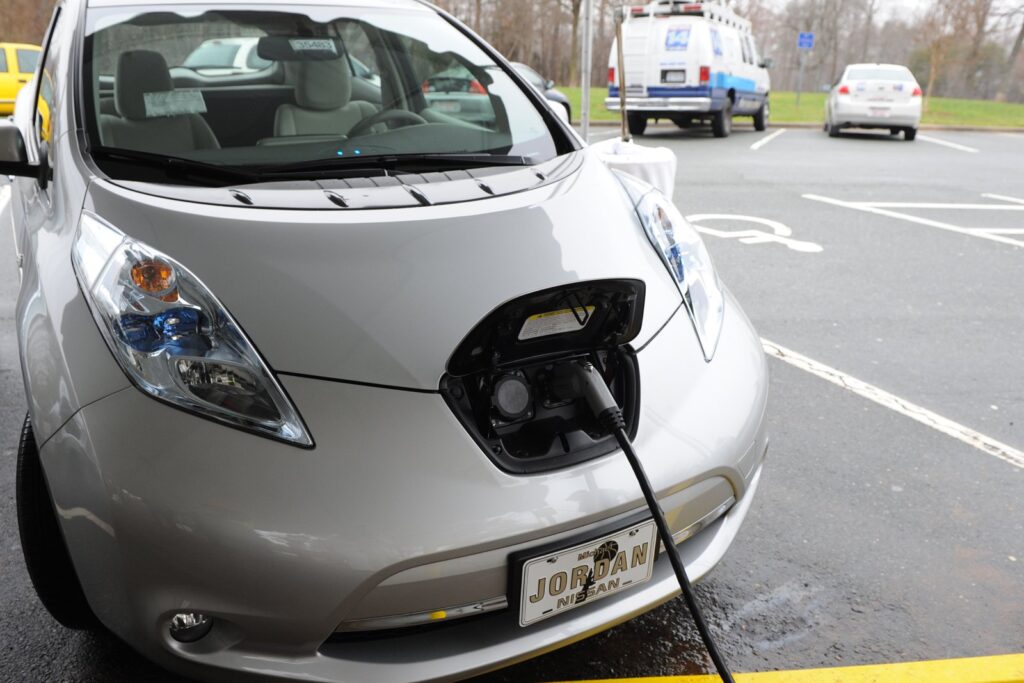
Conventional electric vehicle (EV) refueling takes far longer than the near-instantaneous charging that researchers hope quantum batteries could eventually provide. Australian scientists have constructed a proof-of-concept quantum battery that demonstrates the ability to charge, store, and discharge energy, indicating potential for faster charging of electronic devices and EVs.
However, the prototype is not yet capable of powering a mobile phone or an electric car. The key finding is that the battery's charging power increases more rapidly than its size, suggesting that a larger quantum battery could charge more quickly. The research, led by CSIRO, Australia's national science agency, was conducted in collaboration with researchers from RMIT University and the University of Melbourne.
The study, published in Light: Science & Applications in March 2026, reveals that quantum batteries operate through quantum mechanical behavior, enabling collective interactions among components. This unique scaling behavior, termed superextensivity, allows the battery to charge faster as its capacity increases. The Australian team created a multilayer organic microcavity and charged it wirelessly using a laser.
The charging process occurred on an extremely short timescale, while the stored energy remained accessible for much longer, last for six orders of magnitude longer than the charging time. While the current prototype is too small to serve practical purposes, this breakthrough moves quantum batteries beyond theoretical concepts and demonstrates a working energy-storage system.
However, significant challenges remain, including improving storage time, scaling energy capacity, and manufacturing large numbers of quantum components while maintaining their collective behavior.
Written by urgent.news from Colombia One's reporting — not their text. Machine-written — may contain errors; check the original before relying on it.