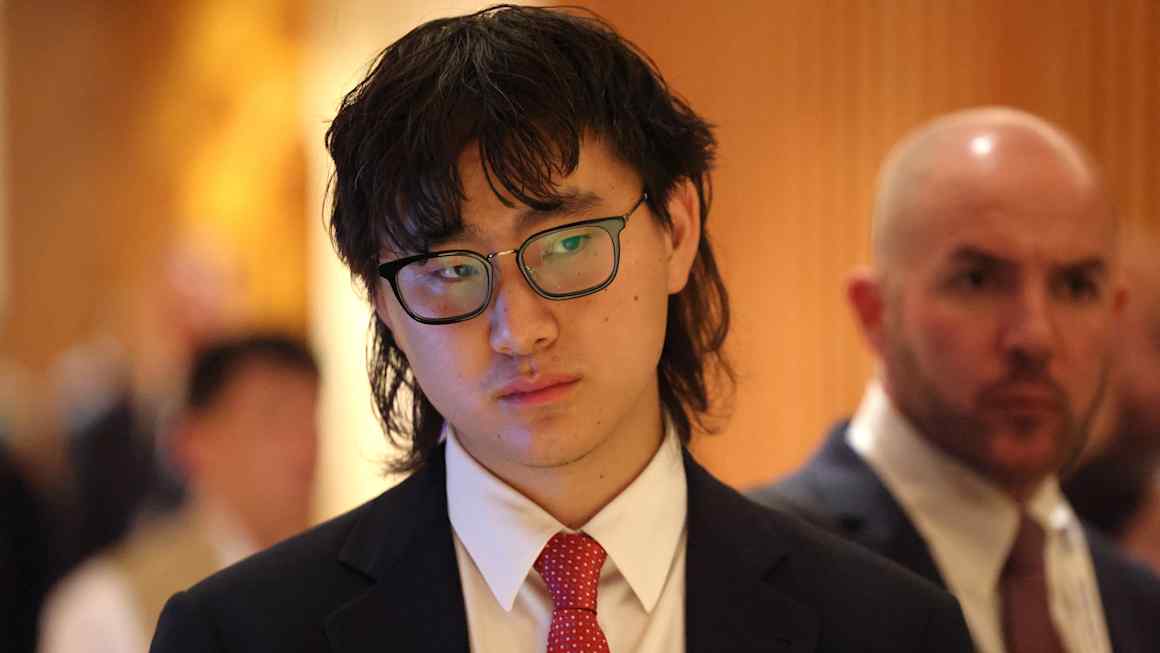
OpenAI says, while unlikely, it "cannot rule out that de-identified data derived" from Buckmaster's and Alpöge's use of its products helped improve its models (OpenAI)
Read the paper Link to Lean formalized proof — We're sharing a solution to the Navier-Stokes existence …
OpenAI has refuted allegations that its researchers or models directly observed prompts from mathematicians Tristan Buckmaster or Levent Alpöge, stating it invested millions in computational resources following news of Anthropic's breakthrough. The dispute centers around the Navier-Stokes equation, a challenging problem within the prestigious Clay Millennium Prize challenges.
OpenAI's Sebastien Bubeck disclosed that the company initiated the development of a new AI model with heightened mathematical capabilities on August 28. Bubeck reported that the team deployed over 1,000 agents to work on the problem for over 50 hours, culminating in a verified solution. OpenAI's Mark Chen acknowledged that the endeavor necessitated substantially more computational power than their previous mathematical problem-solving efforts, costing "in the millions of dollars."
Concurrently, Buckmaster and Alpöge published documents asserting significant advancements in the Navier-Stokes domain, employing various AI models, such as Claude and Codex. Buckmaster later claimed that OpenAI gained knowledge of their work and initiated substantial resource allocation before their solution was publicly revealed.
OpenAI's executives denied accessing Buckmaster and Alpöge's Codex logs, affirming that neither researchers nor agents encountered the pair's work before its public release. The company expressed admiration for Alpöge and Buckmaster's prior contributions but emphasized that their solution differed significantly from OpenAI's approach.
This ongoing controversy over authorship in the realm of mathematical problem-solving could potentially resurface as AI becomes increasingly involved in proof discovery.
Written by urgent.news from Techmeme's reporting — not their text. Machine-written — may contain errors; check the original before relying on it.
This story
This is one outlet's version. Read the fullest account.
- OpenAI's Sébastien Bubeck says he never asked for removal of Levent Alpöge from authorship of the work Alpöge and Tristan Buckmaster did on Navier-Stokes (Sebastien Bubeck/@sebastienbubeck) x.com
- Anthropic says it disrupted several potential plots this year by scientists using its models for research that could have helped develop biological weapons (Dustin Volz/New York Times) nytimes.com
- Mathematician Tristan Buckmaster alleges OpenAI learned of his work with Anthropic's Levent Alpöge on Navier-Stokes and used an internal model to solve it (Joseph Howlett/Scientific American) scientificamerican.com
- OpenAI denies that its researchers or models saw Buckmaster or Alpöge's prompts, says it spent millions in compute after hearing Anthropic had a breakthrough (Wired) wired.com
- ‘Gambling with our lives’: Why a 27-year-old researcher quit Anthropic and OpenAI indianexpress.com