NEET-UG protests: After Supreme Court quashes FIRs, petitioner says police, government yet to explain their conduct
Alleges conduct of Delhi police and political executive not only “contrary to constitutional guarantees but also manifestly criminal in character”
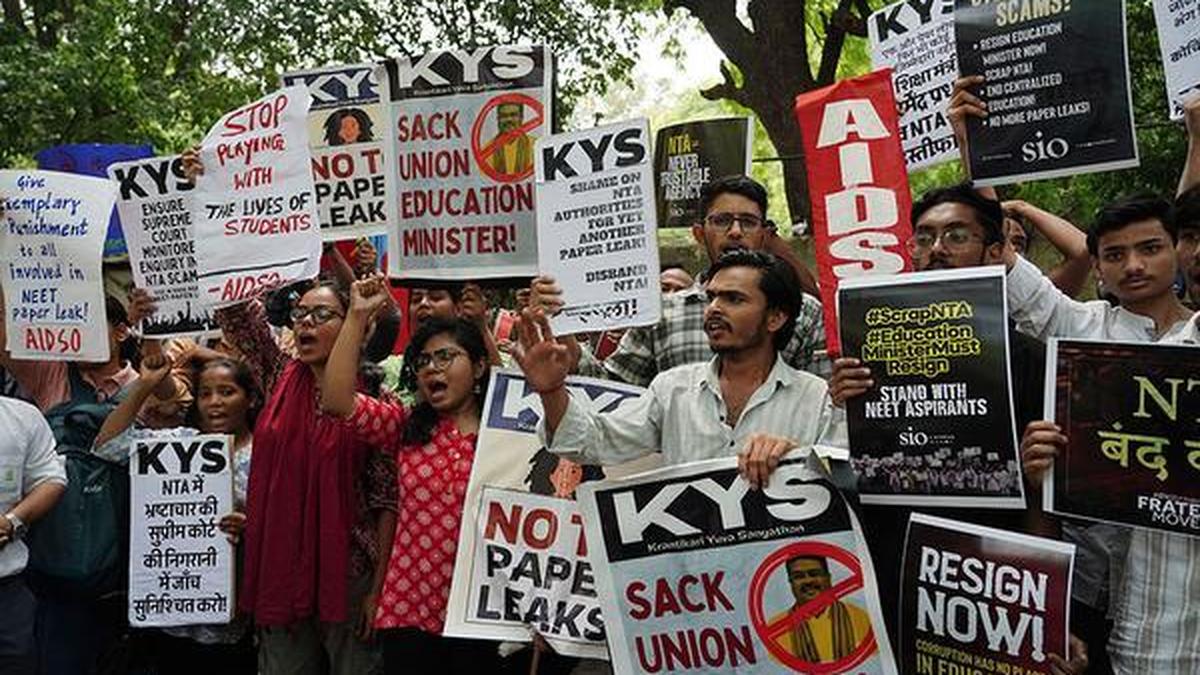
In a move following the Supreme Court's dismissal of FIRs against NEET-UG protesters, the main petitioner in the case listed multiple grievances on Tuesday (September 8, 2026) accusing the Delhi police and political leadership of actions that were both unconstitutional and criminal. Advocate-petitioner Shailendra Mani Tripathi detailed the July 20 crackdown, which saw the deployment of paramilitary forces and the infiltration of "chaotic elements" with sticks and clubs to provoke unrest.
He also criticized the use of lathis, pellet guns, tear gas, and water cannons to suppress a peaceful demonstration against flawed education policies. Tripathi called for accountability at the highest levels of the police and political executive, particularly the Union Ministry of Home Affairs, whose directives governed the deployment.
The Supreme Court is set to form a High-Powered Enquiry Committee to review the July 20 violence, including police overreach, but Tripathi emphasized that the broader issue of whether the government can utilize prohibitory powers and police force to restrict constitutional rights to protest remains unresolved. He argued that the right to peaceful assembly, originating from the Constitution, should not be a privilege granted by the police.
Tripathi urged the court to establish clear judicial safeguards to regulate police power over peaceful assemblies, stating that the "law and order" excuse cannot be used to justify every restriction imposed by the Executive. The petition contested the police's claims, such as the use of spotters as a global practice without statutory justification and the deployment of civilians without name tags.
The advocate-petitioner also questioned the lack of evidence supporting the need for a large-scale deployment of Central Armed Police Forces and the opaque infiltration of private commercial entities into policing functions. Additionally, he highlighted discrepancies in the police's identification of 2,873 individuals with criminal antecedents, noting that a media investigation found 25 out of 205 major cases involved individuals already in prison, weakening the accuracy of the remaining identifications and threatening the civil liberties of innocent students.
Written by urgent.news from The Hindu's reporting — not their text. Machine-written — may contain errors; check the original before relying on it.