Nearly 4 Million Coins Show How Rome Built an Economy Across Its Conquered Territories
Learn how ancient Roman coins helped researchers create a new map of the Roman Republic’s economy using digital archaeology.
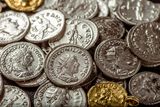
Nearly four million ancient Roman coins, spanning from 155 B.C.E. to 2 C.E., have provided researchers with a unique insight into the economic development of the Roman Republic. By combining archaeology, economics, and data science, researchers were able to trace the movement of these coins and reveal how they helped shape an expansive economy.
Each coin holds three crucial pieces of information: where it was minted, when it was produced, and where it was discovered millennia later. When combined, these records reveal important patterns in economic exchanges, the integration between different regions, and the evolution of the Roman economy.
Researchers found that the distribution of coins was not random, but clustered around Roman roads, ports, cities, and trade routes. This suggests that the spread of Roman currency was facilitated by existing transportation and trade networks. While soldiers played an early role in introducing coins, their influence diminished once territories were permanently integrated into the Roman system.
The study reveals that as the Republic expanded, coins began to appear farther and farther from their original minting locations. By statistical models, this indicates a progressive reduction in the effect of distance on coin circulation, signifying growing economic connections between regions.
In conclusion, the Roman Republic's economic success rested not only on conquest, but also on the networks and institutions established in the conquered territories. These coins provide a tangible record of this economic transformation, demonstrating how Rome's durability was built upon a foundation of interconnected regions and a robust monetary system.
Written by urgent.news from Discover Magazine's reporting — not their text. Machine-written — may contain errors; check the original before relying on it.