Insight Innovation: Die riskante Wette auf den ersten Impfstoff gegen Krebs
Hautkrebs könnte bald mit demselben Prinzip bekämpft werden, mit dem schon das Coronavirus gebändigt wurde. Moderna und Merck melden Erfolge mit einem mRNA-Impfstoff. Doch es gibt Hürden.
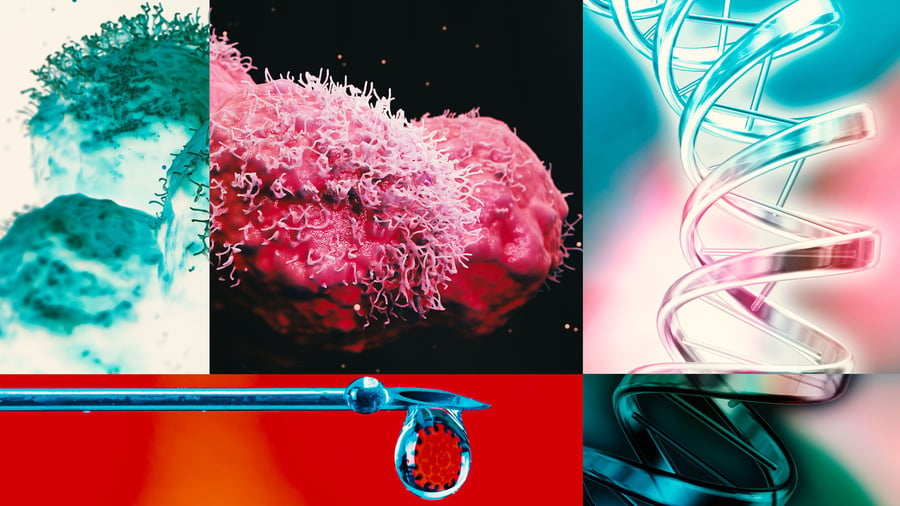
Moderna, the biotech company behind the COVID-19 vaccine, is now taking on the risk of developing the first cancer vaccine. Five years after announcing strong test data for their COVID-19 vaccine, Moderna is now focusing on cancer. This is a high-risk and expensive venture for the US biotech giant. While skeptics looked on, Moderna recently announced positive test results for an innovative skin cancer vaccine developed with pharmaceutical giant Merck & Co. The drug, based on messenger RNA (mRNA) technology, is the first of its kind to show promise in a large, regulatory study against cancer.
The drug could hit the market by 2027. Analysts believe it could generate over a billion dollars in annual revenue by 2030 and more than three billion dollars by 2035. The share price of Moderna surged after the announcement, marking it as the biggest single-day gain of any US stock in the current century. However, the stock remains far from its pandemic peak.
The global market for mRNA cancer vaccines is expected to grow to around $7.3 billion annually by 2030, according to a report from Strategic Market Research. Other pharmaceutical companies are also exploring the potential of mRNA cancer vaccines, with Biontech and Hangzhou Neoantigen Therapeutics making significant progress. Biontech's approach is currently being tested in phase 2 trials for pancreatic cancer.
The success of Moderna's latest study could provide additional capital for cancer research, according to Chris Meier, a senior partner at Boston Consulting Group. The new mRNA technology works by mobilizing the patient's own immune system to fight disease. When injected, the mRNA provides a blueprint for the production of specific proteins, which the immune system then reacts to, attacking cancer cells.
In the case of cancer, the immune system often fails to recognize mutations as a threat. The personalized vaccine, tailored to the patient's specific tumor mutations, aims to change this. The study results showed that when the personalized vaccine is combined with Merck's cancer drug Keytruda, it reduces the risk of new melanomas, the deadliest form of skin cancer.
Side effects were manageable. Moderna's CEO, Stéphane Bancel, called it "a new chapter in the book of medicine," but acknowledged the high costs and long road to profitability.
Written by urgent.news from Handelsblatt's reporting — not their text. Machine-written — may contain errors; check the original before relying on it.