How Japan is digging in to deter – and withstand – a conflict over Taiwan
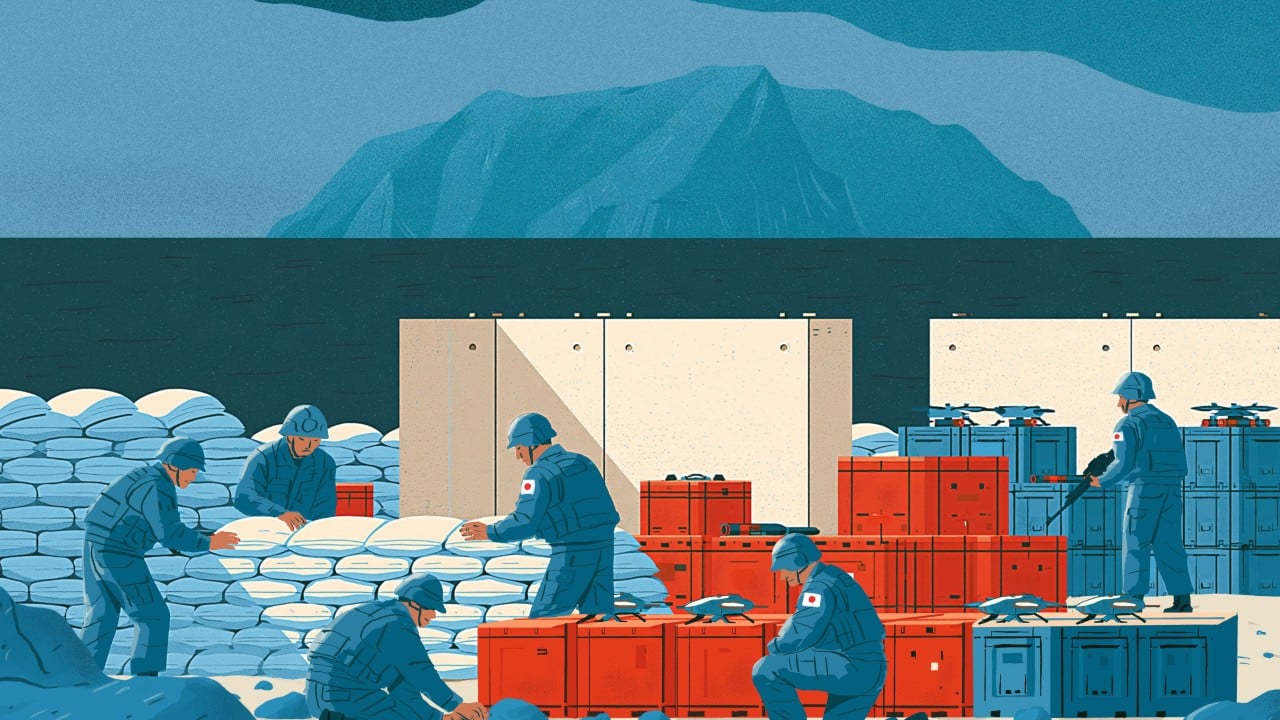
The risk of a conflict over Taiwan is shaping Japanese defence planning, with Tokyo shoring up security at home and abroad for a potentially prolonged fight. But there are economic, demographic and political constraints on how far its military transformation can go. In the second of a three-part series, Gabriel Dominguez examines how Tokyo is building military resilience within its territory.…
Japan is intensifying its defense preparations against a potential conflict over Taiwan, with the country bolstering its security both domestically and internationally. However, economic, demographic, and political limitations constrain the extent of its military transformation. In this second part of a three-part series, Gabriel Dominguez explores how Japan is enhancing its military resilience within its borders.
A significant development is Japan's recent acquisition of a former Nippon Steel site to construct a large-scale defense hub in Kure, Hiroshima prefecture. This site, which already houses a major naval base, aims to integrate military facilities, logistics, and defense production, centralizing several functions necessary to sustain forces during a prolonged conflict.
The emphasis on endurance in Japan's defense planning reflects a grim realization that preparing for a Taiwan crisis now entails safeguarding Japan itself. Prime Minister Sanae Takaichi explicitly acknowledged this concern last November, stating that a Taiwan contingency involving warships and the use of force could pose a "survival-threatening situation" for Japan, potentially prompting the Self-Defence Forces (SDF) to act, even without direct attack on Japan.
The geopolitical implications of this conflict extend far beyond the 110km separating Taiwan from Japan's westernmost territory. Taiwan lies along crucial Japanese sea lines of communication and is situated at the heart of the first island chain, near Japan's southwestern islands and key US military installations. A Chinese victory could bolster the People's Liberation Army's (PLA) operational capabilities around Japan and its access to the western Pacific.
Conversely, the immediate concern revolves around the consequences of a conflict over Taiwan. Beijing regards Taiwan as a breakaway province that must be re-unified by force if necessary. While most countries, including the US and Japan, do not recognize Taiwan as a sovereign state, they oppose any forcible alteration to the existing cross-strait status quo. US forces stationed in Japan could potentially become central targets in a Taiwan conflict, placing Japan itself in the line of fire.
This shift in Japan's military thinking represents a significant departure from its post-war security policy, which has been anchored in constitutional pacifism and a strictly defensive posture. This pivot is evident in the upcoming revisions to Japan's National Security Strategy, National Defence Strategy, and Defence Buildup Programme, all of which have been accelerated to this year, only four years after their initial adoption.
The swift pace of Japan's defense transformation underscores the urgency of preparing for protracted conflict across multiple domains.
The militarization of Japan's defense strategy is also reflected in the steady rise in military spending. The Ministry of Defense is requesting 8.9 trillion yen ($55.7 billion) for fiscal 2027, making it another record defense budget. This allocation highlights the growing importance of "sustained response capabilities" alongside addressing "new ways of warfare" and strengthening the foundations of defense capability, including defense production and technology.
However, Japan's strategic review is not solely focused on bolstering its defense capabilities to protect its own territory. While the government aims to enhance Japan's ability to defend its own territory, analysts argue that the actual mission of the Self-Defence Forces (SDF) is to prepare for a potential armed attack on Japan.
This expectation stems from the vulnerability of Japanese bases, ports, and radar sites to large-scale missile attacks in the early stages of a conflict, as well as the PLA's potential to disrupt US and Japanese forces and bases across the region. The increased resilience of these sites would make it increasingly challenging for Beijing to assume that initiating an opening barrage would swiftly suppress Japan's capacity to fight or support US operations.
To counter these challenges, Japan is prioritizing weapons and systems that can withstand prolonged conflict, disperse, and impose costs despite the PLA's numerical advantage. Uncrewed systems are also being considered as a means to offset Japan's manpower constraints and field larger forces with greater affordability. The remote southwestern Nansei Islands play a central role in this strategic calculus, as they could become direct targets in the initial phase of a conflict with China.
Written by urgent.news from Reuters Business via SCMP's reporting — not their text. Machine-written — may contain errors; check the original before relying on it.
This story
This is one outlet's version. Read the fullest account.