Former head of Keizai Doyukai denounces Japan’s notion of being ‘presumed guilty’
The former Keizai Doyukai chair has criticized Japan's social trend of labeling people suspected of wrongdoing as guilty before the facts are known.
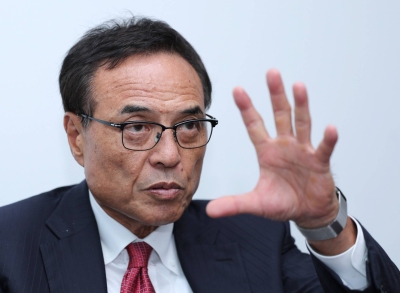
Takeshi Niinami, a former leader of Japan's Keizai Doyukai and the beverage company Suntory Holdings, has spoken out against Japan's tendency to treat individuals suspected of wrongdoing as guilty before evidence is presented. Niinami resigned from both positions in September following allegations that he brought illegal supplements into the country.
Prosecutors ultimately chose not to prosecute him in May. Speaking to the media, Niinami insisted that the accusations against him were unfounded. Reflecting on the negative public reaction to his case, he expressed worry that a climate in Japan of presuming people guilty without full knowledge of the facts could discourage foreign talent from coming to work in the country.
"A society where people are presumed guilty, even without knowing the facts, won't succeed globally," Niinami stated. Niinami acknowledged that the entire investigation process, involving the Fukuoka Prefectural Police and other agencies, "was careful and detailed," and that those questioning him during the investigation were "polite."
Regarding his future, Niinami said he would begin teaching crisis leadership to students at Stanford University in the United States this month as a visiting scholar. He ruled out returning to an executive role in a business group, instead seeing himself as more suited to assisting the next generation of corporate leaders, such as chairpersons or non-executive directors.
Niinami also commented on the government's strategy under Prime Minister Sanae Takaichi, which emphasizes artificial intelligence, semiconductors, and quantum technologies. He argued that an institution should be established to oversee the plan-do-check-act (PDCA) cycle, with private sector participation playing a key role in these initiatives.
Written by urgent.news from Japan Times's reporting — not their text. Machine-written — may contain errors; check the original before relying on it.