Folgen für die Fruchtbarkeit?: Paracetamol in Schwangerschaft? Mögliche Folgen für Töchter
Paracetamol gilt in der Schwangerschaft als Mittel der Wahl gegen Schmerzen und Fieber. Eine Studie deutet nun darauf hin, dass das Medikament die Fortpflanzungsorgane von Töchtern beeinflussen kann.
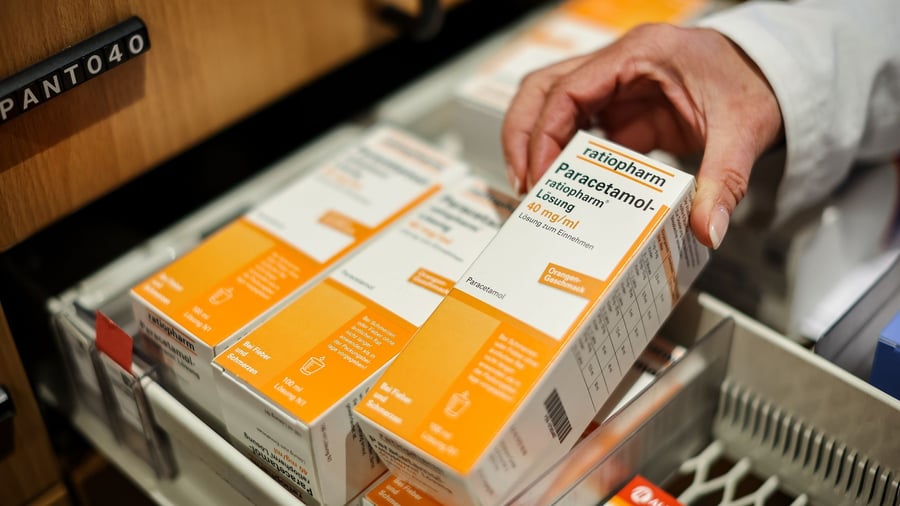
Research suggests that taking paracetamol during pregnancy could have potential implications for a daughter's fertility and the timing of menopause. Girls whose mothers consumed paracetamol during pregnancy had smaller ovaries, fewer follicles, smaller uteri, and lower levels of reproductive hormones at three months of age. These findings align with animal studies indicating limited fertility and shortened reproductive lifespan in female offspring exposed to paracetamol during pregnancy.
However, this study is an observational one, which cannot establish causality. The impact on fertility or menopause onset remains unclear and would need to be determined through longer-term follow-up. Paracetamol is the most commonly used pain reliever during pregnancy. The researchers analyzed data from 685 women in the first trimester, documenting their paracetamol use and analyzing urine samples.
After delivery, they examined 302 daughters at around 106 days old. The timing of paracetamol use differed in significance: early use before the 17th week was linked to smaller ovarian and uterine volumes in the daughters, while use after the 17th week was associated with fewer follicles, structures containing immature eggs. In a subgroup of girls exclusively exposed early, AMH hormone levels, a marker of egg cell reserve, were also lower.
Specifically, early use resulted in about a 40% reduction in ovarian volume and 13% less uterine volume in the daughters. The study also showed a dose-response effect, meaning stronger effects with higher paracetamol use. The women used relatively low doses of paracetamol, not exceeding the recommended daily maximum of 4,000 milligrams.
Most women reported headaches or migraines as the reason for use, followed by other muscle-related pain. Additional data confirmed changes in the daughters' uteri during puberty and a smaller ovarian volume in adolescence, indicating these differences may persist beyond early childhood. The authors emphasize that mothers using paracetamol during pregnancy should not be alarmed, noting their study examined population-level associations and cannot predict outcomes for individual women or children.
Many women who used paracetamol had daughters whose ovaries were similar to those of daughters whose mothers did not use the drug. Wolfgang Paulus, a reproduction toxicology expert from Ulm University Hospital, points out that the early-life differences were only marginally significant and may lack clinical relevance, emphasizing the need for longer-term follow-up studies.
US President Donald Trump warned pregnant women against taking paracetamol (brand name Tylenol) in September last year, falsely linking it to autism in children. This claim was vehemently rejected by experts, who reiterated that multiple studies confirmed no increased risk of autism, ADHD, or intellectual disabilities from paracetamol exposure during pregnancy.
Paracetamol remains the most frequently used pain reliever during pregnancy worldwide, recommended as the first choice for treating mild to moderate pain and fever. The German Federal Ministry of Health advises pregnant women to consult a doctor for prolonged use.
Written by urgent.news from Handelsblatt's reporting — not their text. Machine-written — may contain errors; check the original before relying on it.