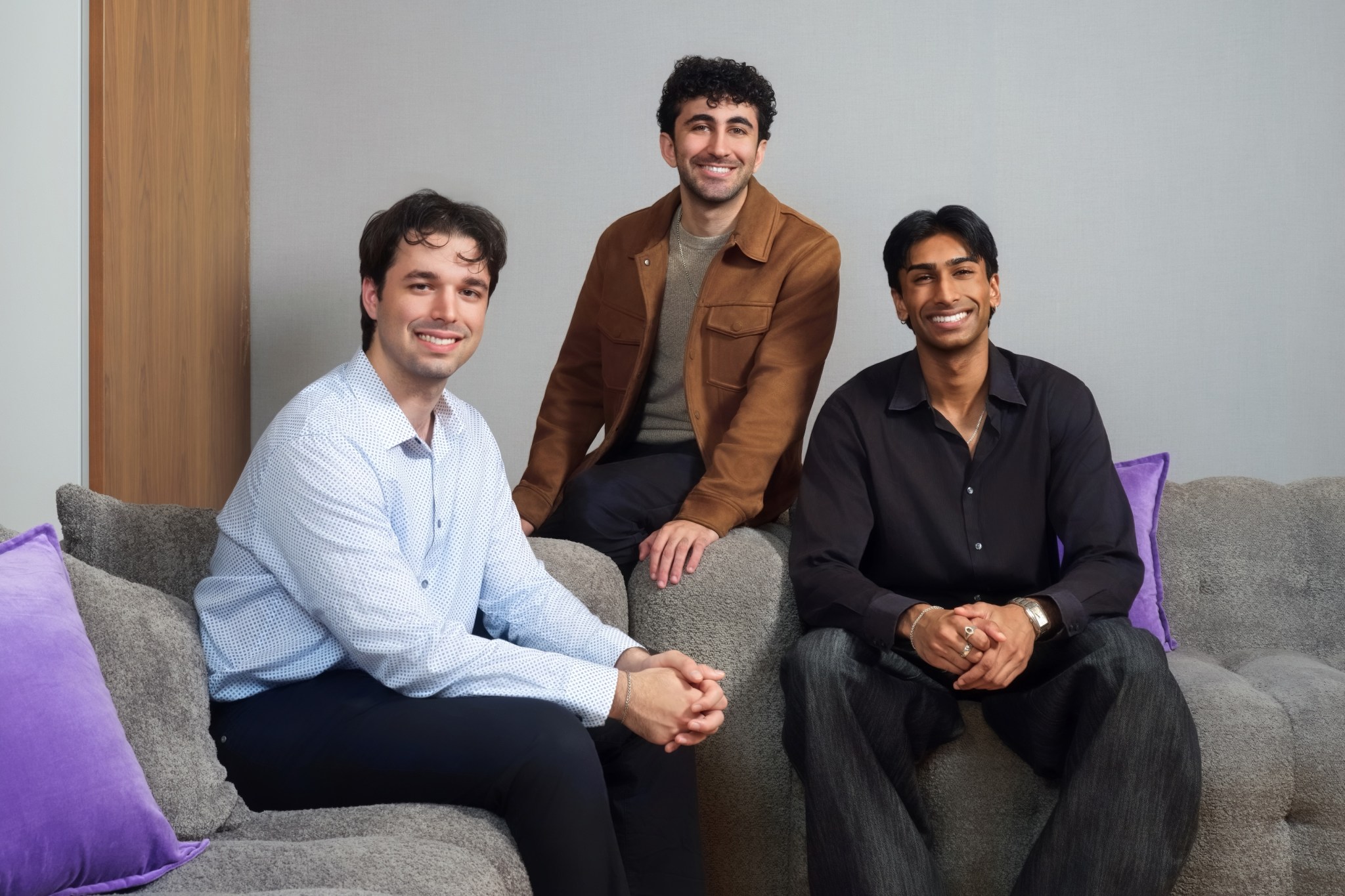
Fields medalist Jacob Tsimerman, set to join OpenAI later this month, launches the Mathematical AI Safety Institute to apply higher math to AI safety problems (Siobhan Roberts/New York Times)
Jacob Tsimerman, a recent recipient of the Fields Medal, believes that higher mathematics can help curb the dangers of runaway artificial intelligence.
OpenAI has claimed a potentially groundbreaking achievement by its AI in solving the Navier–Stokes Millennium Prize problem, a complex mathematical puzzle that has long eluded mathematicians. However, this historic breakthrough is now under scrutiny due to questions regarding unpublished research by outside mathematicians. The controversy raises important questions about the responsibility of AI-assisted scientific research and the trustworthiness of utilizing advanced tools for novel discoveries.
According to OpenAI, an internal model surpassing GPT-6 Astra was responsible for generating a proof that three-dimensional Navier–Stokes equations can develop a singularity within finite time. The company initiated this project on September 1, following rumors that two Millennium Prize problems had been solved. Roughly 10,000 AI agents collaborated on the Navier–Stokes endeavor, achieving the result within approximately 88 hours.
OpenAI executives disclosed that they invested significant computational resources, costing millions of dollars to solve the problem.
However, this development has sparked controversy as NYU mathematician Tristan Buckmaster and Anthropic researcher Levent Alpöge were concurrently working on fluid-dynamics research related to the Navier–Stokes equations. Buckmaster has publicly raised concerns about OpenAI's potential reliance on their work and questioned whether private Codex materials played a role. OpenAI maintains that neither their researchers nor AI agents had access to Buckmaster and Alpöge's unpublished research before it was made public.
OpenAI's chief research officer, Mark Chen, addressed the allegations, asserting, "No people or AI systems searched through user data to solve this problem." He added, "I'm a little disappointed with the allegations." OpenAI has decided not to claim the $1 million Millennium Prize, instead emphasizing the rapid advancement of their frontier models. This news story is breaking, and further updates will be provided as more information becomes available.
Written by urgent.news from Axios's reporting — not their text. Machine-written — may contain errors; check the original before relying on it.
This story
This is one outlet's version. Read the fullest account.