Fidelity Bank champions value chain approach to unlock Ghana’s agricultural potential
Fidelity Bank Ghana has called for a fundamental shift in how Ghana finances and structures its agricultural sector.
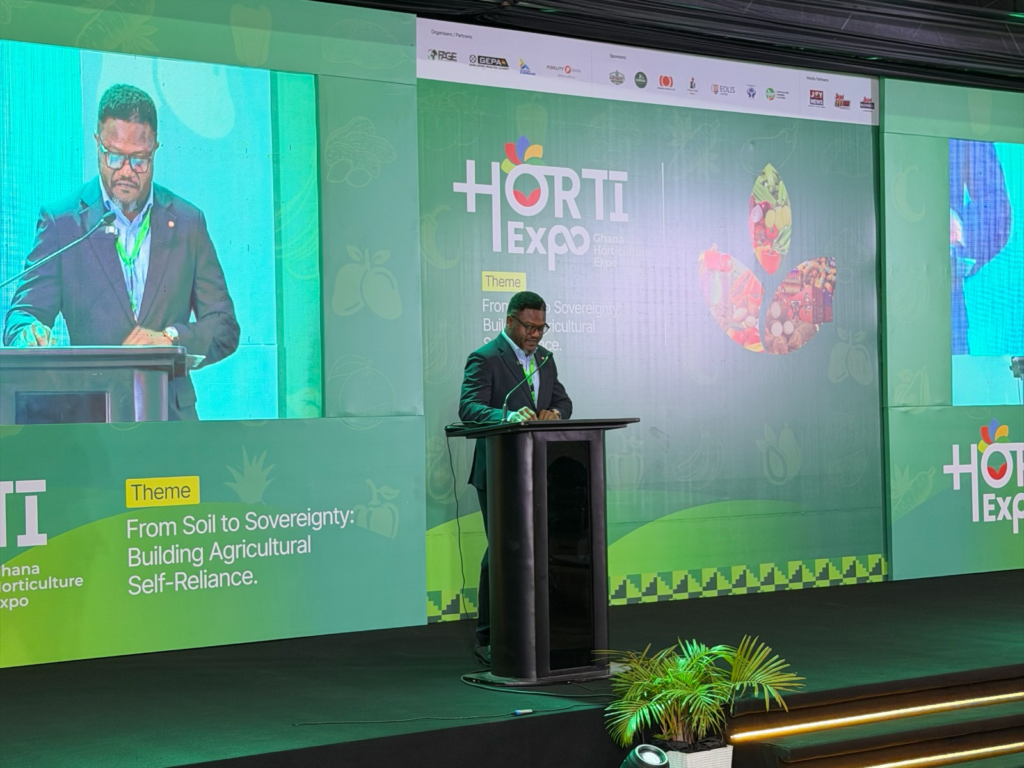
Fidelity Bank Ghana has urged a fundamental transformation in financing and structuring Ghana's agricultural sector. The bank argues that the key to agricultural self-sufficiency lies in capturing more value from existing crops, rather than simply increasing production. This message was delivered at the Ghana Horticulture Expo 2026, where Fidelity Bank actively participated as a long-time partner.
In addressing the challenge, John-Paul Taabavi, Divisional Director for Corporate and Institutional Banking, used a simple comparison: both Ghana's non-traditional agricultural exports and cocoa paste, produced from the same soil, generated significant revenue in 2025. However, the substantial difference was found in the value generated after harvest.
Taabavi emphasized that agricultural sovereignty does not mean producing everything domestically, but rather controlling a greater share of the value created by Ghanaian agriculture, thus retaining more income within the economy and fostering more Ghanaian businesses in the wealth generated by Ghanaian agriculture.
The bank highlighted that demand for Ghanaian products is not the constraint, with non-traditional exports reaching approximately US$5 billion in 2025 and products now selling in 152 countries. The main challenge lies between the farmer and the market, encompassing areas like cold storage, aggregation, processing, packaging, logistics, quality standards, certification, reliable energy, and access to appropriate finance.
Taabavi also questioned conventional views on agricultural risk, proposing financing structured around production cycles, verified transactions, credible off-take agreements, and warehouse receipts instead of traditional collateral alone. Fidelity Bank, through initiatives like the Fidelity Export Club, has supported over 400 exporters and farmers, and disbursed more than GHS 160 million to FAGE members. By mid-2026, members within the bank's SME portfolio had generated US$40 million in foreign exchange inflows.
Alex Amponsah-Agyei, Director of SME Banking, detailed the bank's efforts to de-risk agricultural lending through partnerships with various institutions, making it possible to lend at 7% under the Mastercard Foundation BRIDGE-in-Agriculture initiative. He stressed the importance of considering the entire value chain, from funding customers to ensuring reliable logistics and credit facilities.
James Orraca-Tetteh, Head of Commercial Banking, echoed this sentiment, emphasizing the need for innovative, creative approaches in partnership with the Fidelity Young Entrepreneurs Fund to provide concessionary financing and structured capacity building for youth and women in agribusiness. Fidelity Bank, as a long-standing partner of the Ghana Horticulture Expo, aims to continue its role in building value chains, creating jobs, expanding exports, and unlocking shared prosperity.
Written by urgent.news from Joy Business's reporting — not their text. Machine-written — may contain errors; check the original before relying on it.