Chinese scientists propose turning abandoned coal mines into underground farms
Chinese scientists have proposed developing “underground agriculture” in abandoned coal mine tunnels as part of a push to create a green, circular economy for the country’s massive mining industry. A team of researchers from Shanxi, a major coal-producing province in central China, described the idea late last month in the journal China Mining Magazine. An estimated 15,000 abandoned mines in…
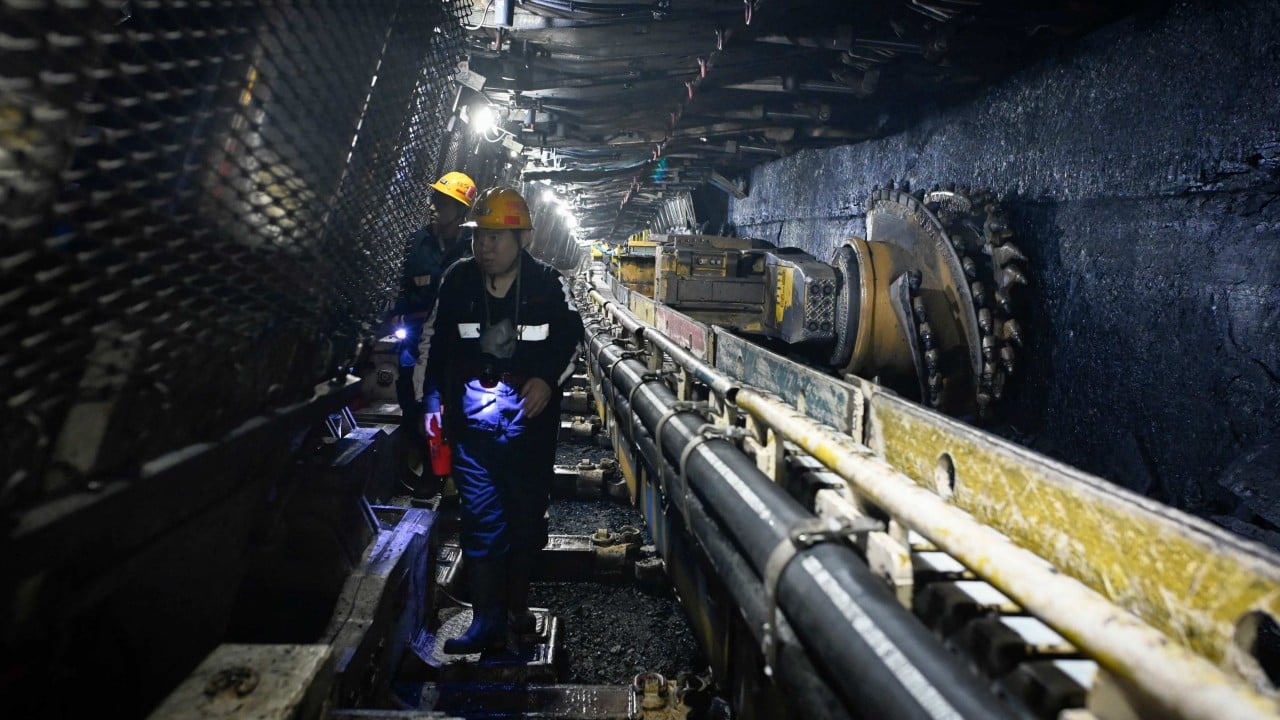
Chinese scientists have proposed transforming abandoned coal mines into underground farms to promote a green, circular economy for the nation's mining industry. The idea, presented in the journal China Mining Magazine by researchers from Shanxi Province, a leading coal-producing region, relies on the stability and sustainability of subterranean spaces.
By repurposing existing tunnels, power grids, ventilation systems, and groundwater, these former mines could serve as insulated farming environments. Although lacking natural sunlight, the ample space and robust power infrastructure would enable the installation of artificial lighting. Subterranean temperatures remain steady, unaffected by seasonal changes, making geothermal energy a viable heat source.
Addressing polluted mine water, the researchers suggest treating and utilizing it for irrigation, converting it into a resource rather than a hazard. The primary objective is not large-scale crop production, but rather establishing an "agricultural engineering experimental platform" to study environmental factors deep underground.
This research could contribute to deep-space exploration, providing a blueprint for stable food production and ecosystem maintenance on extraterrestrial environments. China has already decommissioned around 12,000 abandoned mines between 2010 and 2019, with an estimated 7.2 billion cubic meters of usable underground space available by 2030.
Parallel experiments are underway in subterranean facilities in China and Britain. In Hubei Province, researchers are cultivating butterhead lettuce in an abandoned copper mine using artificial lighting and low-carbon energy. In Britain, a team is operating the world's deepest underground farm, more than 1,000 meters below the surface, within a science facility at a working polyhalite mine.
The concept has gained international support, with Saffa Riffat advocating for its potential to meet global food demand. The Chinese government has also shown interest in this innovative approach.
Written by urgent.news from Reuters Business via SCMP's reporting — not their text. Machine-written — may contain errors; check the original before relying on it.