Bacteria from Trees in Medellin Could Help Clean the Air of that City
Air pollution in Medellin, Colombia’s second most important city, and in the Aburra Valley, where it is located, is a critical problem driven mainly by the geography of that area and emissions from vehicles and industry. But relief from this situation could be found in the trees of the city also known as the city […]
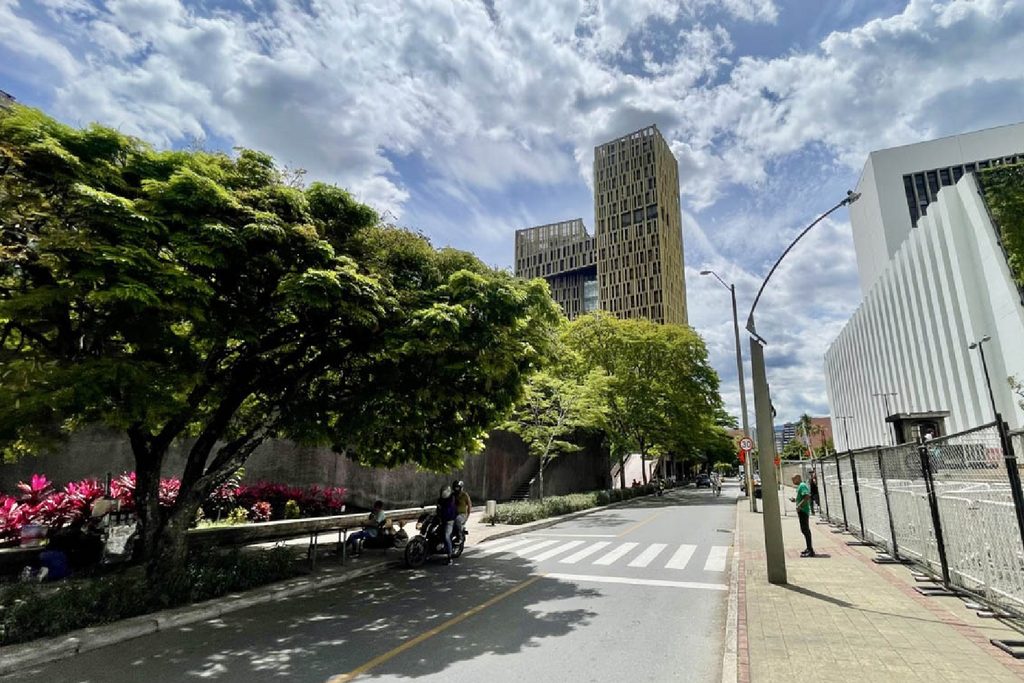
Scientists are investigating whether bacteria residing on trees in Medellin, Colombia's second-largest city, could assist in cleaning the city's air, which is plagued by pollution primarily caused by geography, vehicle emissions, and industrial activity. The study, "Evaluation of an environmental health strategy based on the plant-microorganism association for the removal of air pollutants," focuses on three tree species: mango (Mangifera indica), almond tree (Terminalia catappa), and a common vine (Thunbergia Grandiflora), chosen due to their resilience to pollution and prevalence in Medellin's parks and green corridors.
Mango trees, in particular, were found to be especially tolerant to pollution and capable of retaining heavy metals like aluminum and sulfur. Initial research indicated that Thunbergia, a purple-flowered vine commonly found in the city, might have better results. However, the study revealed that mango leaves contained numerous bacteria, some of which were discovered under a scanning electron microscope.
These bacteria form a biodiversity hotspot on the leaves' stomata, where a constant exchange of nutrients occurs between the plant and its microscopic guests.
The team collected leaf samples from five locations in Medellin at five different times between 2023 and 2025 and sequenced the DNA found in the leaves. Four bacterial genera, including Methylobacterium, Deinococcus, Hymenobacter, and Sphingomonas, were identified and found to contribute unique capabilities. Methylobacterium may play a role in degrading organic pollutants, including atmospheric ones, and can endure high doses of ultraviolet radiation.
Deinococcus can withstand gamma radiation levels ten times higher than human exposure. Sphingomonas has been previously reported for its role in bioremediating persistent pollutants, and Hymenobacter consistently appeared across all five samplings.
Medellin's topography, featuring a semi-confined valley, contributes to recurrent episodes of air pollution in the city, which faces recurrent episodes of air pollution due to its high population density. The most significant pollutant, PM2.5 particulate matter, reaches the pulmonary alveoli and poses severe health risks, particularly for children under five, older adults, pregnant women, and individuals with respiratory or heart diseases.
Researchers emphasize that turning the potential of these bacteria into a real urban decontamination strategy is a complex endeavor and cautions against becoming too optimistic.
Written by urgent.news from Colombia One's reporting — not their text. Machine-written — may contain errors; check the original before relying on it.