Urgent.News

What's breaking now, across thousands of outlets.

AI

AI can now help make entire films. What does that mean for Singapore’s film industry?

As Singapore creators experiment with AI in filmmaking, questions are emerging over what it could mean for human creativity, jobs and authorship.
AI can now help make entire films. What does that mean for Singapore’s film industry?

As Singaporean creators explore the use of AI in filmmaking, concerns have arisen regarding the impact on human creativity, job opportunities, and authorship. A two-and-a-half minute Chinese AI-generated microdrama, Master of Feng Shui, garnered 100 million views within 12 hours of its release, representing a growing trend of short-form dramas in China produced by artificial intelligence.

In the first quarter of 2025, approximately 128,000 microdramas were released in China, with over 95% being AI-generated, according to estimates from China’s Netcasting Services Association. The value of China’s microdrama industry reached 100 billion yuan (US$14.35 billion) in 2025, almost double the country’s annual box office revenue.

DataEye, a digital content marketing company, reported the total output value of China’s microdrama industry in 2025.

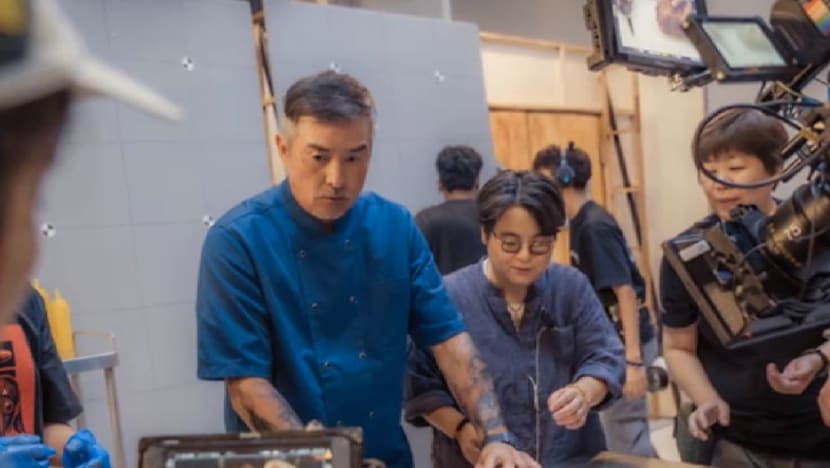
In Singapore, filmmakers are experimenting with AI to create longer productions while retaining human involvement. The country’s first AI-hybrid drama, Crooks, features actors performing on live-action sets, with AI assisting in building the surrounding environments. Over 50 crew members are being reskilled for the project, with more visual effects personnel needing to learn AI knowledge to adapt to the changing production landscape.

Boi Kwong, founder and executive producer of B-01 Films and the showrunner of Crooks, notes that AI has shifted more work towards the post-production process. More people traditionally involved in visual effects are now required to acquire AI skills and adapt their techniques to filmmaking.

AI can also make filmmaking more accessible and expedite the production process. FizzDragon, a Singapore-based AI filmmaking and digital creator platform, believes that AI lowers the entry barrier for many creators and enables faster, more adaptable production. However, this ease of use does not guarantee audience approval. Two AI-generated local films released during the National Day weekend received mixed reviews, with critics pointing out character issues, dialogue, and inaccuracies.

This highlights the gap between AI's capabilities and the audience's perception of authenticity. Assistant professor Debbie Ding, a digital arts specialist at Singapore University of Technology and Design, supports AI tools that make the creative process more accessible but cautions against reliance on tools that obscure the artist's skill and experience.

AI still struggles to replicate human performance, including emotional nuances and subtle reactions that make performances believable, as pointed out by actors' society chairperson Laura Kee.

Automating more aspects of filmmaking could potentially eliminate creative friction that often leads to interesting artistic outcomes. Pei Sze Chow, an assistant professor specializing in digital culture at Nanyang Technological University, emphasizes that collaboration between diverse creative perspectives often results in a more confident finished product.

AI authorship also raises questions about ownership and control. As creators generate more content, the lack of a collective-bargaining framework for AI protection in Singapore leaves performers vulnerable. The issue of who gets to shape the stories audiences see when AI is involved remains unclear, as the increasing dependence on AI for creative decisions may lead to aesthetic uniformity and diminish cultural richness.

Written by urgent.news from CNA - Singapore's reporting — not their text. Machine-written — may contain errors; check the original before relying on it.

This story

This is one outlet's version. Read the fullest account.

Read the original at channelnewsasia.com →

More in AI

More from Tuesday 8 September →