Africa Was Never Small: When the United Nations Finally Corrects the Map
By Kayode Ajulo There are moments when an apparently modest decision carries a meaning far greater than its immediate subject. The United Nations’ recent move towards a more equitable representation
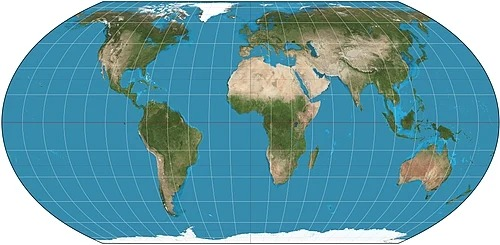
The United Nations has taken a significant step towards a more equitable representation of Africa on maps, a move that transcends mere technicalities of cartography. This decision carries profound implications for how Africa is perceived globally, moving beyond the often-repeated narrative of crisis and poverty. For centuries, Africa has been represented through maps shaped by external frameworks, a practice that distorts the continent's true size and diversity.
The infamous Mercator projection, while valuable for navigation, inflates the size of territories near the poles, creating a misleading impression of Africa’s relative landmass. This distortion is more than a mathematical error; it is a form of visual bias that shapes perceptions of Africa worldwide. The significance of the UN's intervention lies in its affirmation of accuracy in representation, recognizing that maps are not merely tools but powerful instruments that influence understanding and perception.
Africa's history and potential should not be overshadowed by the narrative of perpetual crisis. Instead, Africa stands as a continent rich in youthful energy, cultural diversity, natural resources, and demographic potential that will shape the 21st century. The focus must shift from Africa's portrayal to the realities of its inhabitants: the energy and innovation of its young people, the wealth of natural resources, and the untapped entrepreneurial potential.
The conversation must transition from geography to equality, ensuring that human dignity is not tied to geographical location, but rather to the opportunities and resources available to every individual. Egalitarianism is not about equal outcomes but equal dignity, meaning that a child in Ifira-Akoko, Nigeria, should have access to quality education and opportunities comparable to the best in the world.
Similarly, farmers should have access to finance, technology, and markets, entrepreneurs should not be hindered by political connections, and scientists should conduct research without leaving the continent in search of basic infrastructure. These demands for fairness are not about privilege but about justice. Both Africa and the international community share responsibilities.
The international community must move beyond viewing Africa solely as a recipient of assistance and instead recognize Africa as a partner in shaping the global order. Africa must assert its meaningful voice in international institutions governing finance, trade, technology, climate policy, and security. The continent's markets should contribute more value to African economies, and its intellectual contributions must be acknowledged as part of humanity's common heritage.
However, Africa must also take responsibility for its internal affairs. A continent cannot demand greater global influence while tolerating institutions that deny citizens their basic rights and opportunities. True prosperity for Africa cannot be achieved without addressing governance, education, and the rule of law. The ultimate measure of progress lies not in how Africa is portrayed but in how Africans live.
The true test of success is the improvement in the quality of life for all Africans, ensuring that no child is left behind due to geographical circumstance, and that every individual has the opportunity to fulfill their potential.
Written by urgent.news from This Day's reporting — not their text. Machine-written — may contain errors; check the original before relying on it.