Your Smart Home Has Plenty of Devices. What It Lacks Is a Brain
UGREEN HomeAgent combines local AI, storage, security, voice control, and smart-home automation into a unified intelligence layer for connected homes.
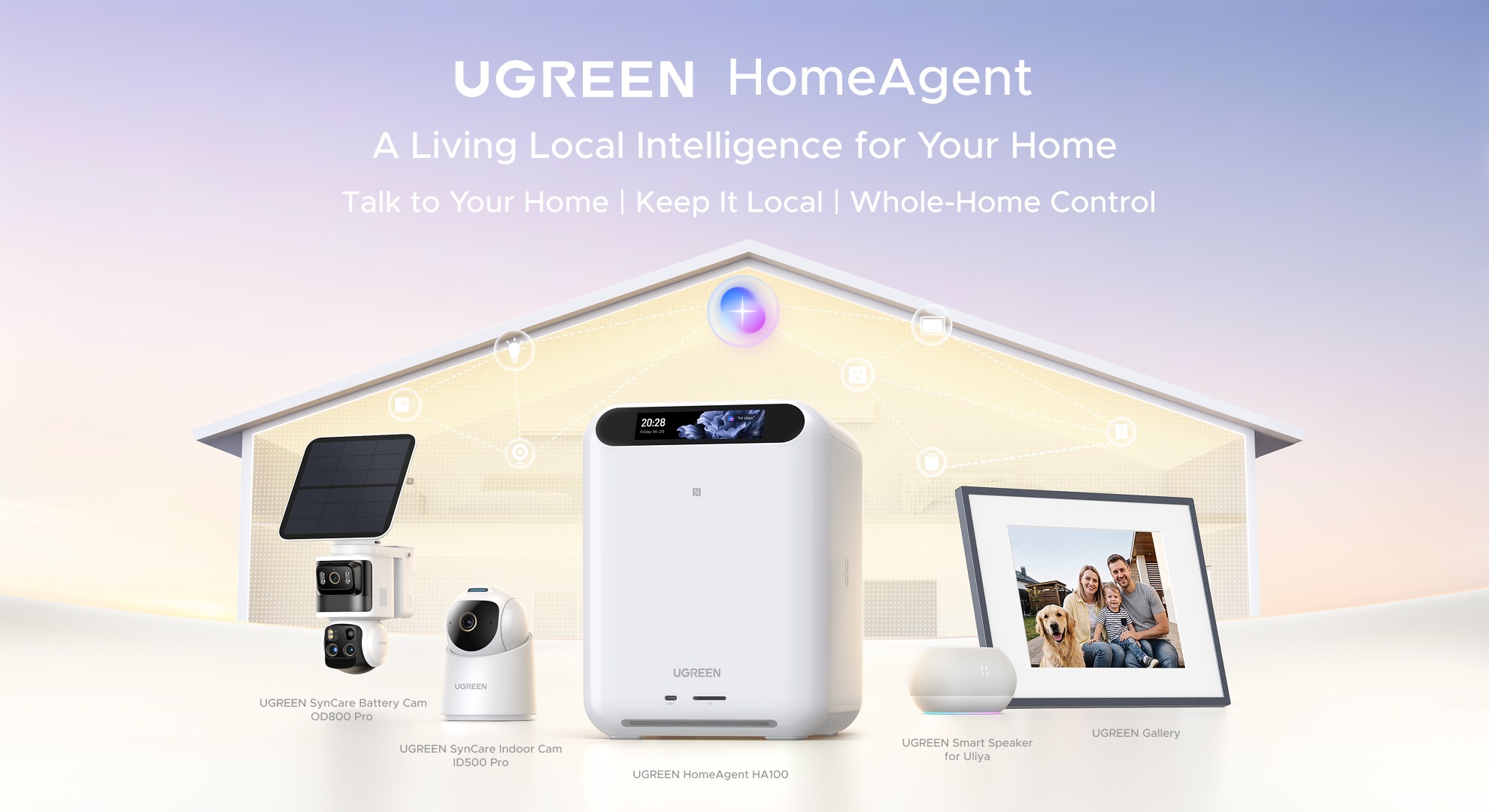
Smart home devices have proliferated, but many remain siloed, each operating independently. Cameras monitor the home, lights follow schedules, speakers respond to voice commands, and storage systems hold precious memories. However, the home as a whole often lacks cohesion, with data and intelligence dispersed across multiple platforms and services.
This fragmentation is precisely what UGREEN aims to rectify with its HomeAgent Series and the new MagFlow Series, a local intelligence layer for the home that integrates storage, AI computing, security, voice interaction, and device control into a single system.
At the heart of HomeAgent is the UGOS Pro, UGREEN's proprietary operating system built on Linux. It offers robust storage management, secure data handling, seamless backup and sync, and extensive expandability. HomeAgent takes this foundation a step further by incorporating integrated home security, smart-home functionalities, and voice interaction. By merging these capabilities, HomeAgent aims to streamline the smart home experience.
One of the standout features is HomeAgent's ability to analyze and utilize recorded footage from supported cameras. Local AI can identify people, vehicles, pets, and packages, detect unusual events, generate alerts, summarize recorded events, and help users locate specific footage through keyword search. By treating surveillance footage as actionable information rather than mere recordings, HomeAgent transforms static data into dynamic insights.
Moreover, HomeAgent's local vision and storage foundation enable it to derive meaningful insights from long-term family footage and photo libraries. Through AI Highlights, the system can automatically generate highlight videos, encapsulating significant moments such as birthday dinners, cherished family times, music practices, or interactions with pets. These moments, which might go unnoticed by conventional security systems, are transformed into treasured memories within the home's intelligent ecosystem.
HomeAgent also revolutionizes user interaction with household data. Through Uliya, users can employ natural language to control compatible devices, check live camera feeds or event histories, and retrieve household information without navigating through multiple applications or menus. This shift from individual device control to a holistic home interaction paradigm makes managing the home more intuitive and seamless.
The company plans to elevate this vision with the MasterAgent MA100, equipped with NVIDIA® Jetson Thor™ T5000, capable of delivering up to 2,070 FP4 TFLOPS of local AI computing performance. This enhanced local computing power will enable larger models and more demanding workloads to run natively, further empowering the home's intelligence layer.
In essence, UGREEN's strategy transcends the conventional smart home market by focusing on the integration of diverse devices into a cohesive, locally intelligent system. This approach not only enhances device control but fundamentally transforms the home into a self-aware entity capable of understanding and acting upon household data in real-time.
If successful, UGREEN's vision may redefine the future of smart homes—no longer measured by the number of smart devices but by the sophistication of the underlying intelligence layer that unifies them.
Written by urgent.news from HackerNoon's reporting — not their text. Machine-written — may contain errors; check the original before relying on it.