Your AI Marketing Claims Are Already Legal Evidence — Even If Legal Never Approved Them
AI marketing claims can become legal evidence. Here’s why companies need proof before promising accuracy, autonomy, safety, or results.
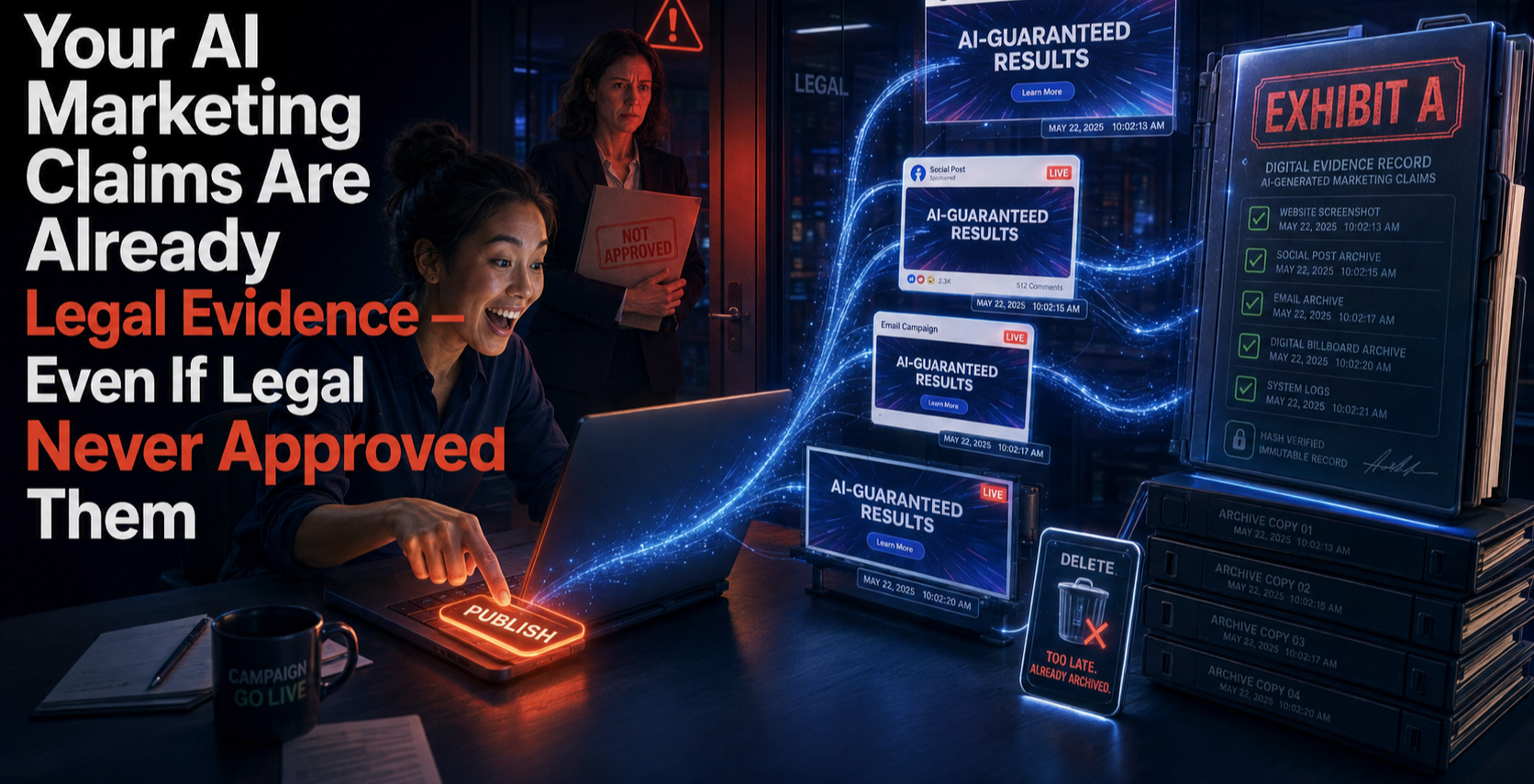
Workado's AI Content Detector claimed a 98% accuracy rate in differentiating human-generated text from AI-generated content. However, independent tests revealed the detector only achieved a 53% accuracy rate, comparable to a coin toss. The FTC ruled in August 2025 that Workado must cease advertising its detector's accuracy without proper evidence and retain such evidence for future reference.
This incident serves as a cautionary tale for AI companies, as attaching numbers to their products can later become legal evidence if challenged. Regulatory issues arise when a product's limitations are marketed as impressive capabilities. Marketing often presents the soft side of a business, while engineering and legal departments handle the critical aspects.
As AI systems evolve, their claims can become inaccurate, making it essential to collect evidence before making any assertions about a product's performance, substitution capabilities, safety, fairness, operational practices, existence, or economic benefits. These claims can become testable and evidence-based, potentially leading to legal consequences if the claims are found to be misleading or unsubstantiated.
Written by urgent.news from HackerNoon's reporting — not their text. Machine-written — may contain errors; check the original before relying on it.