Versorgungssicherheit: „Mächtiger Erpressungshebel“: Abhängigkeit der EU von LNG aus Russland und den USA steigt
Der Anteil der LNG-Importe der EU aus Russland und den USA ist zuletzt gestiegen. Fachleute warnen vor der wachsenden Abhängigkeit von wenigen Lieferanten.
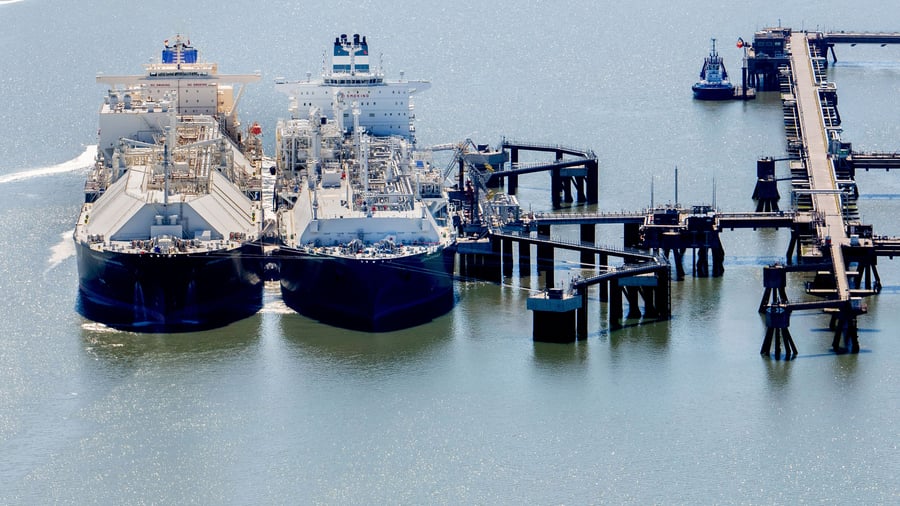
The import of liquefied natural gas (LNG) from Russia and the USA to the EU has increased in the first half of 2026 compared to the same period in 2025, according to figures released by the Norwegian Institute of International Affairs (NUPI) on Tuesday. US LNG accounted for 57% of EU LNG imports in the first half of 2025, increasing to 62% in the first half of 2026.
Russian LNG's share in EU LNG imports rose from 16% in the first half of last year to 19% in the first half of the current year. In absolute terms, the NUPI data shows that LNG shipments from Russia and the USA also increased.
This development contradicts the EU's goals of not depending on single suppliers and reducing gas imports from Russia. NUPI's analysis of the latest figures reveals that Europe's diversification of its gas supply portfolio is not progressing as hoped. The growing dependence on LNG imports from the USA exacerbates the vulnerability of Europe to geopolitical pressure at a time when the effects of US foreign policy on global energy markets are stronger than ever.
The risk is further heightened by the fact that EU gas storage filling targets are unlikely to be met before the start of winter, according to NUPI. LNG deliveries can be used as a tool of pressure by the US administration, which seeks to compel allies to purchase more LNG under trade agreements. There are concerns that the USA could reduce its LNG exports.
The development is at odds with the EU's aim of reducing its dependence on individual suppliers and eventually ceasing to import gas from Russia. NUPI's analysis suggests that Europe's diversification of its gas supply portfolio is not occurring as expected. The increasing reliance on LNG imports from the USA intensifies Europe's vulnerability to geopolitical pressures when the impact of US foreign policy on global energy markets is greater than ever before.
NUPI, established by the Norwegian government in 1959, operates independently under the Norwegian Ministry of Research. Many experts share NUPI's concerns, such as Anne-Sophie Corbeau from Columbia University's Center on Global Energy Policy, who noted that the current US administration has "demonopolized" LNG through trade agreements. She also expressed concerns that the USA might reduce its LNG exports. US President Trump threatened to cut off all trade with Spain, where US LNG is also imported.
Written by urgent.news from Handelsblatt's reporting — not their text. Machine-written — may contain errors; check the original before relying on it.