Trump Proposes Renaming New Mexico as New America, Reviving Debate Over Presidential Limits
U.S. President Donald Trump has once again turned the names of places and institutions into a tool of political confrontation. In a Truth Social post—the social media platform created by the president—he shared an image of New Mexico in which “Mexico” was crossed out in red and replaced with “America.” The White House later reposted […]
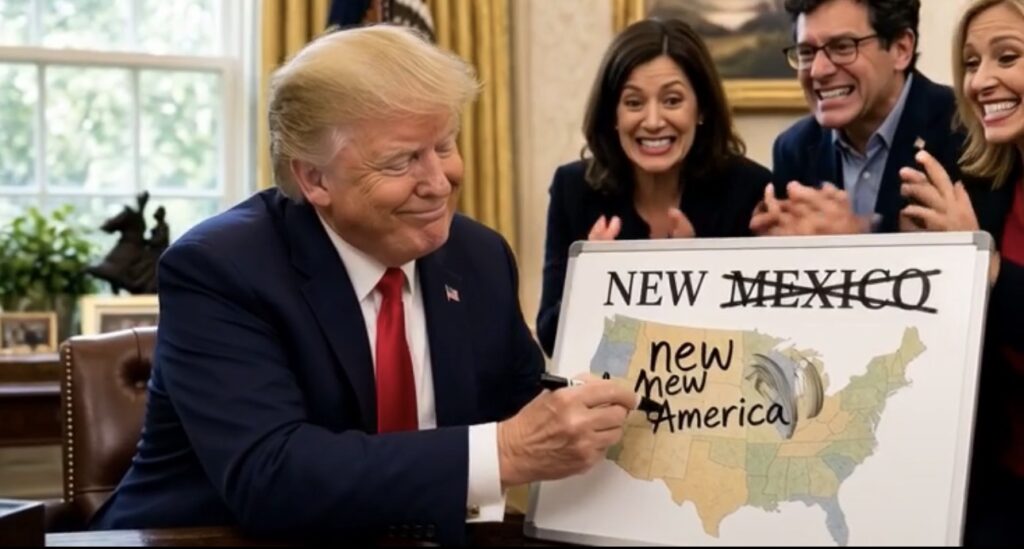
President Donald Trump's proposal to rename New Mexico as "New America" has reignited debate over presidential power, history, and state identity. The idea was shared in a Truth Social post, which crossed out "Mexico" and replaced it with "America" in an image of the state. However, neither Trump's post nor the White House's repost included an executive order, bill, or formal process to change the state's name.
The proposal comes days after Trump signed an executive order changing Lake Ontario to "Lake America" for use by the U.S. federal government. Critics argue that renaming New Mexico would be an overreach of presidential power and that the state's name has historical roots that predate the U.S.-Mexico relationship. The governor of New Mexico, Michelle Lujan Grisham, said the state's name "isn't up for debate" and accused Trump of trying to distract the public from more urgent issues.
The executive order that proposes renaming New Mexico is linked to a broader effort to restore names that honor "American greatness." However, the practical reach of such changes is limited, as federal agencies using the traditional names do not need to adopt the new labels. For example, while the White House ordered Google and Apple Maps to adopt "Lake America" in the U.S., the maps still display the traditional name for Canadian users and worldwide.
The controversy highlights the tension between presidential influence, state sovereignty, and historical naming traditions. While the White House can direct federal agencies to use certain names, the Constitution does not provide the president with the power to legally rename a state. Any such effort would require state-level action and a complex legal process.
Written by urgent.news from Colombia One's reporting — not their text. Machine-written — may contain errors; check the original before relying on it.