Share the love of reading, one book at a time
From Gutenberg's press to Dolly Parton's Imagination Library, developing a love of reading means gifting that same joy to others.
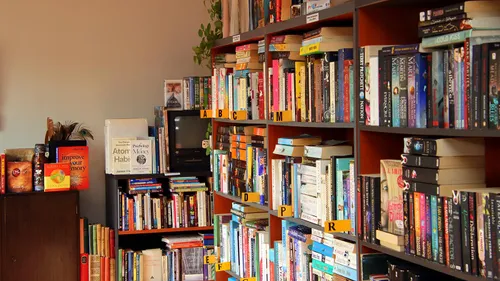
For millennia, countless individuals were denied the pleasure of reading. The simple act of holding a physical book, inhaling the scent of the pages, and immersing oneself in another world has an indescribable allure. When a book is second-hand, it carries a historical richness that resonates through the page. The aroma of aged paper, the thickness of pages in vintage volumes, and personal inscriptions are all part of the tactile experience.
A small bookstore specializing in rare finds finds joy in books passing from one person's hands to another, offering a potential treasure trove. From first editions with illustrations by Thomas Pringle to signed copies by Anne Frank, the owner has seen it all, including a first edition of Angela's Ashes. The joy of returning such a book to its owner, who has found immense delight in it, is unparalleled.
There's a unique satisfaction in reading that cannot be replicated by hearing a storyteller. The experience is entirely under the reader's control, allowing them to customize the voices, faces, pace, and immersion. Reading for pleasure only gained cultural recognition in the 1700s, following the rise of novels like Defoe's Robinson Crusoe (1719), Richardson's Pamela (1740), and Fielding and Sterne.
The 1800s witnessed an explosion of accessibility. Industrial printing, cheaper paper, railways, increased literacy, and public libraries made books affordable to the general public. By the mid-to-late 1800s, reading had secured a place beside other leisure activities. Dickens, for instance, had readers eagerly anticipating the next instalment of his novels, much like audiences anticipate a TV series.
However, this widespread reading culture had its roots. Johannes Gutenberg initiated the experiment with movable type in Europe during the 1440s. While his press initially produced weightier works, notably the Bible, it ultimately democratized the distribution of stories, driving down costs and transforming reading from an exclusive pursuit to an attainable pastime for millions.
Despite these advancements, five centuries later, 739 million adults aged 15 and above remain illiterate, constituting one in nine people worldwide, as per UNESCO. Nearly two-thirds of these individuals are women, and 40% of children fail to reach minimum reading proficiency. This stark statistic underscores the importance of champions like Dolly Parton.
She expanded upon Gutenberg's democratization by providing hundreds of millions worth of books through her Imagination Library, which has distributed over three million books monthly to enrolled children over the past 30 years. In 1995, inspired by her father, Robert Lee Parton, who lacked literacy skills, Dolly launched the Imagination Library in her hometown of Sevier County, Tennessee.
Her straightforward, non-controversial vision was simple: ensure every enrolled child receives a free, age-appropriate book in the mail every month from birth until the age of five, irrespective of their family's financial status. The first order consisted of just 1,760 books, but the program expanded across the US and internationally to Canada, the UK, Australia, and Ireland.
Dolly herself once referred to the program as her proudest achievement, as it provided millions of children with a resource she never had: books in their own homes. Gutenberg provided the means, and Dolly bestowed upon millions the opportunity. Today, it is our turn. Pick up a book, pass one along, or gift a child who has never owned one.
Reading is not merely a personal pleasure; it is a shared responsibility, and each of us has the power to be someone's Imagination Library.
Written by urgent.news from IOL's reporting — not their text. Machine-written — may contain errors; check the original before relying on it.