PCS Mudavadi warns of new terror threats to critical infrastructure
Kenya is considering a new legal framework to register and disclose foreign agents, lobbyists and foreign-funded activities. Prime Cabinet Secretary Musalia Mudavadi said the move would strengthen transparency and protect the country’s national interests. Speaking in Nairobi at the Fifth Nairobi Caucus on Protecting Critical Infrastructure Systems and Public Spaces, Mudavadi said the proposed…
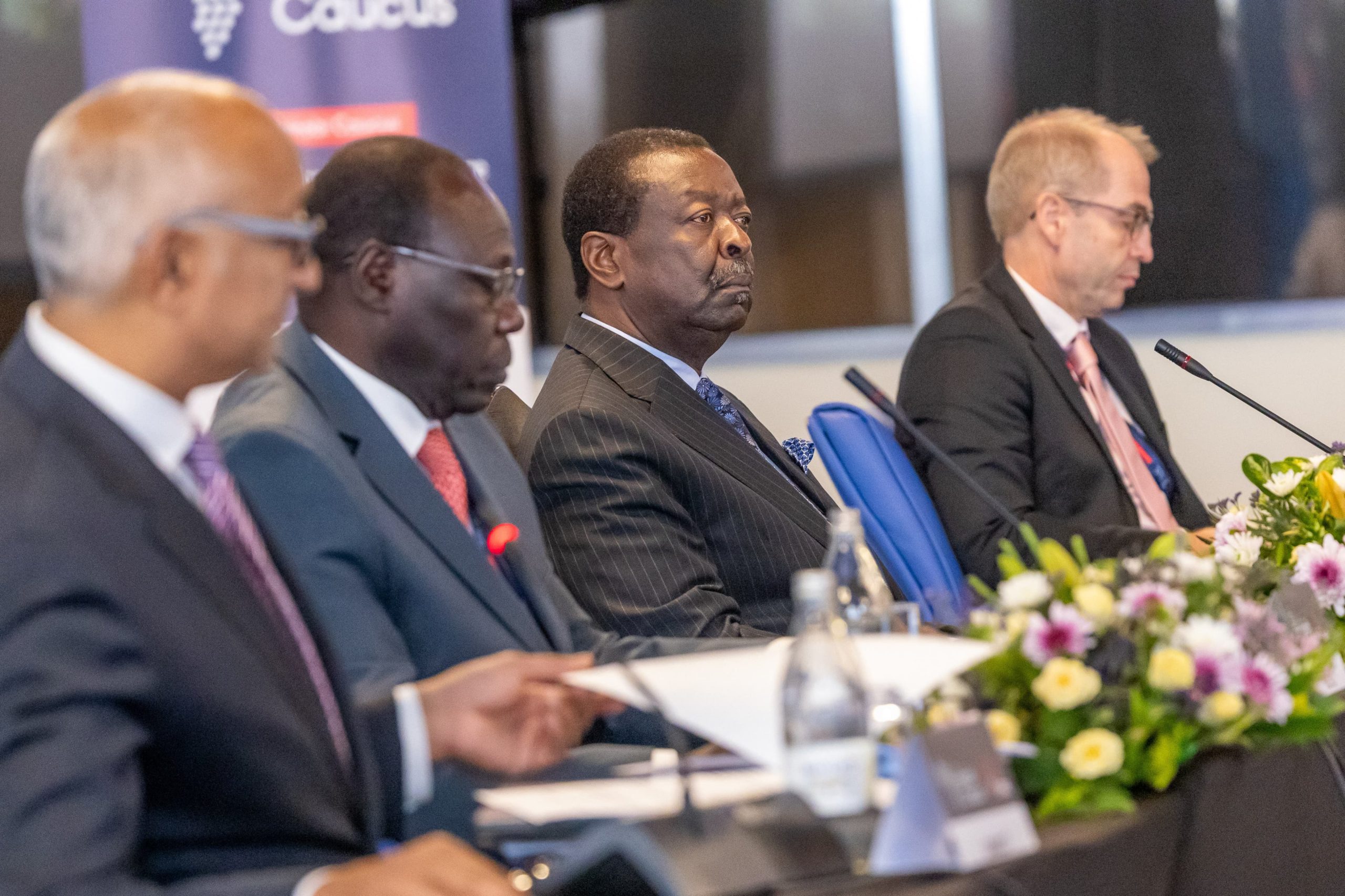
Kenya is contemplating a new legal framework to identify and report foreign agents, lobbyists and foreign-funded operations. Prime Cabinet Secretary Musalia Mudavadi unveiled this proposal at the Fifth Nairobi Caucus on Protecting Critical Infrastructure Systems and Public Spaces. Mudavadi stated that the framework would enable Kenya to better comprehend foreign influence while maintaining legitimate international collaborations.
He emphasized, "A nation that grasps the foreign forces steering its decisions is a nation that preserves its sovereignty."
Mudavadi also highlighted that terrorism has evolved beyond conventional security targets, now posing sophisticated threats to telecommunications, transport, energy, digital systems, public spaces, and other critical infrastructure. He warned that Africa, particularly the Horn of Africa, is increasingly becoming the global epicenter of terrorism, exacerbated by violent extremism, persistent conflicts, weakened state institutions, and geopolitical instability.
As Kenya prepares for the 2027 General Elections, Mudavadi gave significant attention to the security of political rallies and large public gatherings, emphasizing that terrorists could exploit crowded spaces to cause maximum casualties and create panic. He cautioned that organized criminal gangs could potentially transform into violent extremist organizations, challenging the state's authority.
He questioned whether heavily armed gangs, who terrorize populations, undermine democratic institutions, and deliberately target critical infrastructure, should still be classified as mere criminals.
Mudavadi pointed out that Kenya's rapid infrastructure development has created a vast network of assets that now require attention in the country's national security strategy. These include dams, railways, telecommunications networks, energy systems, healthcare facilities, stadiums, ports, and digital infrastructure. He cited the July 2026 attack on a telecommunications mast in Garissa by Al-Shabaab as an example of how terrorist organizations can disrupt essential services while undermining security and economic activity.
Mudavadi warned of the new frontiers of terrorism, particularly the growing dependence on digital systems and the potential for cyberattacks to interfere with electricity grids, water systems, transport networks, financial services, and other critical infrastructure without a physical assault. He emphasized the need to protect not only the physical assets but also the data, networks, software, and human systems that these assets rely on.
He highlighted Kenya's Virtual Assets Service Providers Act, 2025, and the draft Critical Infrastructure Protection Bill, 2024, as crucial steps in addressing digital economy vulnerabilities.
Mudavadi linked Kenya's infrastructure security to the instability in the Middle East and the Red Sea, stressing the vulnerability of global supply chains to geopolitical and security shocks. He highlighted the Port of Mombasa as a critical regional asset, whose security extends beyond Kenya due to its connectivity with several countries in the region. He stressed the importance of securing shared global logistics networks, such as ports and aviation hubs, to prevent international consequences from disruptions.
Written by urgent.news from KBC's reporting — not their text. Machine-written — may contain errors; check the original before relying on it.