Oil extends gains after US and Iran strike ships
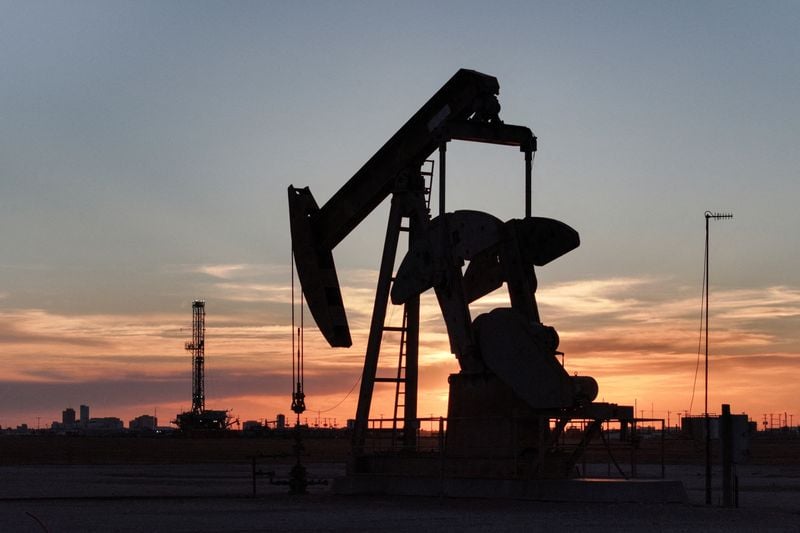
Oil prices continued to rise on Monday as retaliation strikes between the United States and Iran targeting vessels in the Strait of Hormuz raised fears of a prolonged supply disruption from the Middle East. Brent crude futures increased 52 cents, or 0.54%, to $96.80 per barrel, while U.S. West Texas Intermediate crude rose 66 cents, or 0.72%, to $92.14 per barrel.
Last week, Brent rose 7.8%, and WTI gained nearly 10% after the U.S. and Iran resumed attacks, causing a reduction in oil flows through the Hormuz strait, which traditionally carries a fifth of the world's oil supply.
On Saturday, U.S. forces attacked three Iranian oil tankers, including one near Kharg Island, a key oil export hub. Iran's Islamic Revolutionary Guard Corps Navy responded by targeting three oil tankers traveling through unauthorized routes in the Strait of Hormuz and three additional U.S. vessels in other areas. This incident marked a significant escalation in the maritime conflict, according to maritime intelligence firm Marisks.
Commercial tankers are now being deliberately targeted as instruments of reciprocal economic pressure, blurring the line between military confrontation and commercial shipping.
International shipping has been severely impacted, with an average of 10 commodity ships transiting the Strait of Hormuz daily over the past 10 days, the lowest level since May, as reported by analytics firm Kpler. Iran's Supreme National Security Council Secretary Mohsen Rezaei hinted at the possibility of announcing a restricted zone outside the Strait of Hormuz in the coming days, as stated by state media.
OPEC+ decided to maintain its oil output policy unchanged for October during a meeting on Sunday, as they need to agree on new quotas before deciding their next output steps. Despite the ongoing standoff punctuated by calibrated military action by the U.S. and Iran, a prolonged situation is the most probable outcome, potentially delaying the full recovery of Middle East supply.
According to ANZ analysts, exports are expected to remain constrained through the rest of 2026, with a gradual reopening only anticipated late in the fourth quarter of 2026, and a return to pre-war throughput likely not occurring until late in the first or early second quarter of 2027.
Written by urgent.news from Investing.com's reporting — not their text. Machine-written — may contain errors; check the original before relying on it.
This story
This is one outlet's version. Read the fullest account.
- Oil extends gains after US and Iran strike ships brecorder.com
- US and Iran trade fire after IRGC attacks American warships thenationalnews.com
- US and Iran trade retaliatory attacks on ships as conflict flares kahawatungu.com
- US and Iran trade retaliatory attacks on ships as conflict flares hellenicshippingnews.com
- US and Iran trade retaliatory attacks on ships as conflict flares peopledaily.digital
- Oil extends gains after US and Iran strike ships myjoyonline.com
- Crude oil futures rise as US, Iran attack each other’s ships thehindubusinessline.com
- Iran attacks US naval drone trying to enter Strait of Hormuz after tanker strikes malaymail.com