Nvidia CEO: Artificial General Intelligence Has ‘Arrived’ With New OpenAI Model
Nvidia CEO Jensen Huang once again trumpeted the arrival of artificial general intelligence (AGI). Huang congratulated OpenAI in a Sunday (Sept. 6) post on social platform X after the startup released its latest AI model, which was trained on Nvidia’s chips. “From ChatGPT to o1 to Astra in 4 years,” Huang said in the post. […] The post Nvidia CEO: Artificial General Intelligence Has ‘Arrived’…
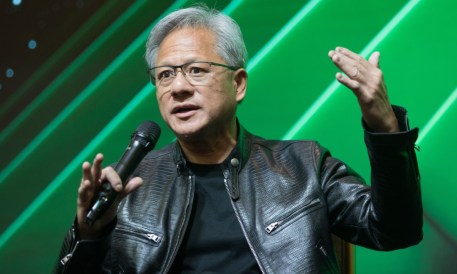
Nvidia CEO Jensen Huang hailed the launch of OpenAI's most recent AI model, Astra, as the dawn of artificial general intelligence (AGI) on September 6. In a post on X, Huang praised the OpenAI team, stating, "AGI has arrived. Congratulations @OpenAI team." AGI, a "fuzzy concept," is the intelligence of machines that can match or surpass human abilities in various intellectual tasks.
Companies like OpenAI, Google, and even Tesla and AI pioneer Andrew Ng have set their sights on this goal. OpenAI defines AGI as "highly autonomous systems that outperform humans at most economically valuable work," while Google describes it as intelligence matching that of a human being. OpenAI's Astra model, unveiled last week, is touted as the world's "most intelligent and aligned model," capable of handling complex professional tasks with exceptional speed, precision, and judgment.
Following the model's release, OpenAI's president Greg Brockman referred to the era as "the AGI era." In a March podcast with Lex Friedman, Huang claimed to have achieved AGI, though he later seemed to soften his stance. AI expert Andrew Ng remains skeptical, believing AGI is still decades away, while Tesla CEO Elon Musk predicted that physical robots, such as Tesla's Optimus, could be a more direct route to AGI.
Written by urgent.news from PYMNTS's reporting — not their text. Machine-written — may contain errors; check the original before relying on it.