Iran says improved ballistic missile shows it will take preemptive action against threats
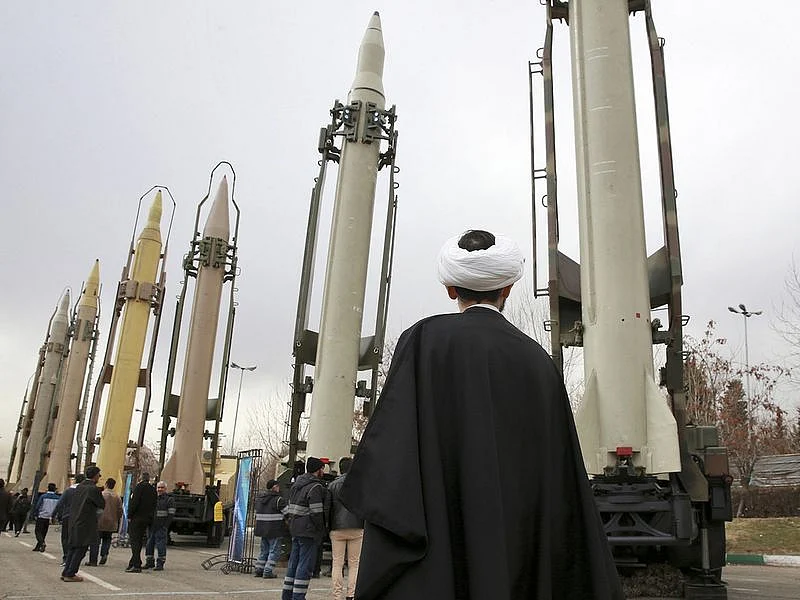
Iran's state media announced on Monday that a newly developed ballistic missile boasts enhanced capabilities, signaling Tehran's intention to counter potential threats before they manifest. This declaration, made by the head of Iran's Supreme National Security Council, Mohsen Rezaei, was reiterated on state television the previous day.
The report did not specify whether the missile tested was the solid-fueled Qassem Basir, which the agency claimed had been tested against a U.S. warship. However, U.S. officials confirmed on Saturday that ballistic missiles were indeed fired at their warships and that Iran had responded by sinking three of its oil tankers. Experts have labeled this action as a dangerous escalation, given Iran's previous attacks on commercial shipping during the six-month conflict.
The U.S. stated that the warships successfully evaded the missiles. In recent days, Iran has adopted a more assertive tone, with Monday's report describing the Qassem Basir as having a greater range, accuracy, and a half-ton warhead. The missile was unveiled last year with a claimed range of at least 1,200 kilometers. Iran's aggressive stance has raised concerns about its ballistic missile program, which was cited as a reason for the U.S. and Israel to launch attacks on Iran earlier this year, starting the ongoing war.
The White House dismissed plans by Rezaei to establish an "exclusion zone" near the Strait of Hormuz, stating that the waterway is open and subject to U.S. control. The U.S. has already cleared the strait of mines and announced that tanker traffic to non-Iranian ports would increase. Despite Iran's blockade on Iranian ports to intensify economic pressure on Tehran, the U.S. military reported that 94 commercial vessels had been redirected, and three disabled.
Rezaei acknowledged that the U.S. has assisted a limited number of ships using a route off Oman, stating that Iran refrains from sinking them due to their oil-carrying capacity and environmental concerns. As both nations continue to assert territorial claims over the strait, global commerce firm Kpler reported a sharp drop in transits through the waterway the previous week.
In response to the uncertainty surrounding the Strait of Hormuz, Anwar Gargash, a UAE diplomatic adviser, stressed during a forum in Abu Dhabi that no single state should control the strait, warning that energy exports would not be held hostage. The UAE, a close U.S. ally, has been under Iranian missile and drone fire during the war and suspended all trade with Iran after renewed attacks.
Nabil Fahmy, the secretary-general of the Arab League, condemned Iran's attacks on Gulf nations and emphasized that maritime corridors will not be used as bargaining chips in others' calculations.
Written by urgent.news from Gulf News's reporting — not their text. Machine-written — may contain errors; check the original before relying on it.
This story
This is one outlet's version. Read the fullest account.
- Iran says improved ballistic missile shows it will take preemptive action against threats apnews.com
- Iran says improved ballistic missile shows it will take preemptive action against threats toronto.citynews.ca
- Iran says improved ballistic missile shows it will take preemptive action against threats mainichi.jp
- Iran says improved ballistic missile shows it will take preemptive action against threats winnipegfreepress.com