Ghana’s SIM registration history from 2010 to the new biometric verification system
Ghana’s efforts to register mobile phone users have evolved significantly over the past 16 years, with successive exercises aimed at strengthening subscriber identification and tackling mobile fraud. The country has moved from an initial registration system that relied on several forms of identification to the use of the Ghana Card and, now, plans for a more advanced system involving real-time…
Ghana's approach to registering mobile phone users has undergone significant transformations over the last 16 years, with the aim of enhancing subscriber identification and tackling mobile fraud. The journey began with a registration system that relied on various forms of identification, and has since evolved through two major exercises to a more advanced system involving real-time biometric verification, which is expected to commence before the end of 2026.
The inaugural nationwide mandatory SIM registration exercise kicked off in July 2010, under the supervision of the National Communications Authority (NCA). Initially, subscribers could present several identification documents, including voter identity cards, passports and driver’s licences, to link SIM cards to identifiable individuals.
However, the system faced challenges, primarily in verifying the accuracy of identity documents, with manual checks often leaving gaps in ensuring the person registering a SIM was the legitimate holder of the presented identity document.
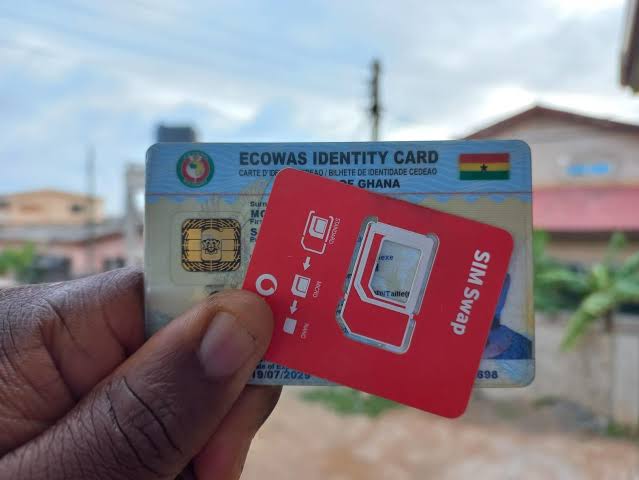
A more comprehensive SIM registration exercise commenced on October 1, 2021, leveraging the Ghana Card to link SIM cards to central national identification system. This phase involved two stages: first, linking SIM cards to Ghana Card details via a USSD process and subsequently completing the registration through biometric capture, including fingerprint and photograph collection at designated service points.
The exercise, however, faced numerous obstacles, including long queues, technical difficulties and delays in obtaining Ghana Cards. The deadline was successively extended until the exercise was officially concluded on May 31, 2023, with millions of SIM cards that failed to meet registration requirements deactivated.
Despite the intention to create a more reliable database of mobile subscribers by linking SIM ownership to Ghana’s national identification system, validation exercises carried out in 2025 revealed discrepancies. The National Communications Authority (NCA) reported that 81.1% of records matched official identity data, underscoring ongoing concerns about the integrity of the subscriber database and the necessity for more robust verification mechanisms.
The government is now gearing up for a significant update to the SIM registration system, introducing real-time biometric verification expected to be operational before the end of 2026. Unlike the previous systems, this new phase will verify the identity of the SIM registrant against the National Identification Authority (NIA) records and necessitate the physical presence of the subscriber.
For Ghanaian citizens, the Ghana Card will serve as the primary identification document, while non-citizens will rely on the Non-Citizen Ghana Card. Incorporated into this system is the proposed Central Equipment Identity Register (CEIR), which will use the unique International Mobile Equipment Identity (IMEI) number associated with mobile devices.
This feature aims to bolster authorities' and network operators' abilities to identify and manage devices connected to telecommunications networks, thereby potentially preventing the misuse of stolen or illegally obtained devices.
The evolution of Ghana's SIM registration system underscores the government’s commitment to combating mobile fraud, identity misuse and criminal activities facilitated by telecommunications services. By strengthening identity verification, the government aims to make it increasingly challenging for individuals to register mobile numbers anonymously or under another person’s identity.
Such measures also caution subscribers against registering SIM cards for others, with penalties for such actions that could have serious consequences for the legitimate identity holder due to the tighter link between the subscriber, mobile number, identity, and device.
Written by urgent.news from MyJoyOnline Ghana's reporting — not their text. Machine-written — may contain errors; check the original before relying on it.