Urgent.News

What's breaking now, across thousands of outlets.

AI

Can dogs sniff out cancer? AI is helping put their noses to the test in India

BENGALURU, Sept 8 — When rescue dog Chloe is not tumbling across the grass on a farm outside India’s tech ca...
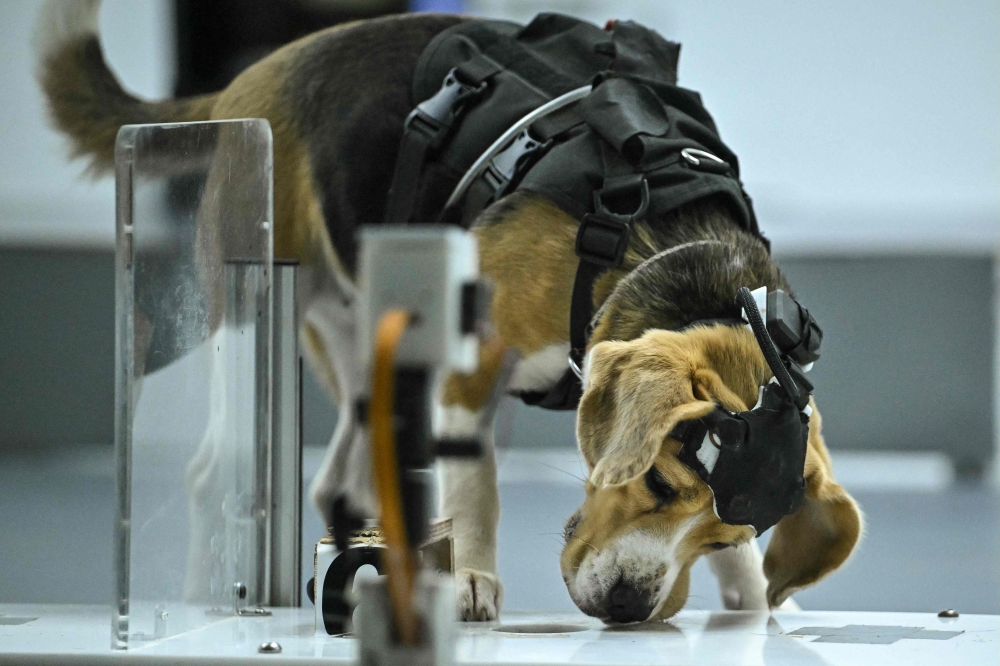
Can dogs sniff out cancer? AI is helping put their noses to the test in India

Bengaluru, India - Chloe, a rescue dog, is learning to detect human breath for cancer using AI technology. The 3D-printed helmet and harness fitted with sensors provide data analysis. Dognosis, a Bengaluru-based startup, uses AI to study dogs' brain activity, respiration, and body language. The company aims to launch commercially next year, becoming the third such firm after Germany and Israel.

Early detection of cancer can significantly improve survival rates, and dog sniffs could serve as an affordable screening tool. However, further research and testing are needed to confirm the technology's effectiveness.

Written by urgent.news from Malay Mail's reporting — not their text. Machine-written — may contain errors; check the original before relying on it.


Read the original at malaymail.com →

More in AI

Sim-to-Real Transfer for Physical AI Robots

Sim-to-Real Transfer for Physical AI Robots A policy that hits 95% success in simulation and 20% on the real robot is one of the most common — and most frustrating — outcomes in robot learning.

  • Sim-to-real gap arises from visual, dynamics, and sensing/latency differences.
  • System identification involves measuring real robot and tuning simulation parameters.
  • Progressive validation strategy uses multiple evaluation checkpoints.

Domain Randomization for Robust Robot Learning

Domain Randomization for Robust Robot Learning Domain randomization is the idea that, instead of trying to perfectly match simulation to reality, you randomize simulation parameters widely enough that…

  • Domain randomization enhances robot learning robustness in simulation.
  • Trains policy on diverse simulated scenarios with varied conditions.
  • Improves transferability to real-world applications by handling unexpected challenges.

More from Monday 7 September →