Bad Delivery, Bigger Damage: IIM Indore Study Finds Unfair Service Can Turn Customers Into Brand Critics
Indore (Madhya Pradesh): A late online delivery, a missing item or a spoiled meal may seem like a routine customer-service complaint. But when customers feel they have been treated unfairly, the fallout can go far beyond a refund. A study co-authored by Prof Deepa Halder of IIM Indore has found that serious service failures can trigger customer rage, weaken trust in brands and fuel negative…
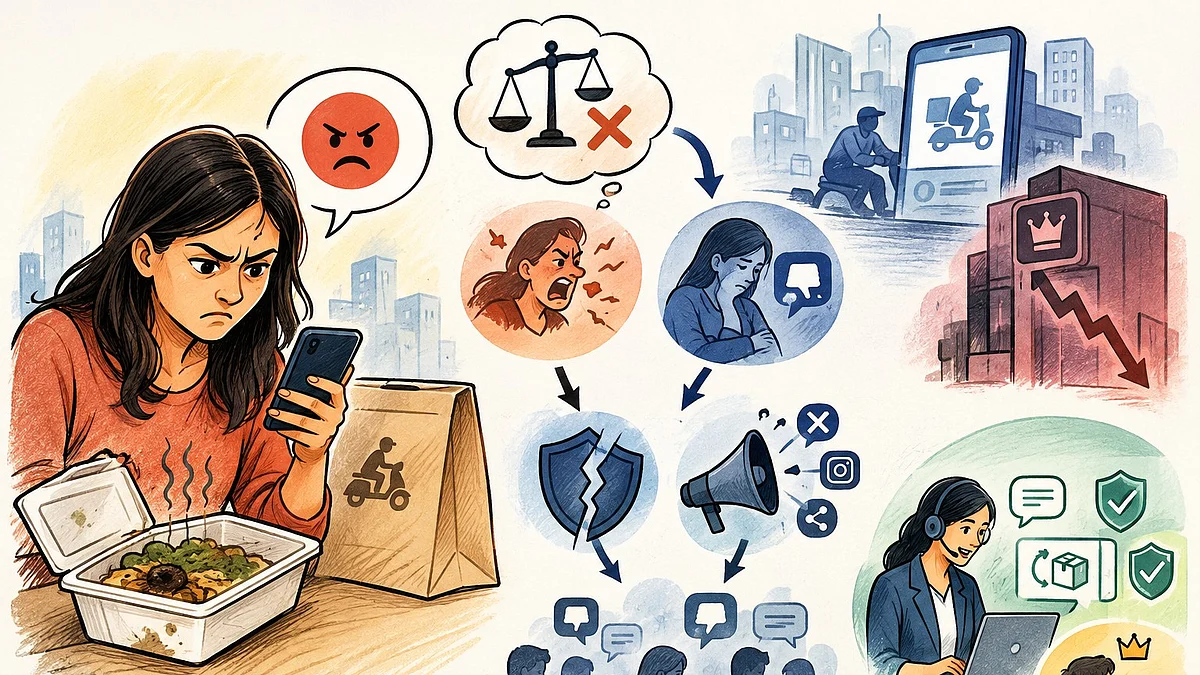
Indore, Madhya Pradesh - A single missed delivery, an unsatisfactory order, or a meal gone wrong may appear as ordinary customer service grievances at first glance. However, when customers perceive their experiences as unjust, the consequences can extend far beyond a simple financial refund. A joint research study by Prof. Deepa Halder of IIM Indore reveals that significant service failures can ignite customer discontent, erode trust in brands, and spread negative word-of-mouth, transforming a dissatisfied customer into a vocal critic.
The findings, published in the Journal of Product & Brand Management, shed light on how consumers respond when their expectations from digital services are not met. The researchers discovered that the severity of customer anger is not solely determined by the service failure itself, but rather by the customer's perception of fairness.
Customers evaluate whether the outcome was just, if the complaint-resolution process was reasonable, and if they were treated with respect. When these expectations are breached, customers experience a double-edged fallout - customer rage and negative engagement. Rage is an intense, immediate emotional response to a particularly bad experience, while negative engagement is a more prolonged state where customers maintain negative thoughts, feelings, and actions towards the brand.
Both forms of negative reaction can severely harm businesses. The study examined various e-service failure scenarios, including a fictitious delivery app called Deliverista, and tested the model with three sets of participants - 176 in a pilot study, 454 in a second sample, and 217 in a third sample. Additionally, the impact of self-esteem on customers' responses was analyzed.
Customers with higher self-esteem were more likely to express their rage and negative engagement through negative word-of-mouth, and their trust in a brand suffered more significantly when they were angry. Nonetheless, self-esteem did not affect the connection between negative customer engagement and brand trust. For businesses, particularly quick-commerce and other digital service providers, the study's insights carry a warning: a refund alone may not suffice to mend a bad experience.
The researchers recommend proactive and transparent service recovery, including user-friendly complaint-resolution systems, real-time support, clear refund or replacement procedures, and empathetic communication. Additionally, training customer-support teams through simulated service-failure situations may help employees manage angry customers before situations escalate.
In today's fast-paced digital marketplace, where complaints can quickly spread across social media, the study's message is clear: when customers feel wronged, brands risk paying a much larger price than the cost of replacing an order.
Written by urgent.news from Free Press Journal's reporting — not their text. Machine-written — may contain errors; check the original before relying on it.