Autistic language abilities are vastly more complex than “verbal” or “nonverbal,” large study shows
A study of 62,000 autistic individuals challenges traditional clinical labels, showing that evaluating what a child understands separately from what they can say provides a more accurate and clinically useful map of their abilities.
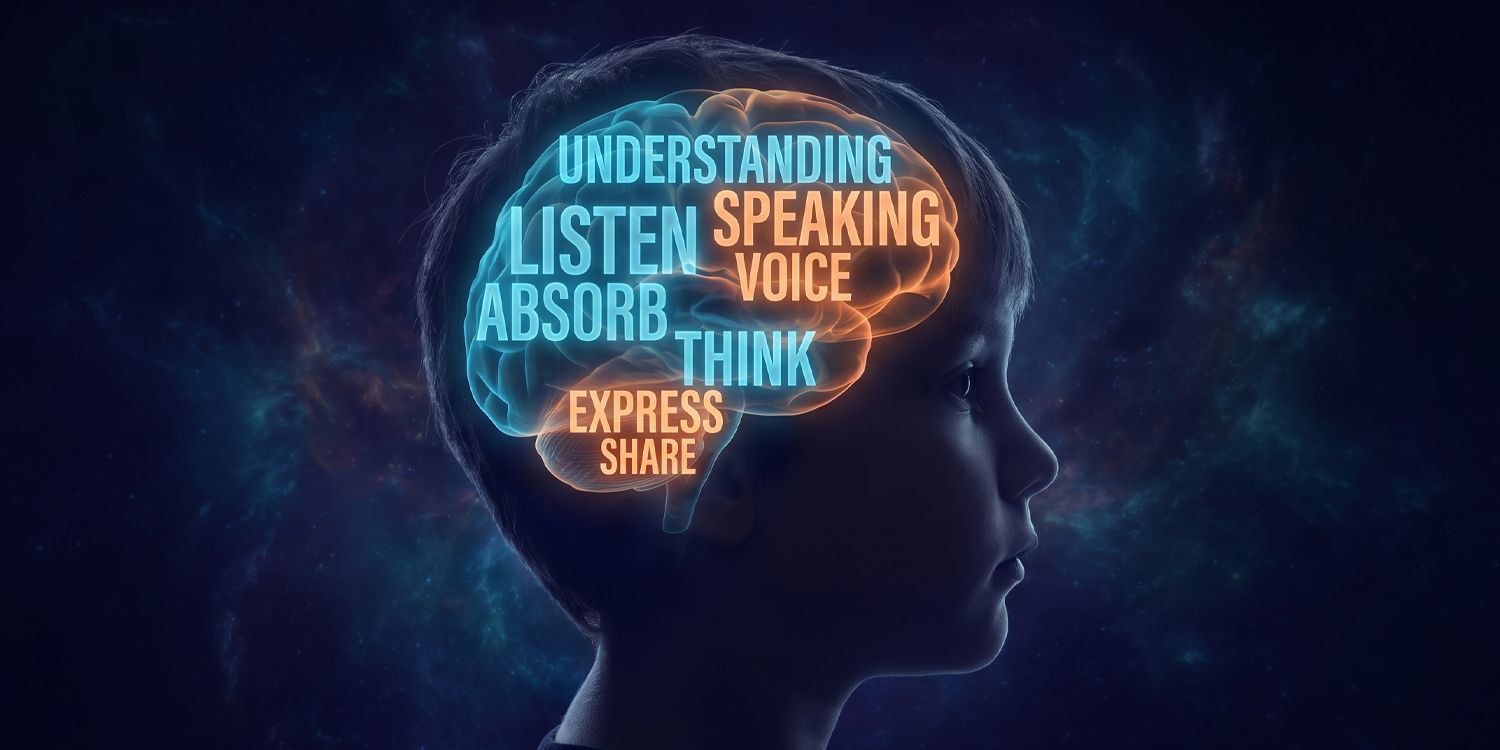
A new study has revealed intricate categories for how autistic individuals comprehend and utilize language, suggesting that evaluating these skills separately yields a more precise depiction of their abilities. Researchers from George Washington University and Boston University published their findings in npj Science of Learning, challenging the traditional three-part system for categorizing language in autism, as it disregards significant individual discrepancies.
Autism Spectrum Disorder (ASD) often manifests through social communication differences. Clinicians typically categorize autistic individuals' language abilities into three broad groups: those who speak with no structural impairment, those who speak with structural impairment, and those who speak minimally. According to Andrey Vyshedskiy, an adjunct professor at Boston University and co-author of the study, this one-dimensional classification is detrimental to children, parents, and therapists since it impedes comprehensive language development.
The study's authors contend that this simplified framework may underrepresent the intricacies of communication. A 2026 research study on young autistic children discovered that simplistic labels like "speaking" or "non-speaking" obscure the true complexity of communication, as distinct language skills frequently evolve independently.
An analysis of autistic children published in 2026 revealed that while those who speak infrequently exhibit substantial variations in word comprehension proficiency. This diversity aligns with the broader language development trajectories observed in autism. A PsyPost-covered study in 2026 found that while autistic children initially acquire language comprehension skills at rates comparable to neurotypical peers, their learning rate begins to decelerate exponentially around age two.
Due to this high variability in language progression, the researchers hypothesized that independently assessing what a child comprehends (receptive language) and what a child can articulate (expressive language) would result in a more accurate classification system. To explore this hypothesis, the research team examined data from 62,414 autistic individuals aged 4 to 22 years, obtained via a free, language-focused mobile application.
Caregivers completed standardized surveys evaluating their child's abilities, responding to 15 items regarding language comprehension and 11 items concerning expressive language. The questions addressed a spectrum of skills, ranging from recognizing a name or responding to the word "no" to engaging in multi-sentence conversations and understanding complex spatial prepositions.
The researchers subsequently employed data-driven statistical techniques, such as unsupervised hierarchical cluster analysis and principal component analysis, to automatically group individuals based on shared patterns in the data, without relying on predefined clinical assumptions. This approach allowed the team to identify distinct language profiles within the extensive dataset.
The analysis unveiled three primary profiles for language comprehension. The "command phenotype" accounted for 35.6% of participants, primarily limited to understanding single words and simple commands. The "modifier phenotype" represented 47% of the sample and encompassed individuals capable of understanding basic commands and integrating nouns with adjectives, such as discerning differences in color, size, and quantity.
The "syntactic phenotype" comprised 17.4% of participants, characterized by an understanding of both previously mentioned language levels and complex grammatical structures, including verb tenses, possessive pronouns, and intricate narratives. When examining expressive language independently, the researchers identified four distinct speaking phenotypes.
The "nonspeaking phenotype" described 28.4% of participants, who lacked functional spoken language. The "single-word phenotype" represented 34.4%, encompassing those who primarily communicated using isolated words. The "single-sentence phenotype" made up 24.1% of the sample, describing individuals who could construct basic, concise sentences.
The final group, the "multi-sentence phenotype," consisted of 13.2% of participants, indicating their ability to engage in conversations and pose meaningful queries. By integrating both dimensions, the researchers identified four primary receptive-expressive phenotypes. The highest-functioning group, characterized by multi-sentence expression and syntactic comprehension, constituted 9.7% of the participants.
Another 25.4% fell into a category marked by single-sentence expression and modifier comprehension. A third group, comprising 30.5% of the sample, exhibited a nonspeaking profile alongside command-level comprehension. The fourth group, accounting for 22.3% of the participants, displayed single-word expression combined with modifier-level comprehension.
Vyshedskiy stated, "The study suggests that language profiles in autism are better described on two separate axes — receptive comprehension and expressive language — than by the usual three broad categories."
Written by urgent.news from PsyPost's reporting — not their text. Machine-written — may contain errors; check the original before relying on it.