AI data centers are less thirsty now: Tech giants
AgenciesData centers are running into a wall of public anger in the United States over their thirst for water and power. The tech giants spending billions of dollars on them say th...
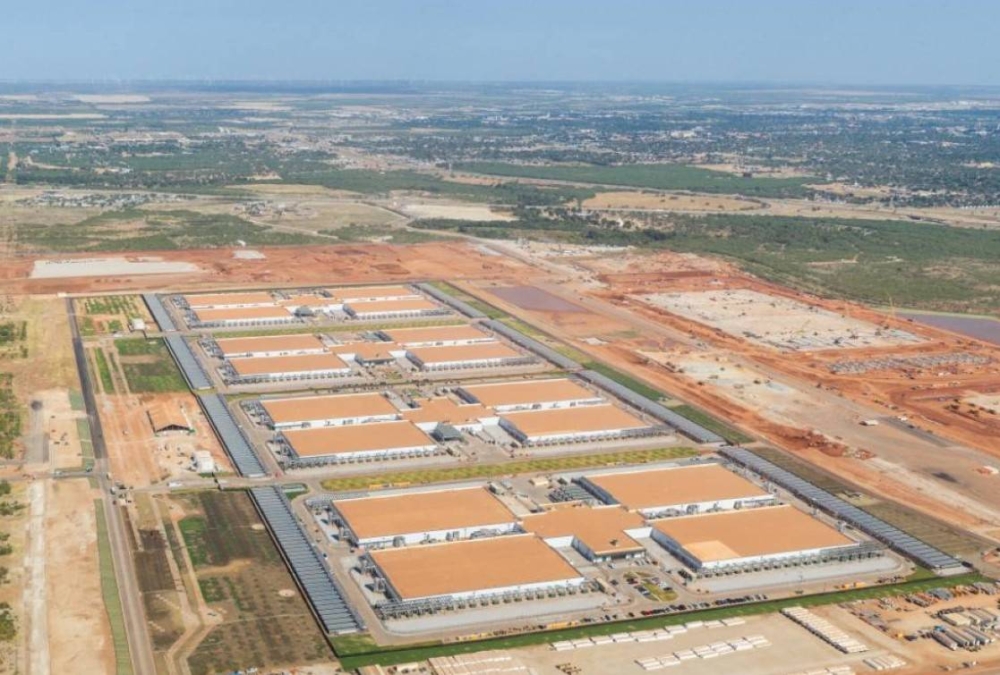
Data centers, the vast warehouses housing computer servers that power the internet and artificial intelligence, have come under fire in the United States for their heavy water and power consumption. However, tech giants such as Nvidia, Microsoft, Amazon Web Services (AWS), and Meta claim that the water aspect of their energy use is now addressable.
Nvidia's June report revealed that it can almost eliminate water consumption at certain facilities when utilizing its DSX system for designing and managing AI data centers. This bold assertion has spurred industry-wide pressure to prove its feasibility.
In 2025, data centers worldwide consumed 222 billion liters (59 billion gallons) of water for cooling purposes, according to consultancy Rystad Energy. Without implementing adaptive measures, this figure could nearly triple to 644 billion liters by 2030, estimates Rystad. Nvidia's solution involves a closed-loop cooling system that runs liquid directly through servers, bringing chip temperatures close to 80C (176F).
While there is a trade-off between water and energy usage for temperature control, Nvidia mitigates this issue by using warmer-than-usual liquid entering the servers at 45C. Most other closed-loop systems ran at around 32C in 2024.
Microsoft, AWS, and Meta have all employed closed-loop systems, asserting that they do not result in net water loss. The two cloud giants have seen improved water use efficiency between 2022 and 2025, with Microsoft achieving a 25% efficiency increase and AWS a 37% improvement in their sustainability reports. However, there is no uniformity in how companies report their environmental, social, and governance (ESG) efforts.
Elon Musk's SpaceX, a significant player in the data center sector after acquiring AI company xAI, has not published an ESG report. In June, ratings agency MSCI assigned SpaceX its lowest ESG score. The primary driver for water conservation in data centers is primarily driven by public relations concerns rather than cost savings, as water is generally cheaper than electricity.
Moreover, upgrading older data centers to more water-efficient technology is costly. Older data centers, being smaller and less powerful, inherently require less cooling than the large new facilities under construction, according to Minh K Le, who leads data center and hydrogen research at Rystad.
Written by urgent.news from Qatar Tribune Business's reporting — not their text. Machine-written — may contain errors; check the original before relying on it.