Why Did So Many Ancient Civilizations Build Pyramids if They Never Met?
From the towering pyramids of Egypt to the stepped temples of Mexico and the monumental structures of Peru, one question has fascinated historians, archaeologists, and travelers for generations: Why did so many ancient civilizations build pyramids despite having no contact with one another? For decades, the similarity of these structures fueled theories about lost civilizations, […]
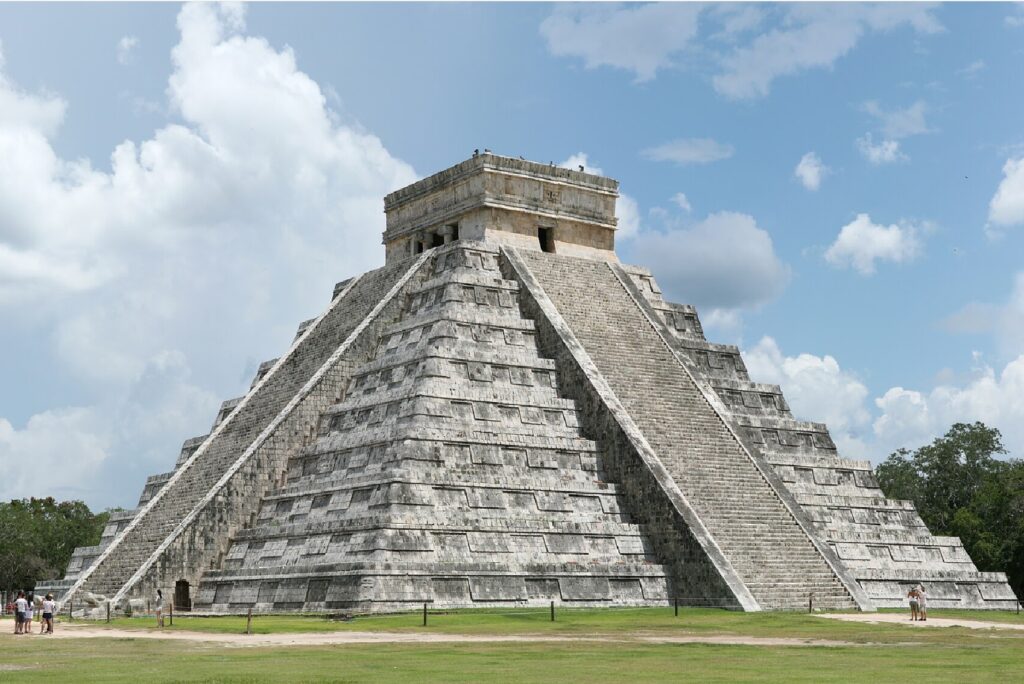
The phenomenon of ancient civilizations constructing pyramids across the globe has long captivated historians and archaeologists. Despite having no contact with one another, structures like the Egyptian Giza pyramids, Mexican stepped pyramids, and Peruvian pyramid complexes share a remarkable similarity. Initial theories speculated about ancient networks, extraterrestrial influence, or forgotten civilizations.
However, modern archaeological insights provide a more straightforward explanation grounded in human ingenuity, engineering principles, religious beliefs, and the desire to connect earthly existence with the heavens.
Pyramids served as royal tombs for pharaohs in Egypt, symbolizing both a path to the afterlife and the pharaoh's divine power. Similarly, the Maya, Aztecs, Mesopotamians, and others built pyramids as religious centers, with structures like the ziggurats of Mesopotamia and stepped pyramids of Mesoamerica serving as platforms for rituals and ceremonies.
Across diverse cultures separated by vast distances, the pyramid shape emerged as a practical and symbolic solution to the challenge of building tall, stable structures using available materials.
The engineering behind pyramids lies in their efficient distribution of weight and resistance to collapse. The broad base and tapered sides of a pyramid provide stability, making them ideal for constructing monumental edifices with limited technology. This convergence of design across different societies demonstrates a shared recognition of the pyramid's structural advantages.
Moreover, ancient cultures often equated mountains with divine realms, and when natural mountains were absent, they constructed artificial structures to bridge the gap between earth and sky. Pyramids became sacred symbols, embodying the aspirations to connect with spiritual forces.
Beyond their religious significance, pyramids also functioned as powerful statements of political authority. The monumental effort involved in constructing pyramids—mobilizing thousands of workers, coordinating complex logistics, and harnessing vast resources—communicated the ruler's or state's ability to organize society on a grand scale. Thus, pyramids were not merely architectural achievements but also political tools used to assert dominance and secure an enduring legacy.
In essence, the widespread presence of pyramids across continents and millennia is a testament to human creativity and problem-solving. Rather than being mystical or anomalous, pyramids represent a universal human pursuit: building enduring structures that inspire awe and transcend the limitations of earthly existence. The shared quest to create monuments that reach skyward underscores a fundamental aspect of human culture—the desire to reach beyond the immediate and to leave a lasting imprint on the world.
Written by urgent.news from Colombia One's reporting — not their text. Machine-written — may contain errors; check the original before relying on it.