When everyone has a voice, who gets heard? — Asrul Farhan Hasran
SEPTEMBER 6 — Modern communication has undergone a significant transformation in recent years. Information that on...
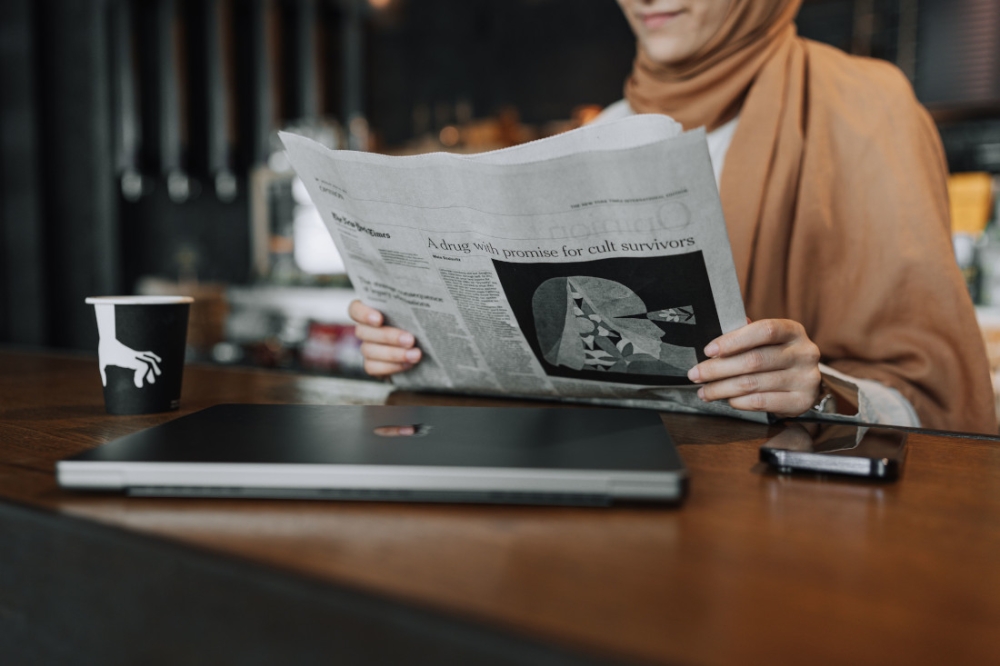
On September 6, the nature of modern communication has evolved drastically. In the past, news was predominantly disseminated through traditional media such as newspapers and television. Today, anyone with internet access can produce and distribute information swiftly, thanks to the rise of social media platforms. This shift has made our world more interconnected and informed than ever before.
I wholeheartedly support this democratization of media, as it offers more individuals the chance to engage in discussions that were once monopolized by a select few institutions. However, while democratization grants everyone the capacity to speak, it does not guarantee that all voices will receive equal attention. On social media, for instance, some viewpoints may emerge as dominant due to their repeated use, louder expression, or support from accounts with larger followings.
Moreover, algorithms can further magnify popular or contentious content, leading to a skewed media landscape. Despite the potential for a more open media environment, it may still be unequal, albeit controlled by different entities than before. This presents a challenge because reverting to conventional media may not be the optimal solution either.
Traditional media outlets are crucial in verifying information and upholding professional standards, yet they are not inherently neutral. Journalists and editors still make decisions regarding which stories to highlight, which sources to incorporate, and how events should be portrayed. Personal observations from my experiences have led me to question the biases often present in reporting on the Israel-Palestine conflict across various media outlets.
These disparities in language, imagery, and perspectives result in vastly different impressions among audiences. Thus, the dilemma cannot be reduced to a simple choice between unrestricted media and increased censorship. This dichotomy oversimplifies a complex issue, presenting only two options. While unrestricted freedom may invite misinformation, manipulation, and the dominance of powerful voices, excessive control poses its own danger by empowering authorities or institutions to dictate which information is deemed acceptable.
Media structures themselves can be weaponized when those in positions of political, economic, or social influence shape the information accessible to others. Therefore, I advocate for the pursuit of equitable media. Equitable media does not entail giving every opinion equal prominence nor accepting all information as equally valid.
Rather, it involves creating an environment where participation is not solely determined by pre-existing power, wealth, popularity, or influence. Individuals should be afforded genuine opportunities to articulate their experiences and perspectives, while audiences should also receive adequate context to assess the information they consume.
This necessitates media literacy among the public, responsible journalism from established organizations, and responsible behavior from participants in online discourse. The advent of generative artificial intelligence further emphasizes the importance of these precautions. AI can now generate realistic images, videos, audio, and text that may prove challenging for ordinary users to differentiate from authentic content.
Consequently, safeguards are required to maintain information integrity, particularly when fabricated material can disseminate globally within minutes. However, these safeguards should not serve as an excuse for reactionary censorship. Instead, they should aim to safeguard the media environment's integrity rather than obstruct productive and civil exchanges.
Ultimately, the democratization of media remains a goal worth defending. Its true potential lies not only in the rapid transmission of information but also in enabling previously marginalized individuals to engage in public discourse. However, simple accessibility does not suffice to establish fairness. If the most vocal individuals continue to dominate online spaces while powerful institutions dictate which perspectives are deemed legitimate, communication may become more democratic without becoming more equitable.
Thus, an equitable media environment should strive to ensure that people can participate meaningfully irrespective of their race, religion, nationality, gender, sexual orientation, ability, wealth, or social status. The future of media should not merely involve allowing everything or suppressing what we fear. Rather, it should focus on cultivating a communication environment where differences can coexist, information can be scrutinized responsibly, and no single group enjoys an unfair advantage in determining whose voices deserve to be heard.
Written by urgent.news from Malay Mail's reporting — not their text. Machine-written — may contain errors; check the original before relying on it.