What China’s Lop Nur desert base expansion means for PLA stealth jets in race with US
China is rapidly expanding a flight-test facility deep in its western desert, satellite imagery has revealed, a push that analysts say could help fast track the development of its next-generation military aircraft as air-power rivalry with the United States intensifies. Latest satellite photos of the facility near Lop Nur, in China’s western Xinjiang region, show four large new hangars, new…
Recent satellite images have exposed the rapid expansion of a secretive flight-test facility nestled within China's arid Lop Nur desert. The facility, located in the Xinjiang region, has seen the construction of four substantial new hangars, new taxiways, a circular runway potentially designated for engine run or turnaround operations, and possible fuel storage infrastructure, according to a recent analysis by defense website TWZ.
The timing of this expansion, which began around August 2025, aligns with China's intensified pursuit of advanced combat aircraft programs, potentially bolstering its capacity to test cutting-edge designs while minimizing the risk of observation.
Andreas Rupprecht, an aviation analyst and expert on the Chinese air force, is confident that the Lop Nur base will become the People's Liberation Army's new test center for high-end next-generation aircraft. However, another expert, who wished to remain anonymous, cautioned against jumping to conclusions until the base expansion is completed.
This expert pointed out that the recent addition of 60,000 sq ft (5,570 square meters) of hangar space and over 300,000 sq ft of other facilities, which likely include test and evaluation facilities and personnel housing, effectively doubled the size of the base.
The remote location of Lop Nur offers several strategic advantages. Its vast, sparsely populated expanse provides ideal conditions for testing experimental aircraft away from urban areas and with reduced observation. Moreover, the base could alleviate pressure on existing facilities by allowing multiple flight-test programs to operate concurrently, depending on the size of the aircraft.
The expanded infrastructure, according to Rupprecht, enables combined maneuvers involving advanced crewed and collaborative combat aircraft without the safety concerns associated with testing near major cities. The secluded environment could also facilitate sensor and electronic-warfare testing due to limited interference.
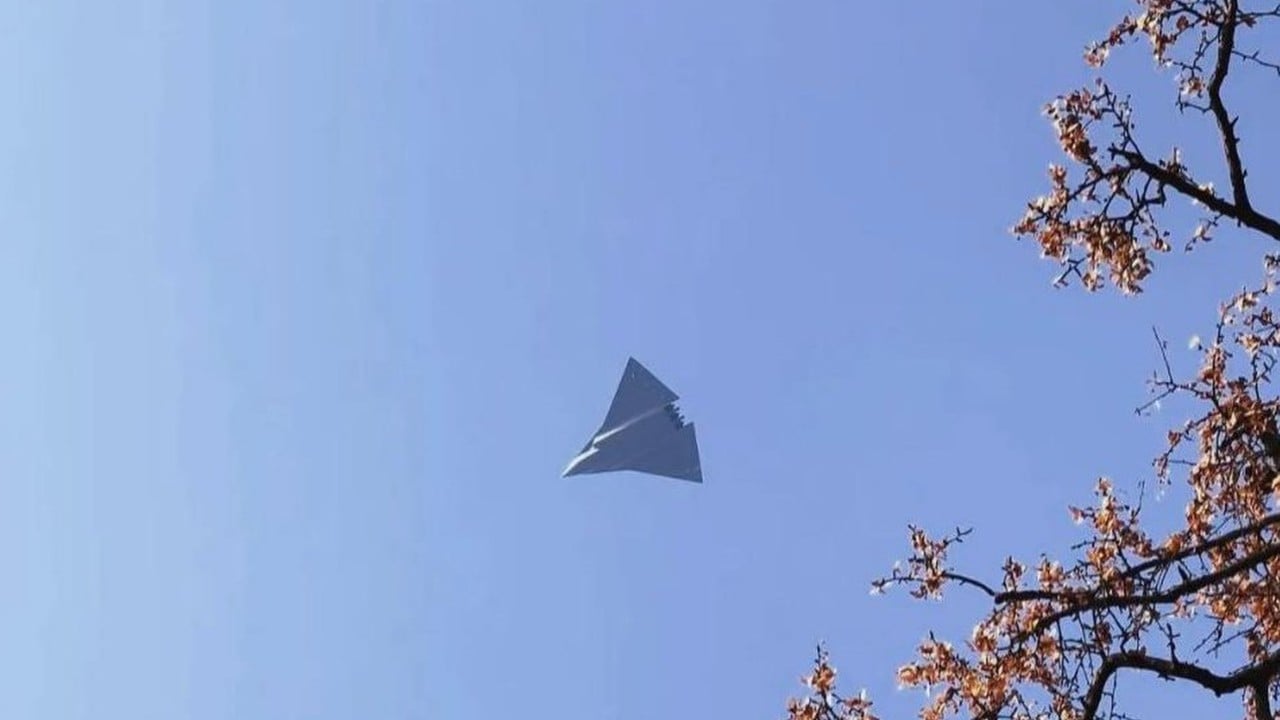
However, while the Lop Nur expansion could enhance China's stealth jet capabilities, it is not occurring in isolation. Major additions to manufacturing and testing infrastructure have also been documented at Chengdu, home to the J-20 and J-36 aircraft programs, and a new production complex near Shenyang, northeastern China. These developments underscore China's commitment to refining and improving the quality of its combat aircraft, emphasizing that such infrastructure investments are crucial for ensuring operational effectiveness and technological advancement.
Despite the lack of official disclosures regarding the missions, specifications, or formal designations of the J-36 and J-XDS/J-50 aircraft, experts acknowledge China's ambition and resources to build a technologically advanced air force.
Written by urgent.news from South China Morning Post's reporting — not their text. Machine-written — may contain errors; check the original before relying on it.
This story
This is one outlet's version. Read the fullest account.