Vietnam gains market share as China’s 3rd biggest vegetable, fruit supplier
Vietnam was China’s third largest supplier of fruits and vegetables in the first half of the year, with its market share rising and narrowing the gap with the second largest, Chile.
In 2025, China made a significant investment in importing vegetables, flowers, roots, and fruits from Vietnam, spending around US$2.16 billion, a 19.3% increase compared to the same period in 2024. Vietnam's share of China's imports rose from 13.8% in the first half of 2024 to nearly 16%, placing it behind Thailand (37%) and Chile (17%).
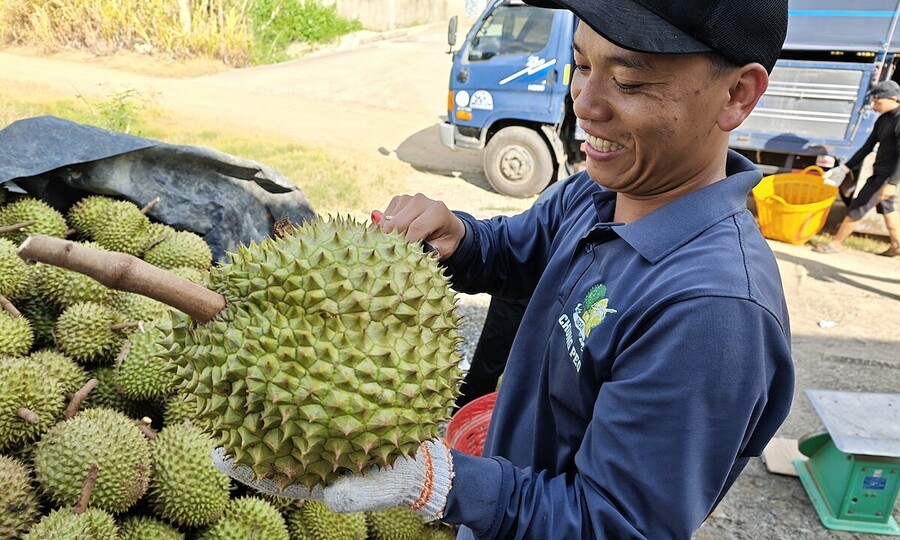
This growth has been fueled by both the expansion of Vietnam's production and changes in its product mix, particularly the emergence of durian as the biggest growth driver. China paid nearly $988 million for fresh and frozen durian imports from Vietnam this year, a 43% increase from the previous year.
Shipments of coconut also saw a sharp rise, although there were declines in exports of mango, dragon fruit, and banana. Dang Phuc Nguyen, secretary-general of the Vietnam Fruit and Vegetable Association, credited Vietnam's proximity to China as a key factor. He explained that fresh products can reach Chinese markets swiftly, maintain higher quality, and incur lower logistics costs compared to exports from Southeast Asia and South America.
This advantage is crucial, especially for fresh fruits, which are highly sensitive to transportation time.
As demand for tropical fruits in China grows—from major cities to second- and third-tier cities and provinces in the country's northern and western regions—suppliers located closer to China can capitalize on this advantage to grow their businesses. The approval of an increasing number of Vietnamese fruit varieties has facilitated expansion in growing areas and overall output.
However, Vietnam must also contend with increasingly stringent import requirements imposed by China. Nguyen noted that China is tightening oversight in various aspects, including business registration, growing-area codes, and packing facilities. Violations such as origin fraud, misuse of growing-area codes, and pest contamination can lead to temporary suspension or revocation of export codes, severely impacting the exports of entire growing regions.
Written by urgent.news from VnExpress Business's reporting — not their text. Machine-written — may contain errors; check the original before relying on it.