Tesla to exhibit Cybercab robotaxi in China: can it spark buzz amid slow sales?
Tesla is facing weaker sales in China this year, but the American electric vehicle (EV) manufacturer is looking to generate a buzz in its second-largest market by exhibiting its new self-driving vehicle, the Cybercab. The robotaxi – which operates entirely without a steering wheel, pedals or rear-view mirrors – would debut in major Chinese cities, including Beijing and Shanghai, starting…
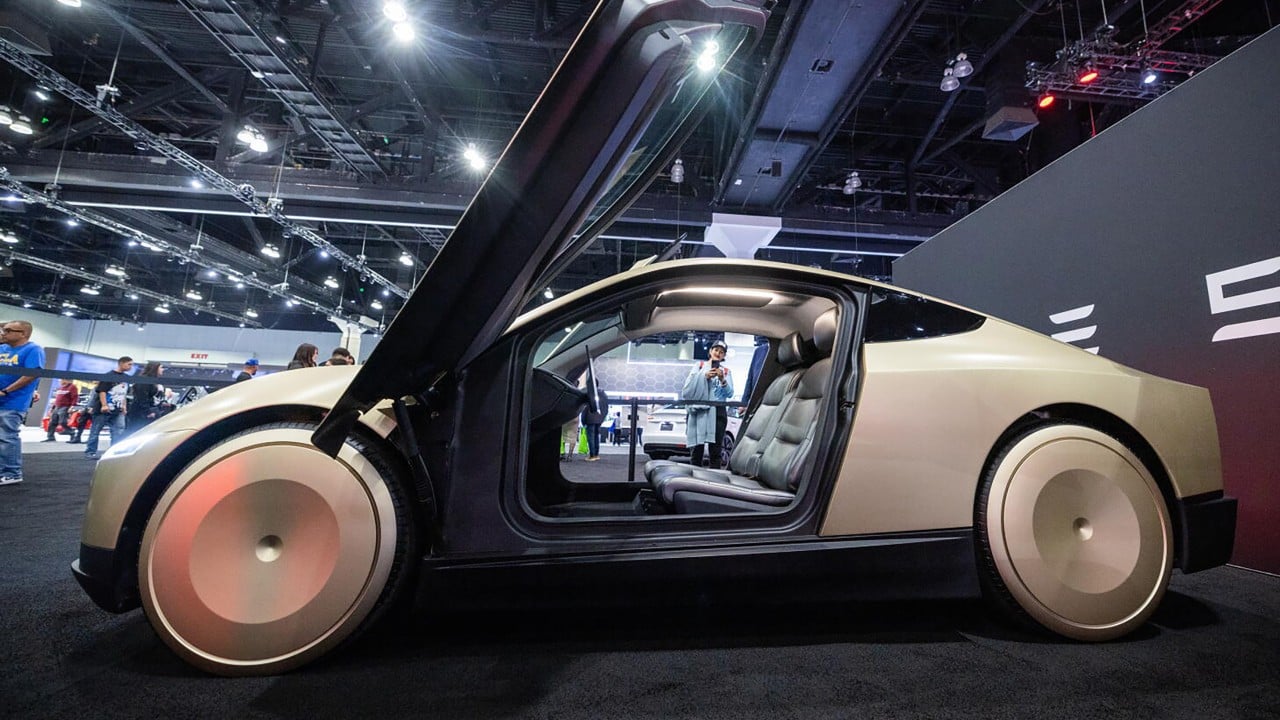
Tesla, the American electric vehicle manufacturer, is set to showcase its new self-driving robotaxi, known as the Cybercab, in major Chinese cities such as Beijing and Shanghai beginning mid-September. The futuristic vehicle operates without a steering wheel, pedals, or rear-view mirrors, highlighting the company's technological prowess.
However, Tesla has clarified that the exhibition does not entail sales of the Cybercab in China, nor does it indicate the company's intention to launch its robotaxi business in the country anytime soon.
Despite the exhibition not leading to immediate sales, industry observers and dealers believe it could bolster Tesla's brand visibility in China – the world's largest electric vehicle market. Steve Shi, a manager at Juchen Auto Trade, a China-based car service firm, stated that the event could convince thousands of visitors that Tesla remains a global leader in autonomous driving. Even with stiff competition from local players, Tesla still enjoys a significant fan base in China, eager to purchase its vehicles.
The Cybercab entered mass production at Tesla's Texas Gigafactory in April. The two-seater model depends entirely on a self-driving system to navigate public streets, eliminating the need for conventional manual controls. This announcement comes in the wake of Tesla China's Shanghai Gigafactory reporting a 7.9% month-on-month decline in deliveries in August.
The Shanghai plant, Tesla's largest production hub globally, delivered 86,166 Model 3 and Model Y vehicles to customers in China and abroad in August, down from 93,579 in July. Although the China Passenger Car Association (CPCA) has not yet broken down the figures into domestic and overseas sales, deliveries throughout January and July amounted to 266,204 vehicles for Chinese buyers, a 12.4% decrease compared to the same period last year.
In 2025, the Shanghai Gigafactory is expected to produce around 851,000 vehicles for both domestic sales and exports, constituting 52% of Tesla's global total. As of now, China remains Tesla's second-largest market worldwide, trailing only the United States. Last year, the EV giant reported sales of approximately 625,000 vehicles on the mainland, marking a nearly 5% decline compared to 2024.
Although Tesla established itself as an early frontrunner in China's premium EV segment after starting deliveries of the Model 3 to domestic customers in late 2019, Chinese smartphone vendor and EV start-up Xiaomi has since emerged as a formidable challenger in the domestic market, with deliveries of its fully electric SU7 surpassing those of Tesla's Shanghai-produced Model 3.
Written by urgent.news from SCMP Business's reporting — not their text. Machine-written — may contain errors; check the original before relying on it.