Only 2pc ever-married women own land in Pakistan: study
https://www.dawn.com/news/2027778/women-own-just-2pc-of-land-in-pakistan
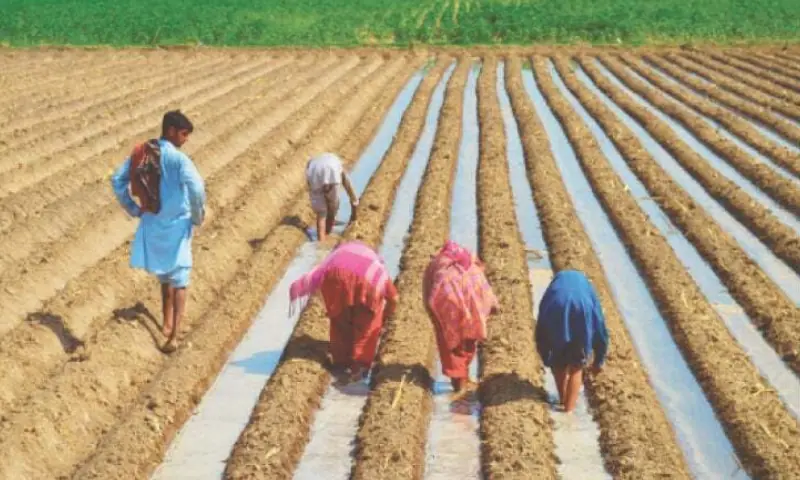
KARACHI: A recent survey conducted by the Sustainable Development Policy Institute (SDPI) reveals that only 2% of women in Pakistan own land, underscoring the significant gender disparity in land ownership and economic empowerment. Despite 67% of employed women working in agriculture, only 1.5% of agricultural households are formally identified as female-headed.
The study highlights that just 2% of ever-married women aged 15-49 possess land individually or jointly, while 97.2% have not inherited any property. In Sindh, 99.1% of women do not own land alone or jointly.
The study further uncovers a pronounced financial and digital gender gap. Among agricultural households, only 1.5% are formally recorded with female heads, compared to 56% of men owning full-service financial accounts, with only 14% of women having such accounts. Mobile-wallet ownership is even lower, with 48% of men and just 11% of women using them.
The urgency of addressing these challenges is heightened by the increasing intensity of climate risks. In 2022 alone, floods caused over $30 billion in damage and economic losses, with at least $16.3 billion needed for resilient reconstruction. Currently, half of Pakistan's population remains unrecognized as active agricultural workers.
It is crucial to recognize the vital role women play in agriculture, as they absorb climate shocks and often rely on borrowing to survive. However, the formal financial system fails to cater to their needs adequately.
More than 90% of surveyed women farmers have experienced extreme climate-related events, such as heatwaves, flooding, heavy rainfall, or drought, within the past five years, resulting in crop losses or negative impacts on farming. Over 80% of these women reported borrowing as their primary coping strategy, while more than half also resorted to selling livestock.
In the Khushab district, every woman who reported a coping strategy had borrowed money, and more than half had sold livestock, potentially jeopardizing future income.
Pakistan, ranked among the world's most climate-vulnerable nations, faces a structural exclusion that permeates financial products centered around land ownership, individual mobility, and digital access. These factors do not reflect the reality of women farmers and must be addressed urgently. The SDPI proposes a practical framework for designing gender-responsive climate finance solutions to help women farmers protect livelihoods, recover faster, and build resilience.
This framework should involve financial institutions, regulators, development finance institutions, and development partners to create more inclusive and climate-responsive solutions.
Written by urgent.news from Dawn Business's reporting — not their text. Machine-written — may contain errors; check the original before relying on it.
This story
This is one outlet's version. Read the fullest account.