MSRTC Revenue Rises By ₹66 Crore In August After Demand-Based Bus Schedule Changes Across Maharashtra
Mumbai: The Maharashtra State Road Transport Corporation (MSRTC) has reported a Rs 66 crore increase in revenue in August compared with July, with the transport undertaking attributing the rise to changes in bus schedules based on passenger demand. The increase follows a series of review meetings and directions by Transport Minister and MSRTC chairman Pratap Sarnaik, who has been pushing the…
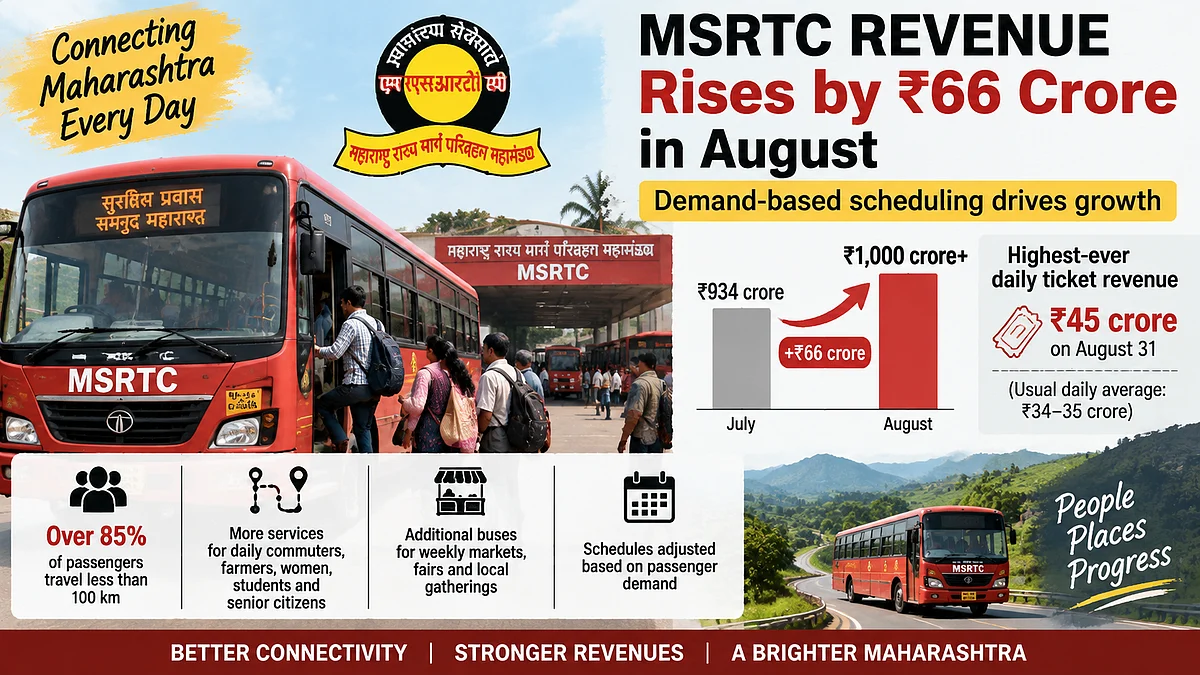
The Maharashtra State Road Transport Corporation (MSRTC) witnessed a significant surge in revenue during August, marking a rise of Rs 66 crore compared to July. This growth was attributed to a strategic adjustment in bus schedules based on passenger demand, as directed by Transport Minister and MSRTC Chairman Pratap Sarnaik. Sarnaik's objective was to optimize bus deployment to ensure maximum utilization, focusing on areas with higher passenger volumes, particularly local and short-distance routes.
Over 85% of MSRTC's passengers travel distances of less than 100 km, underscoring the critical role of local and short-distance services in generating revenue. The transport authority introduced additional services on routes serving weekly markets, fairs, and other local gatherings, further enhancing its capacity to cater to the needs of daily commuters, farmers, women, students, and senior citizens.
As a result, MSRTC achieved its highest-ever daily ticket revenue of Rs 45 crore on August 31, surpassing its usual daily average of Rs 34-35 crore. This marked a milestone as the August total crossed the Rs 1,000 crore mark for the first time. Sarnaik emphasized that the revenue increase demonstrated the effectiveness of demand-based planning in improving the financial health of MSRTC without compromising its public service commitment.
He reiterated MSRTC's vital role as the lifeline for the common people, highlighting the importance of aligning services with passenger needs. Sarnaik expressed confidence that if this trend continues, MSRTC could recover its operating losses within the next two to three months. However, the immediate challenge lies in sustaining these revenue gains while ensuring that schedule modifications do not diminish access to essential services in rural and semi-urban regions.
Written by urgent.news from Free Press Journal's reporting — not their text. Machine-written — may contain errors; check the original before relying on it.