Less crew, more tech: How China’s next-gen Type 100 is changing the tank playbook
China's new Type 100 main battle tank is appearing in new footage. This advanced vehicle features an unmanned turret and active protection systems. It also incorporates hybrid-electric propulsion for reduced signatures. The tank is designed for networked battlefield operations and deep assaults. This new platform signals a significant shift in China's armored warfare approach.
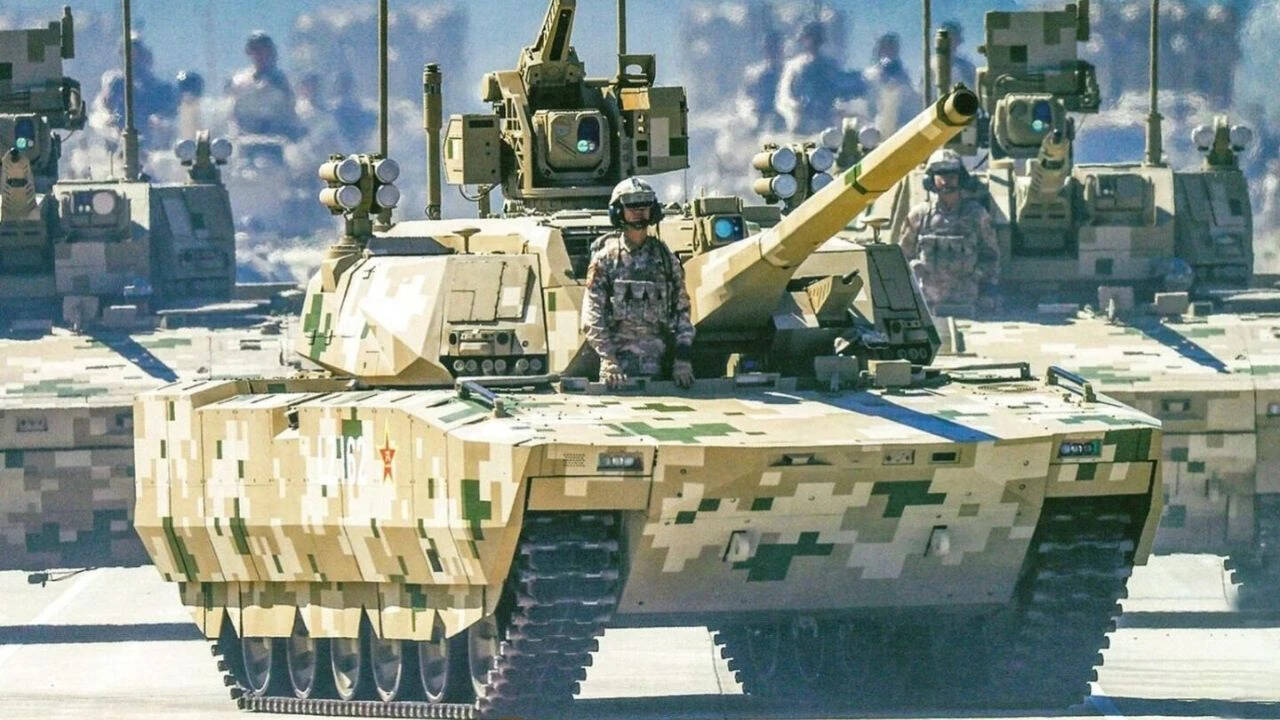
China’s next-generation Type 100 main battle tank has been showcased in recent footage from an undisclosed Chinese city, which displays the vehicle in a new camouflage pattern and could indicate an increased deployment. The military publication Military Watch Magazine highlighted these developments on September 5, alongside unconfirmed reports suggesting a larger-scale introduction of the Type 100.
The People’s Liberation Army has officially confirmed the tank’s integration into their forces following its debut at the September 2025 Victory Day parade. The Type 100 marks a pivotal change in China's armour strategy, incorporating unmanned turret capability, advanced sensors, active protection, hybrid-electric propulsion, and networked battlefield functionalities.
Officially characterized as a new-generation main battle tank, Chinese state media has emphasized its unmanned turret, sophisticated radar, active protection system, and augmented-reality technology. The tank is equipped with a 105mm main gun, enhanced visibility and threat detection through cameras and sensors on the hull, and an active protection system safeguarded by a four-faced phased-array radar to fend off incoming projectiles, rockets, and missiles, including drones and precision-guided weapons.
Innovative hybrid-electric propulsion enables the tank to generate substantial onboard electrical power for sensors and defensive systems while operating in various modes, potentially reducing its acoustic and infrared signatures. The unmanned turret configuration separates the three-person crew from the turret and ammunition systems, possibly enhancing crew protection while allowing a more compact turret design in alignment with broader tank design trends aimed at safeguarding crews from lethal anti-armour weapons and unmanned aerial threats.
Beyond its conventional attributes, the Type 100 is engineered to operate within a broader digital combat network. The US Army War College has assessed the platform as suitable for long-range rapid deployment, tactical deep assault, urban operations, and joint fire guidance. Its integrated sensors and communication systems enable the tank to receive and share battlefield intelligence with other combat units, drawing on data from drones, satellites, and command headquarters to create a comprehensive battlefield picture and exchange targeting information.
This all-encompassing approach positions the Type 100 not merely as a vehicle to move, shoot, and survive, but as a networked battlefield node, interlinking sensors, weapons, and commanders across a wider combat formation. Overall, the Type 100 represents a comprehensive evolution in China's armoured vehicle development, merging firepower, protection, mobility, and networked warfare into a single, advanced platform.
Written by urgent.news from Times of India's reporting — not their text. Machine-written — may contain errors; check the original before relying on it.