Økning i tvangssalg av boliger: – Renten er en kvern
Gjeldsøkonom advarer: Flere vil miste hjemmene sine.
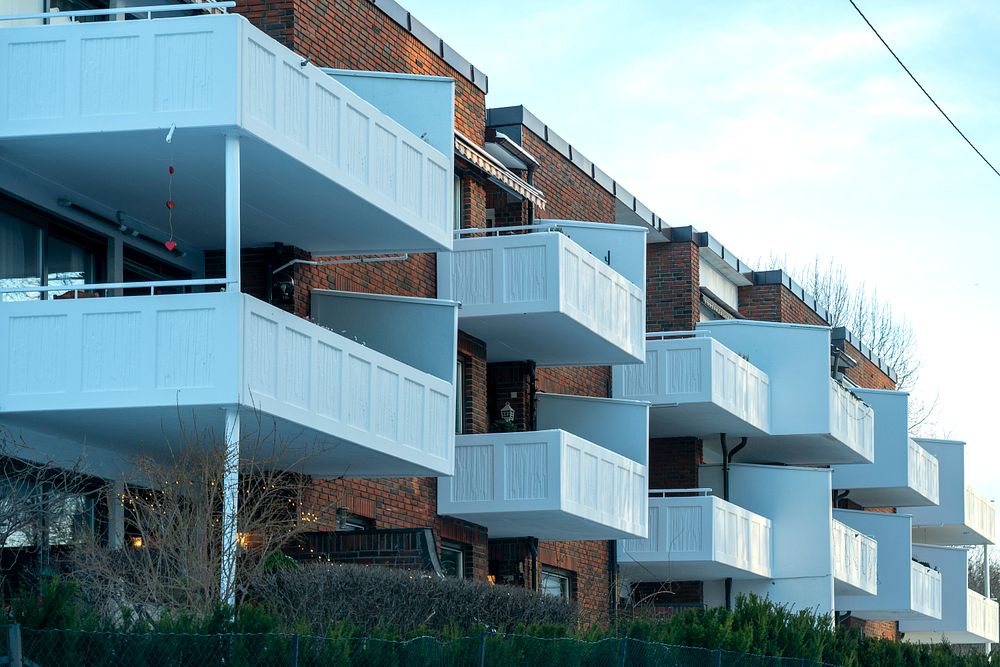
In the first half of this year, there were 353 instances of property being forcibly sold due to borrowers being unable to meet their loan repayments - typically to the bank holding the mortgage. This is the highest number of forced sales in a single first half of the year since 2021, according to figures from Statistics Norway (SSB).
This indicates that high interest rates are particularly affecting those who are struggling the most, says Vetle Severinsen, an economist at Bluestep Bank and Bank2. Severinsen believes the rise in forced sales is a consequence of high interest rates and rising prices. When comparing the trend of forced sales to the policy rate, it can be seen that forced sales tend to increase after interest rates are raised.
The interest rate level in 2024 and the first half of 2025, with a policy rate of 4.5%, was the highest since 2008. The central bank raised the rate to 4.25% in May, and it has remained unchanged since then. In June, the central bank warned that there may soon be "a need to raise the interest rate at the next policy meeting". The tone then mellowed in August, with inflation slowing more than expected throughout the summer, but the committee felt it was too early to conclude that inflation outlooks had changed significantly.
It may still be necessary to raise interest rates, said DNB Carnegie, Danske Bank, and Nordea Markets. Norwegian households still have very high debt. By the end of 2025, outstanding loan debt was around 4,800 billion kroner, equivalent to 212% of disposable income - down from a peak in 2021, but still high compared to other countries, according to the Finanstilsynet.
Small family households are the most indebted: couples with children under six have on average more than three times their after-tax income in debt, according to the agency's report from summer. Severinsen has worked with debt collection agencies and banks over the past year. He says the central bank does not typically point to forced sales when deciding whether to raise or lower interest rates. - They focus on the average and don't see the weakest, he says.
When things are going well for the average Norwegian, you don't see those who are struggling. The interest rate is a poison that poisons those who are struggling, he says. Those seen in the forced sales statistics are those who are not average. They are those who have not benefited from wage growth but only price increases. - The ones we see in the forced sales figures are those not at the average.
They are those who have not shared in the wage growth but only in the price increase. - What more forced sales will there be if the interest rate is raised further? - It's hard to say, but when you look at the trend, it's on the rise, and there's nothing to suggest it won't continue to rise. Senior economist at Handelsbanken, Marius Gonsholt Hov, says the link between interest rates and forced sales is clear. - This illustrates that even when the Norwegian economy is doing well, with most people employed and purchasing power still growing, it is also a macro picture that masks the fact that there are also people who are struggling with high costs and high interest rates, he says.
Severinsen has advice for those who may soon face the sale of their property: sell before it's too late. - When you work in a bank, you see people hold fast to what they have, he says. If you have such problems that your property ends up being sold through forced sale, you have to pay late payment interest. - It can typically be around 12%, which would be 240,000 kroner for a 2 million kroner mortgage over a year, he says.
Moreover, forced sales tend to be slower than regular property sales and often the properties sold through forced sale are sold at a lower price than the market value. - People of course want to keep their home, but if you first find yourself in a situation that cannot be resolved without selling your property, you will come out better by selling voluntarily than by waiting for a forced sale.
Written by urgent.news from E24 Norway's reporting — not their text. Machine-written — may contain errors; check the original before relying on it.