Klimawandel: An Kälte gewöhnte Arten verschwinden von Europas Berggipfeln
Steigende Temperaturen seit den 1980er Jahren führen dazu, dass die Pflanzenwelt in europäischen Gebirgen artenreicher wird. Allerdings gibt es auch Verlierer, wie Wissenschaftler nachgewiesen haben.
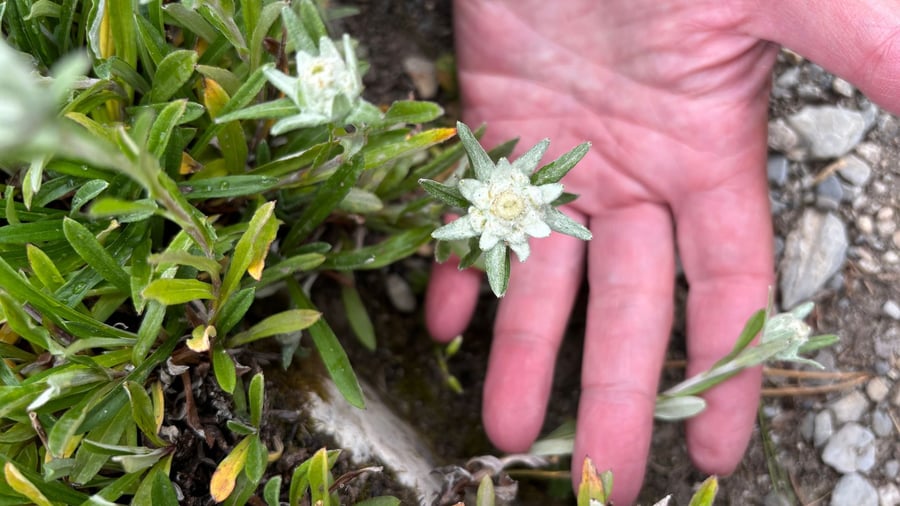
As global temperatures rise, plant life is expanding on European mountain peaks, while specialized species are disappearing from these high altitudes, according to a study published in the journal "Science". The lead author, Johannes Wessely from the University of Vienna, explains that the study shows a clear link between the degree of local temperature increase on individual peaks and the loss of species on those peaks.
Decades ago, the regions above the alpine tree line were unsuitable for many plants. However, the researchers say that rising temperatures since the 1980s have softened these cold limits, leading to an increase in species numbers on European mountain peaks. Plants such as Alpine buttercup grass and Arnica have begun to dominate the peaks, as documented in a 2018 study in the journal "Nature".
Observations at mountain summits have been ongoing for 25 years, with data from permanent observation sites on 62 European mountain peaks analyzed for this study. Conducted between 2001 and 2022 within the global monitoring network Gloria, these surveys were carried out every four years at sites ranging from the Schrankogel in Tyrol to the Swiss Alps, the Pyrenees, and the Georgian Caucasus.
The proportion of species that disappeared at each subsequent survey increased over time. Most affected were species adapted to cooler habitats, including species such as glacier bellflower, single-flowered hornwort, or alpine men's shield in the Alps. The researchers say further investigation is needed to pinpoint the exact factors leading to the local extinction of specialized species at high altitudes.
They suggest additional influences beyond rising temperatures could include reduced water availability, a shorter duration of snow cover, and competitive pressure from newly established species that have recently taken over the peaks.
Written by urgent.news from Handelsblatt's reporting — not their text. Machine-written — may contain errors; check the original before relying on it.