How the hair of a museum bear is helping tackle wildlife crime
Hayden Leigh, a forensic science graduate, is studying the hair of Boris the bear.
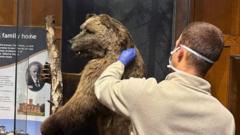
A forensic science graduate is using hair from a 120-year-old taxidermy bear to aid in the fight against wildlife crime. Boris, the museum's unofficial mascot, has proven to be a valuable resource in Hayden Leigh's research at the University of Staffordshire. By analyzing Boris's fur, Leigh aims to develop a cost-effective and reliable alternative to DNA analysis for identifying animal hairs during investigations.
Boris arrived at the Museum of Chelmsford in 1932, alongside a collection of taxidermy bequeathed by a local game hunter. Leigh has approached numerous zoos and museums for assistance, but the museum agreed to lend Boris for the project. The research involves examining the cuticles, different layers, and DNA of the bear's hair. By analyzing Boris's hair at a microscopic level, Leigh hopes to help protect brown bears from illegal poaching.
Taxidermy samples from museums can provide a valuable and accessible source of authentic animal hair for forensic research, without the need to disturb live animals. Councillor Jennie Lardge praised the scientific value of historic taxidermy collections and expressed delight in the Museum of Chelmsford's support for this important project.
Written by urgent.news from BBC Science's reporting — not their text. Machine-written — may contain errors; check the original before relying on it.