Hong Kong open to classifying heatstroke as an occupational disease: labour chief
Hong Kong labour authorities are open to classifying heatstroke as an occupational disease, the city’s labour chief has said, acknowledging the revamped heat warning system would have triggered stronger alerts on two exceptionally hot days last month. Commissioner for Labour Sam Hui Chark-shum said retrospective modelling showed the revised system would have issued a black warning on August 8 and…
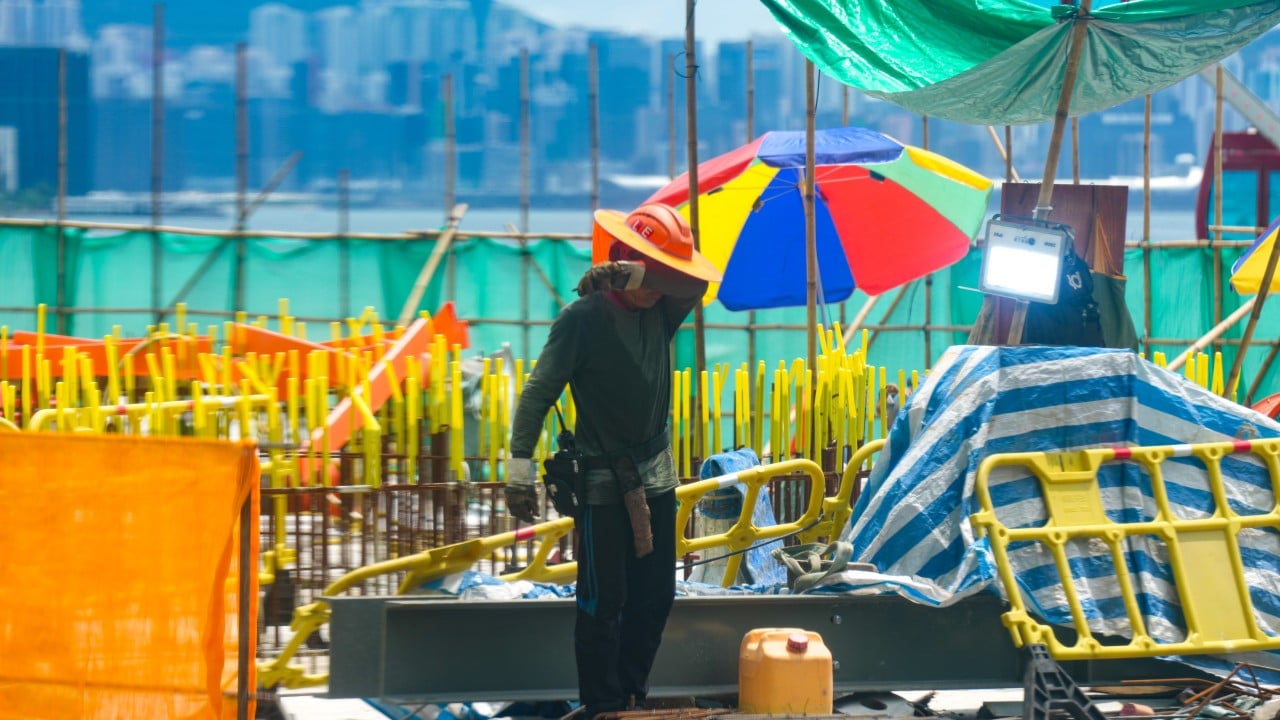
Sam Hui, Hong Kong's labour commissioner, has expressed openness to designating heatstroke as an occupational disease. This proposal stems from concerns over the city's heat warning system, which critics argue did not adequately address the severity of extreme temperatures experienced by outdoor workers. When the revised heat stress warning system was implemented in mid-August, it would have issued a black warning on August 8 and a red alert on August 9, when the Observatory recorded the highest temperature on record at 36.9 degrees Celsius (98.4 Fahrenheit).
The heat stress warning system comprises three levels – amber, red, and black – each providing employers with guidance on rest arrangements for outdoor and indoor workers lacking air conditioning. Previously, only an amber warning was issued on August 9, leading to criticism from lawmakers, unions, and meteorologists who argued the system's lack of responsiveness failed to capture the true risks faced by outdoor workers.
In response, authorities revised the mechanism on August 28 by introducing additional triggers aimed at heightening its sensitivity to extreme temperatures and strong solar radiation. Hui stated the department remains committed to evaluating the revamped system's performance and may consider further adjustments before the upcoming hot season.
While heatstroke and heat exhaustion already qualify for compensation under existing legislation, Hui acknowledged workers might encounter challenges in proving a direct causal link between their condition and their job, as classifying an illness as occupational requires a well-established medical connection to a specific working environment or pattern.
To facilitate future claims, the department is exploring the possibility of compiling medical and pathological data from confirmed work-related heatstroke cases into a reference database for healthcare professionals. Hui emphasized that a higher heat stress warning does not mandate a complete shutdown of operations, as employers can maintain work through advanced risk assessments and measures such as setting up cooling stations, providing ventilated clothing, fans, shade, and rescheduling physically demanding tasks away from the hottest hours.
The department anticipates the revised mechanism may result in red warnings on four to seven days and black alerts on one or two days annually.
Written by urgent.news from South China Morning Post - Hong Kong's reporting — not their text. Machine-written — may contain errors; check the original before relying on it.
This story
This is one outlet's version. Read the fullest account.