At flood-destroyed China-Nepal border, no sign of a once-busy port
Rescue workers have divided the search area into seven zones, officials said. They have completed searches in four of them, with three remaining.
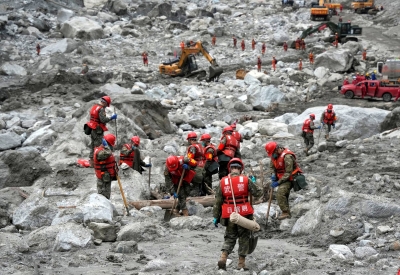
On Sunday, Chinese rescue workers employed excavators, shovels, and ground-penetrating radar in a desperate search for hundreds of people missing since a catastrophic mudslide destroyed China's main border crossing with Nepal. The Gyirong border crossing, a vital land port in a narrow gorge, was transformed into a grim symbol of the devastation following the collapse of a glacier on the Nepalese side on August 26.
Reuters and other news organizations were granted exclusive access for the first time by China's foreign ministry to tour the site devastated by the mudslide.
Despite their efforts, no trace of the five-story Chinese customs building that once stood at the border was found. The sole remnant of the pre-disaster landscape was a remnant of a nearby water tower. A Chinese flag was placed at the site where the nearly 20-meter-high border gate once stood, marked by hazard signs warning, "Danger Area - Pass Quickly."
Rescue teams divided the search area into seven zones, with three zones remaining unsearched. As of Friday, China had confirmed 31 deaths while 531 were still listed as missing. Among the missing are 261 foreigners from 23 countries. The only land route into Gyirong was reinstated by Wednesday, allowing China to bring in heavy equipment for recovery and future rebuilding. Temporary electric poles were set up to restore power to the area.
Gyirong, situated at an average altitude of over 4,000 meters, became the primary border crossing for trade and travel between Nepal and Tibet over the past decade. The port's significance surged after a 2015 earthquake heavily damaged an alternative crossing farther east. Apart from facilitating trade, it also served as a key entry point for thousands of Hindu pilgrims journeying to the revered Hindu-Buddhist site of Mount Kailash in Tibet.
Written by urgent.news from New Straits Times's reporting — not their text. Machine-written — may contain errors; check the original before relying on it.
This story
This is one outlet's version. Read the fullest account.
- At flood-destroyed China-Nepal border, no sign of a once-busy port nst.com.my
- China-Nepal border: No sign of a once-busy port economictimes.indiatimes.com