AI replacing Auslan interpreter jobs in regional towns
Virtual interpreters, apps and AI can help deaf and hearing-impaired people in regional areas, but there are fears the tech is coming at the expense of face-to-face interpreters.
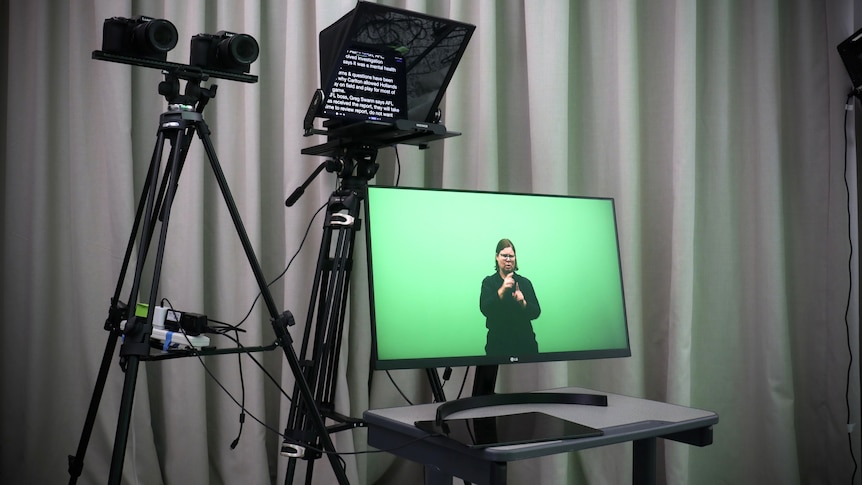
The shortage of Auslan interpreters in regional Victoria is causing difficulties for deaf and hearing-impaired individuals. Virtual interpreter services, apps, and artificial intelligence (AI) are being increasingly utilized to overcome this challenge. However, concerns are emerging that these technologies may replace face-to-face interpreters in the long run.
For the deaf and hearing-impaired community in Australia, securing and scheduling an in-person Auslan interpreter can be challenging. To address this issue, virtual services, apps, and AI are being employed more frequently to provide translation services in areas previously struggling to find interpreters. This shift is, however, having an unintended consequence – many registered Auslan interpreters based in regional areas are finding themselves without work.
Cindy Murray, a former Auslan interpreter, recently left her job due to the declining demand for in-person services. While she acknowledges the growing need for interpreters, particularly in rural and regional areas, Murray criticizes agencies for their reluctance to pay travel expenses and prioritize in-person interpreters over virtual options. Certain agencies have even stated that no interpreters are available in regional areas, despite deaf clients reporting otherwise and being offered virtual interpreters instead.
Live captioning, an AI software that transcribes spoken conversations in real-time, is often used as an alternative to interpreting. However, it does not translate Auslan responses to spoken language, which limits its applicability. Virtual interpreters can work remotely, appearing on-screen to translate heard language, typically at a lower cost than in-person interpreters. Murray believes that the reduction in interpreters will continue to worsen due to the way interpreters are treated.
Brent Phillips, the chief services officer for Deaf Connect, an organization that serves deaf and hearing-impaired people, emphasizes the importance of accommodating customers' preferences. If a customer prefers an in-person interpreter, Deaf Connect will do its best to provide one. However, when an in-person interpreter is unavailable, they work closely with the customer to find an alternative solution.
Phillips is actively monitoring the AI landscape and actively advising on the design of future AI sign-language products, but maintains that AI will never replace human interpreters.
Gary Kerridge, a regional outreach officer for Deaf Victoria, echoes concerns about the scarcity of in-person Auslan interpreters. He highlights that demand for interpreters is high, and they are frequently booked, leaving many people without options. Kerridge, who is deaf and lives in a regional community, notes that virtual and AI services can help alleviate the shortage while saving costs for NDIS funding participants.
He helped implement a trial of a virtual interpreter app called Convo, which allows users to access Auslan interpreters anywhere at a fee. Ballarat City Council in regional Victoria is among the organizations testing Convo. Kerridge stresses that Convo relies on human interpreters and is not intended to replace face-to-face services.
He concludes that the evidence suggests this support is needed, and if properly implemented, it could save lives.
Written by urgent.news from ABC News AU's reporting — not their text. Machine-written — may contain errors; check the original before relying on it.