This NASA-funded 'Slingshot' spacecraft idea could map minerals on planets and moons across our solar system
NASA funded an early-stage concept aiming to show new techniques for mapping minerals on the moon, asteroids or Martian moons.
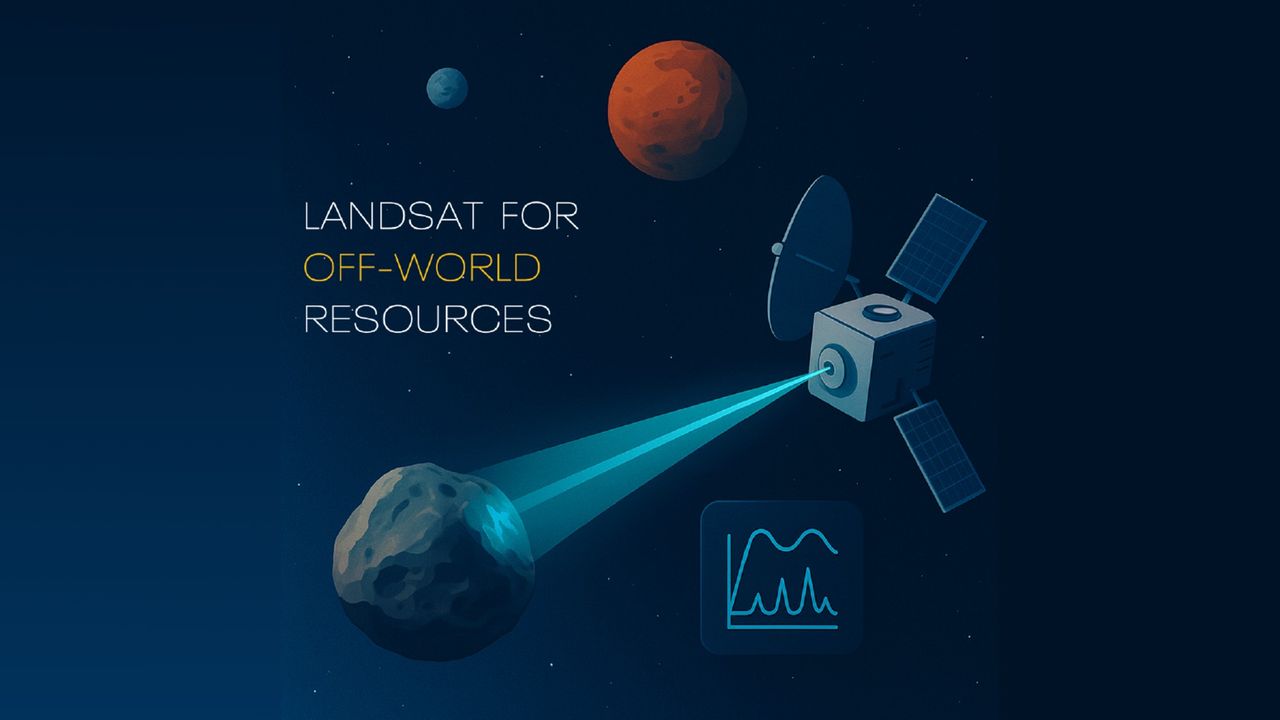
NASA has awarded a Phase 1 grant to Interworld Slingshot Resource Surveys, a study aimed at developing a spacecraft capable of mapping minerals on planets and moons within our solar system. The project, named after the Landsat satellite series that has charted minerals and climate change on Earth for over 50 years, seeks to bring similar capabilities to other celestial bodies.
Principal investigator Pablo Sobron of the SETI Institute explained that the spacecraft could visit various destinations, including the moon, an asteroid near Earth, or Phobos, a moon of Mars. The mission's primary goal is to demonstrate the feasibility of using Raman spectroscopy from orbit or a flyby to identify mineral compositions. Raman spectroscopy, commonly employed by NASA's Perseverance rover on Mars, relies on reflected light from a laser to analyze the molecular structure of minerals.
Sobron highlighted the challenge of detecting Raman-scattered light over vast distances, estimating that only about one photon in 10 trillion is Raman-scattered. The team aims to detect useful measurements within a range of 30 to 50 kilometers (19 to 31 miles). If successful, the tiny spacecraft could survey multiple celestial bodies during a single mission, utilizing a single remote-sensing instrument.
Written by urgent.news from Space.com's reporting — not their text. Machine-written — may contain errors; check the original before relying on it.