The IWT stands
EDITORIAL: The award issued by the Hague-based Permanent Court of Arbitration (PCA) on the Indus Waters Treaty (IWT) comes as a vindication of Pakistan’s position and reinforces a fundamental principle of international law: treaties cannot simply be suspended or discarded unilaterally. The ruling provides important legal clarity, declaring that the IWT “remains fully in force” and that India must…
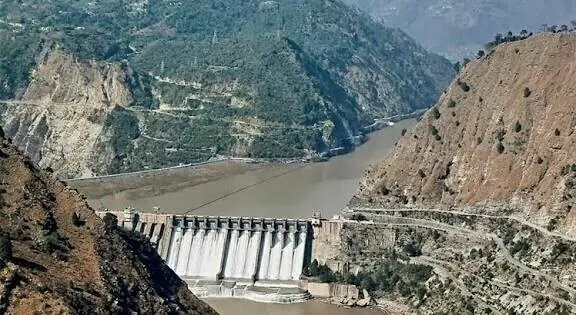
The Permanent Court of Arbitration's (PCA) ruling on the Indus Waters Treaty (IWT) gives Pakistan a victory and reinforces a crucial international law principle: treaties cannot be unilaterally suspended or abandoned. The court's decision confirms that the IWT remains in full force and India must comply with its obligations, particularly regarding hydroelectric projects on Western Rivers.
Pakistan has always argued that the IWT provides a rules-based framework for managing the Indus, Jhelum, and Chenab rivers. It maintains that any disputes over hydroelectric projects should be resolved through the treaty's mechanisms. Over the years, the treaty has withstood wars, political crises, and hostility between the two nations, proving that even adversarial neighbors can cooperate when vital shared resources are involved.
However, the IWT's durability was challenged when India unilaterally placed the treaty in "abeyance" under the Modi government. For Pakistan, the stakes are immense, as the Indus River system is vital for agriculture, food security, hydropower, and the livelihoods of millions. Pakistan has declared that any attempt by India to block or stop its share of the Indus waters would be considered an "act of war."
The PCA's affirmation of the treaty's validity is crucial, as it contradicts India's arguments. The court found that Pakistan's alleged failure to agree to treaty modifications does not constitute a material breach and that India's terrorism allegations cannot serve as a legal basis for suspending the treaty. The court also ruled that the interim measures concerning the Ratle hydroelectric project do not prejudice the dispute, with the final decision expected in 2027.
While this legal victory should not lead to complacency, it underscores the importance of sustained diplomacy and institutional cooperation. India's rejection of the PCA's jurisdiction is unfortunate but does not diminish the significance of the ruling. Pakistan must now solidify its legal position, closely monitor developments on the Western Rivers, participate in the neutral-expert process, and push for the restoration of meaningful institutional engagement.
The IWT's endurance is due to its ability to manage disagreements, and it must not become another casualty of India-Pakistan tensions.
Written by urgent.news from Business Recorder's reporting — not their text. Machine-written — may contain errors; check the original before relying on it.