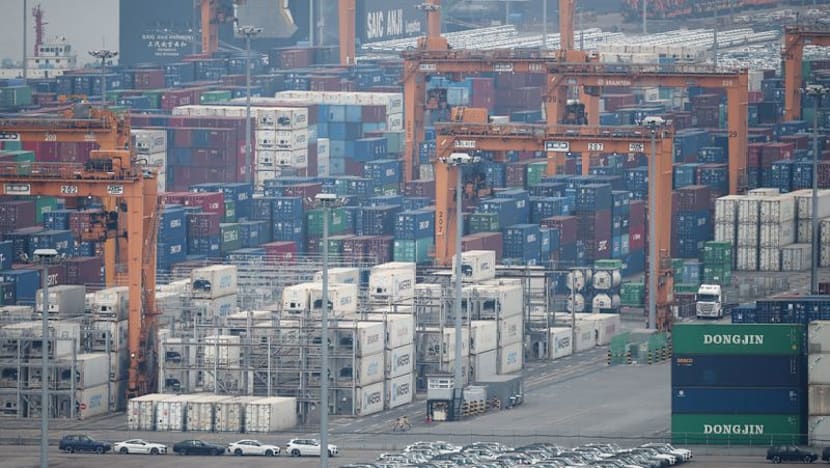
South Korea exports surpass full-year record, hit $709.4 billion YTD
South Korea's Financial Services Commission has set February 2027 as the beginning of a three-phase rollout of tokenised securities, aiming to facilitate on-chain settlement using stablecoins. The programme, which covers traditional assets like stocks, bonds, and funds as well as fractional investment products, was unveiled after a public-private meeting on September 4.
The first phase will focus on products suitable for a controlled launch, including privately pooled money market funds, institutional investor bonds, unlisted shares held in trusts, and publicly offered fractional investment securities. The subsequent phases will extend tokenisation to all publicly offered securities and establish an on-chain payments infrastructure linked to stablecoins, enabling payment and settlement to occur on distributed-ledger systems.
The exact timelines for the remaining phases will hinge on the success and stability of the initial phase, the speed of technological adoption among market participants, and the advancement of stablecoin-specific legislation. Existing securities licenses will permit firms to handle tokenised securities within their current authorisations, while over-the-counter intermediaries will need to seek approval from the Financial Supervisory Service before engaging in tokenised-securities transactions.
Retail participation on over-the-counter exchanges will be capped at a 100 million won net purchase amount annually, and the commission has established requirements for issuers managing investor accounts directly, including minimum equity capital and compliance with cybersecurity and operational standards. The Korea Securities Depository will serve as a central infrastructure hub, overseeing the screening of distributed ledger technologies and conducting reviews and operational tests when securities firms seek to connect blockchain systems to the existing electronic-registration framework.
The framework seeks to integrate distributed ledger technology into the current capital-market regime rather than create a separate, unregulated market.
Written by urgent.news from Arabian Post's reporting — not their text. Machine-written — may contain errors; check the original before relying on it.
This story
This is one outlet's version. Read the fullest account.
- South Korea charts tokenised securities launch for 2027 thearabianpost.com
- S Korea plans February 2027 tokenized securities rollout techinasia.com
- South Korea exports surpass full-year record, hit $709.4 billion YTD investing.com
- South Korea exports surpass full-year record, hit $709.4 billion YTD channelnewsasia.com