Qatar banks ramp up overseas lending: QNBFS
Qatari banks pushed lending outside the country up 58.6% in the seven months to July 2026, far outpacing the 3.2% rise in the domestic loan book over the same stretch, according to the QNBFS Monthly B...
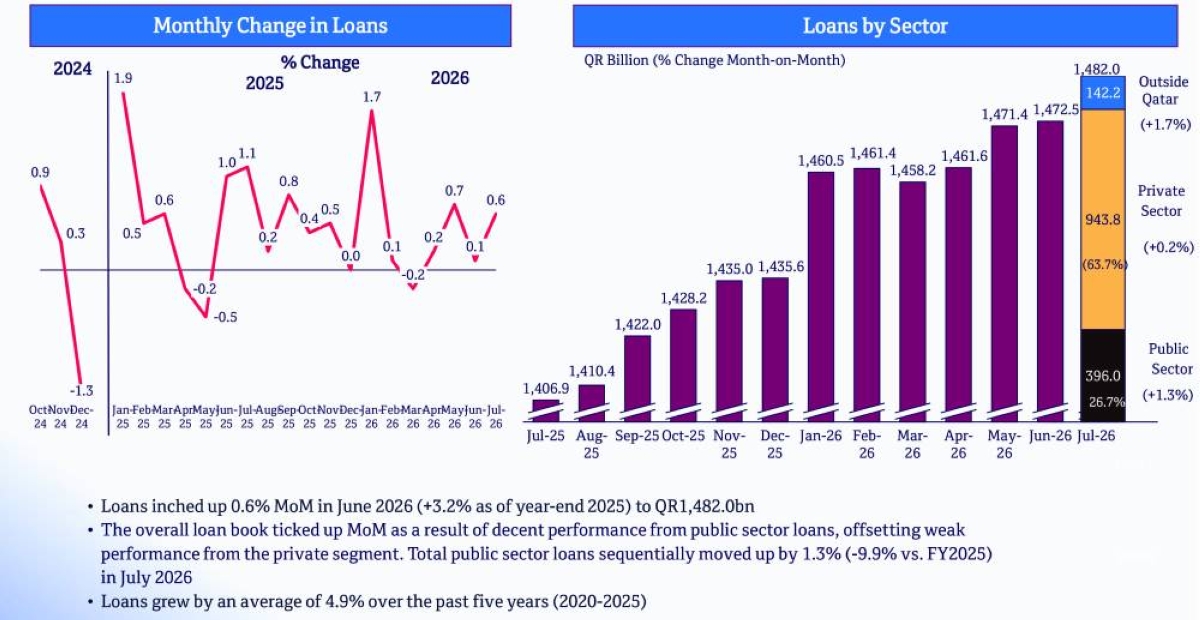
Qatari banks experienced a significant surge in overseas lending, increasing by 58.6% in the seven months leading up to July 2026, in stark contrast to the 3.2% rise in domestic loans over the same period, according to the QNBFS Monthly Banking Sector Update for July 2026. This overseas lending growth accelerated to an additional 1.7% during the month of July alone, a rapid rate outpacing the domestic loan market where deposit growth is slowing down.
Total sector assets remained stable at QR2.194tn in July, marking a 2.0% increase from the end of 2025. The loan book saw a modest 0.6% growth during July, reaching QR1,482.0bn, which represents a 3.2% increase since December. Conversely, deposits decreased by 3.2% during July, falling to QR1,070.2bn, although they are still 2.5% higher than at the end of 2025.
These dynamics led to a loan-to-deposit ratio of 139% in July, up from 133% in June and 137% at the close of the previous year. However, as per the Qatar Central Bank’s guidelines for calculating the Loan-to-Deposit Ratio (LDR), the ratio remains well below the 100% limit set by the central bank.
Public sector deposits experienced a notable decline of 8.7% during July, yet they are up 0.6% for the year. Government deposits, accounting for approximately 29% of the public sector total, dropped by 2.1% in July and have decreased by 11.2% since December. Government institutions, which constitute about 55% of the total, saw a 13.9% decrease in deposits during July, despite being 3.3% higher than the year's beginning.
Semi-government institutions, comprising roughly 17% of the total, recorded a smaller 0.9% decline in July, while still up 17.2% since year-end.
On the flip side, non-resident deposits increased by 2.6% in July, and they are now 4.3% higher than at the end of 2025, making up 19.1% of total deposits, a slight change from 18.8% at the close of the previous year. Private sector deposits fell by 1.0% during July but are still 3.1% higher than at the end of the year, with company and institution deposits down by 2.0% and up 2.7% year-to-date, while consumer deposits remained flat during the month and up 5.2% since December.
Public sector loans grew by 1.3% in July, although they are 3.9% below their levels at the end of 2025. Government segment, making up about 40% of public sector loans, increased by 0.7% during July and is up 15.8% for the year. Government institutions, accounting for roughly 51% of the total, saw a 1.6% rise in July, but they are still down 18.0% since December.
Semi-government institutions, encompassing around 10% of public sector loans, grew by 2.1% in July and have increased by 20.0% since the start of the year, the strongest growth among the three categories. Private sector loans remained flat during July and grew by 1.0% since the end of the previous year. Retail loans declined by 1.0% in July but have risen by 2.3% since December, while real estate lending expanded by 0.7% during July, yet they are still 2.6% below their year-end levels.
Other lending categories remained largely unchanged, according to the report. Loan provisions slightly improved, standing at 3.8% of gross loans in July, down from 4.0% at the end of 2025. Loan loss provisions remained unchanged during July and declined by 1.7% since December. Liquid assets maintained a stable 30% of total assets in July, consistent with the ratios observed in May, June, and the end of 2025, a level deemed robust by the report.
Written by urgent.news from Gulf Times Business's reporting — not their text. Machine-written — may contain errors; check the original before relying on it.